• Skip to primary navigation
  • Skip to main content
  • Skip to footer

Pimachiowin Aki

World Heritage Site

  • News
  • Resources
  • Visit
  • Home
  • Shop
  • Donate
  • Contact
  • About Us
    • Pimachiowin Aki Assembly of Partners
    • Board of Directors
    • Timeline
    • Communities
      • Bloodvein River First Nation
      • Little Grand Rapids First Nation
      • Pauingassi First Nation
      • Poplar River First Nation
    • Annual Reports
  • Keeping the Land
    • Our Work
    • Cultural Heritage
    • Wildlife and Habitat
    • Sustainable Economies
    • Guardians Program
      • Colin
      • Melba
      • Owen
      • Dennis
    • Education
  • The Land That Gives Life
    • Boreal Forest
    • Calendars
    • Climate
    • Cultural Sites
    • Habitation
    • Harvesting
    • Language
    • Named Places
    • Plants
    • Travel Routes
    • Water
    • Wildfire
    • Wildlife
  • Fast Facts
  • Search
  • Facebook
  • Twitter
  • Instagram
  • YouTube

Indigenous Traditional Knowledge

5 Spectacular Pictographs Explained

June 15, 2020

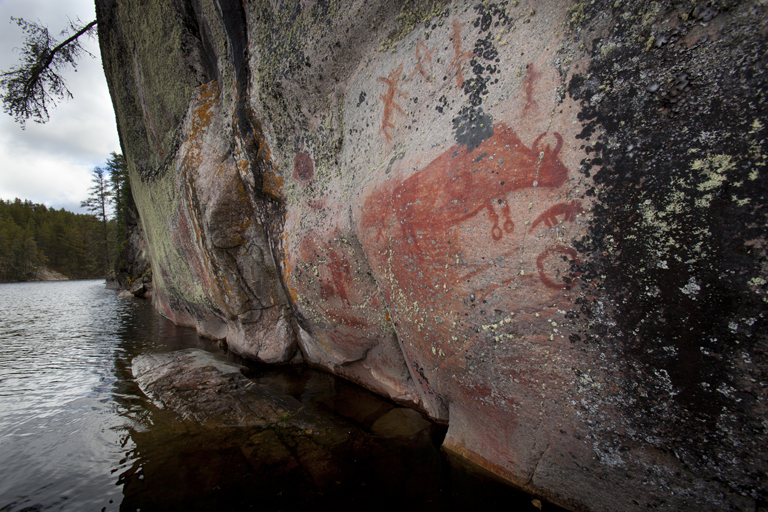
The Bloodvein River waterway in Pimachiowin Aki contains the largest collection of pictographs in Canada. Hundreds of centuries- and millennia-old pictographs (rock art paintings) have been documented at over 30 locations, including this cliff face on Artery Lake, beautified with handprints, animals, canoes, snakes, and other symbols  painted with a paste made of a red ochre and fish oil or bear fat.

Paddling up to one of these rare images is nothing short of awe-inspiring. Canadian author and pictograph-hunter Selwyn Dewdney called these particular sites along the Bloodvein River a “rare experience” and a “supreme reward.”

Elder Leslie Orvis of Bloodvein First Nation suggests making an offering each time you pass by a pictograph.

Here’s a close-up look at five spectacular pictographs in Pimachiowin Aki:

1. Moose
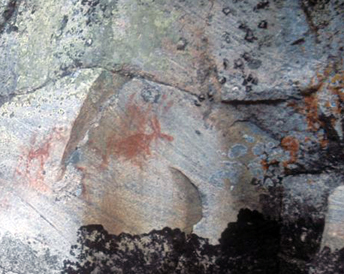
Recently, Pimachiowin Aki Board Co-Chair William Young took Elder Leslie Orvis to the site of this moose pictograph on the Bloodvein River. Leslie believes that the message behind this drawing is of respect. 

“Respect the land,” he says. He then echoes the words of Elder Kenneth Owen—“If you are looking for moose to hunt, you put down tobacco in order to have a successful hunt.” 

Leslie and other Elders in Bloodvein River First Nation aim to teach local students about Anishinaabe history, culture, and language. They are developing a program that will be a part of the curricula after the community’s new school is built.

2. Kingfishers
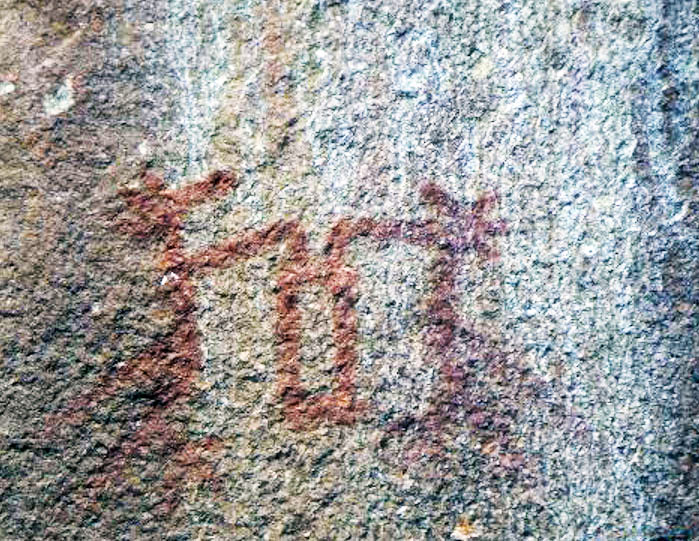
In some cases, scholars suggest that Anishinaabeg created pictographs to mark significant personal events or associations between certain clans and areas used for traditional land use and ceremony. This pictograph found at Sasaginnigak Lake shows two Kingfishers, one of the clan emblems of Anishinaabeg in Pimachiowin Aki.

This particular pictograph was probably painted in the early 1800s by members of the Kingfisher clan who wintered at Sasaginnigak Lake and used the lake as part of their family harvesting area (Petch 2010).

3. Bison
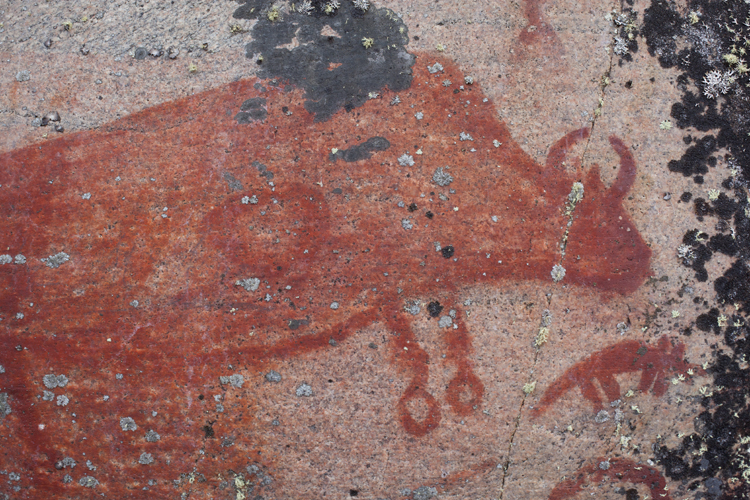
The bison in this pictograph is recognized for its circular hooves and the dark outline that appears to indicate its heart. 

In the 1950s, guided by Ojibwe elders, Selwyn Dewdney began his studies of pictographs on the Canadian Shield. His book titled Indian Rock Paintings of the Great Lakes names this pictograph the Bloodvein Bison and describes it as “beautifully proportioned.” 

The book, co-authored by Kenneth E. Kidd, suggests that this pictograph is located a hundred miles north of where the bison herds once roamed, and the person responsible for the drawing was from that region or had traveled a far distance to hunt there.  

4. Shaman
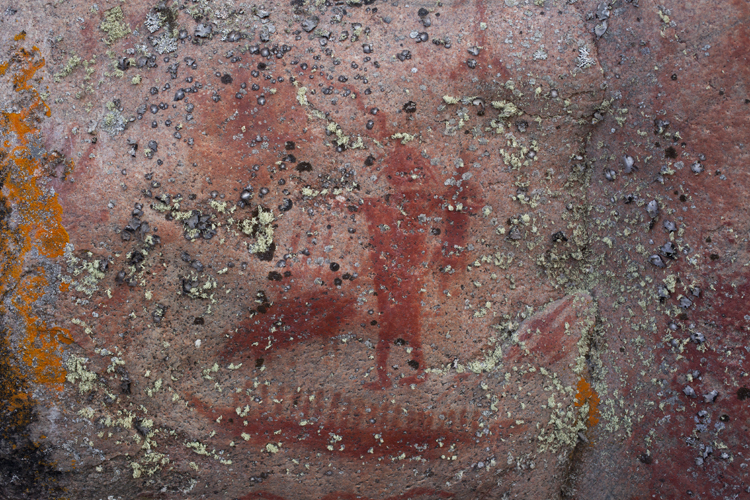
Dewdney titled this pictograph the Bloodvein Shaman. The shaman is carrying a medicine bag. Dewdney notes that the zig-zag lines that appear above the shaman’s head are also seen in other pictographs, and are often interpreted as thoughts or magical powers. He adds that the “large canoe beneath and the porcupine to the left might represent the fighting prowess and clan of the shaman.”

5. Wigglers
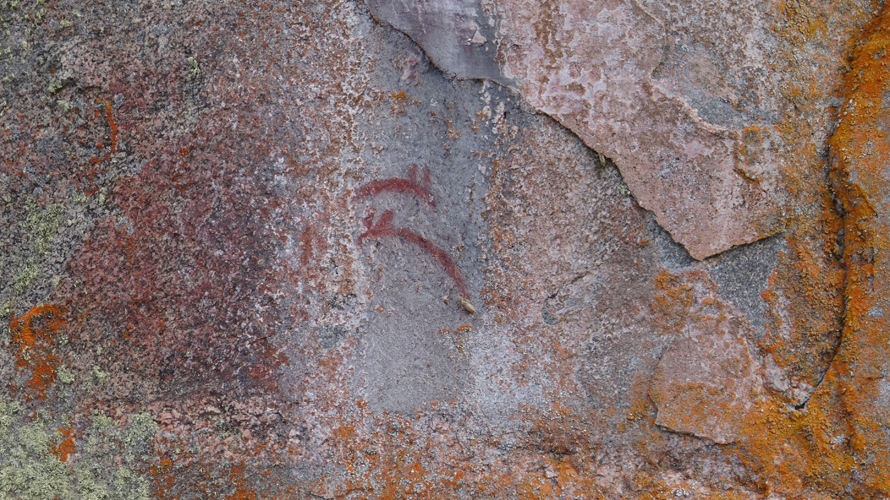
Dewdney refers to these pictographs as the “two curious wigglers” but does not provide details on what they represent. In his Ramblin’ Boy blog, True_North suggests “they may be representations of the medicine serpent.”

Many of the drawings in Pimachiowin Aki include animals and people that one can assume were based on powerful spirit beings and first-hand experiences of the artists. Each pictograph has its own significance. Archaeologist Jack Steinbring writes, “The imagery may often be prompted by dreams, or visions sometimes induced by fasting or prolonged concentration.”  

How Pimachiowin Aki Guardians Help Preserve Pictographs
The spectacular pictographs in Pimachiowin Aki are well preserved. Guardians keep the sites clean of any litter, in addition to educating people about the importance of respecting the pictographs (i.e. leaving offerings, not touching or wetting them, etc.).

The rate at which the pictographs are deteriorating due to natural weathering is unknown. Lichen encroachment is probably the most serious threat.  

Locating Pictographs in Pimachiowin Aki
Pictographs are usually found on steep granite rock-faces overhanging the waterways of the boreal forest.

The drawings are typically found in places associated with powerful spirit beings, such as next to water, at the intersections of sky, earth and water, underground, and underwater. 

Not all pictograph locations are to be revealed. 

“There are rock paintings at Dog-skin that are sacred because the people of Little Grand Rapids believe that those paintings were made by the little rock people (memegwesiwag). The rock people were part of creation and were here from the beginning.”  

—Joseph Levesque, Sr. (in translation, 2014)

Anishinaabeg communicate with memegwesiwag at particular pictograph sites by presenting offerings to demonstrate respect and request assistance in travel or hunting.

“There is a cliff-rock-painting of a snapping turtle [on a certain river]. When someone travels along over there, they’d cut some tobacco. They would say, ‘I will kill a moose’ as they placed tobacco in their pipe. Sure enough, that was exactly what would happen. That person would get the blessing to kill a moose.”  

—Elder Kenneth Owen of Pauingassi First Nation (in translation, 2007) explains the importance of a particular pictograph in communicating with the memegwesiwag responsible for the painting

For more images of pictographs, including a link to the digital version of Dewdney and Kidd’s book, click here: 

https://archive.org/details/indianrockpainti00dewd/page/n1/mode/2up

Anishinaabe Pictographs On The Bloodvein: The Artery Lake Site

Sources

Indian Rock Paintings of the Great Lakes by Selwyn Dewdney and Kenneth E. Kidd
Discussion paper: Rock Paintings in the Eastern Lake Winnipeg Watershed by Jack Steinbring 
Cultural Landscape: Macro Scale Document. Virginia Petch, August 2010
Tips on How to Smoke Fish and Meat

June 15, 2020

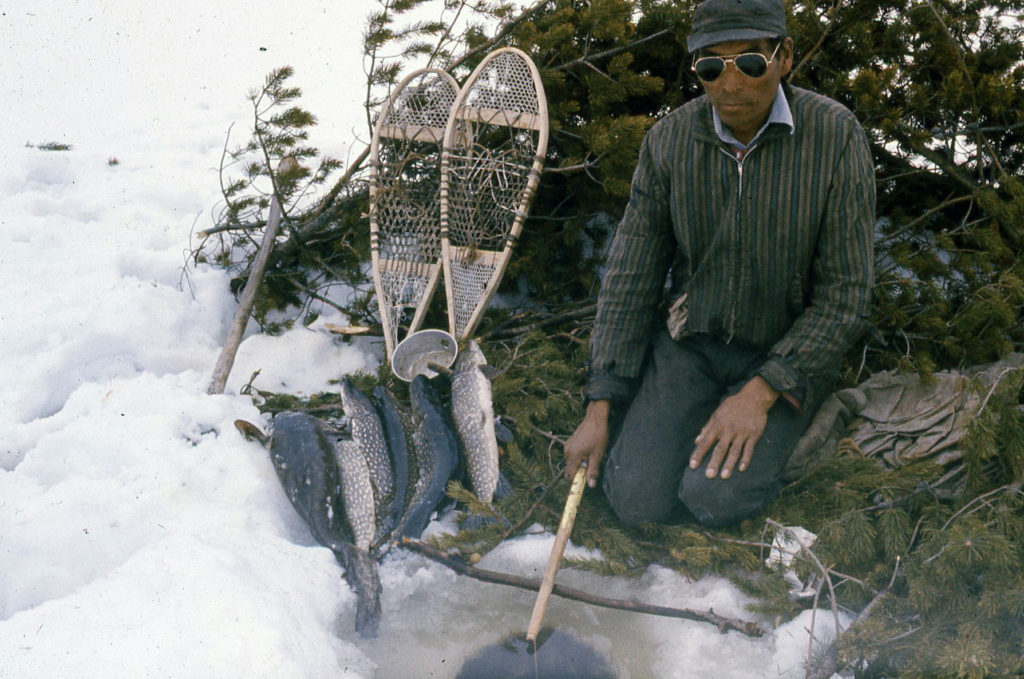
After 46 years as a commercial fisherman, Frank Young Senior retired last year. That doesn’t mean he has stopped fishing. Today he fishes to feed his family, to share with Elders in the community and neighbouring communities, and to pass on traditions to his children and grandchildren.

Frank and his wife Ellen raised two daughters and a son in Bloodvein River First Nation. He says that his daughter Lisa, who now lives in Winnipeg, wants to learn how to smoke meat, and his grandchildren are interested in fishing.  

“We go out on the lake in the boat with the net. They really enjoy that,” he says.

Learning to fish, hunt and trap are a right of passage for youth living in Pimachiowin Aki, and learning how to prepare and cook meat is passed down through generations. 

“When I cut up and dry meat, my daughter always wants to be there,” says Frank, adding that his grandchildren like to watch him filet fish.

Frank has also done a lot of moose hunting, sometimes traveling a long way to “get moose just about every year.” He says that he cuts the moose into quarters to haul it home, where he then cuts it up into smaller pieces.

“My daughter wants to learn how to cut up meat into slabs and hang it,” he says. She was helping me last year. She’s very interested in stuff like that.”

If you’re interested, too, here are some tips from Frank:

The Best Wood for Smoking Fish and Meat
“Look for dead poplar trees,” says Frank. He builds a fire out of dried poplar, found right outside his home. Poplar is best because it doesn’t have sap—trees with sap make a black fire.

Frank’s Tips on How to Smoke Meat
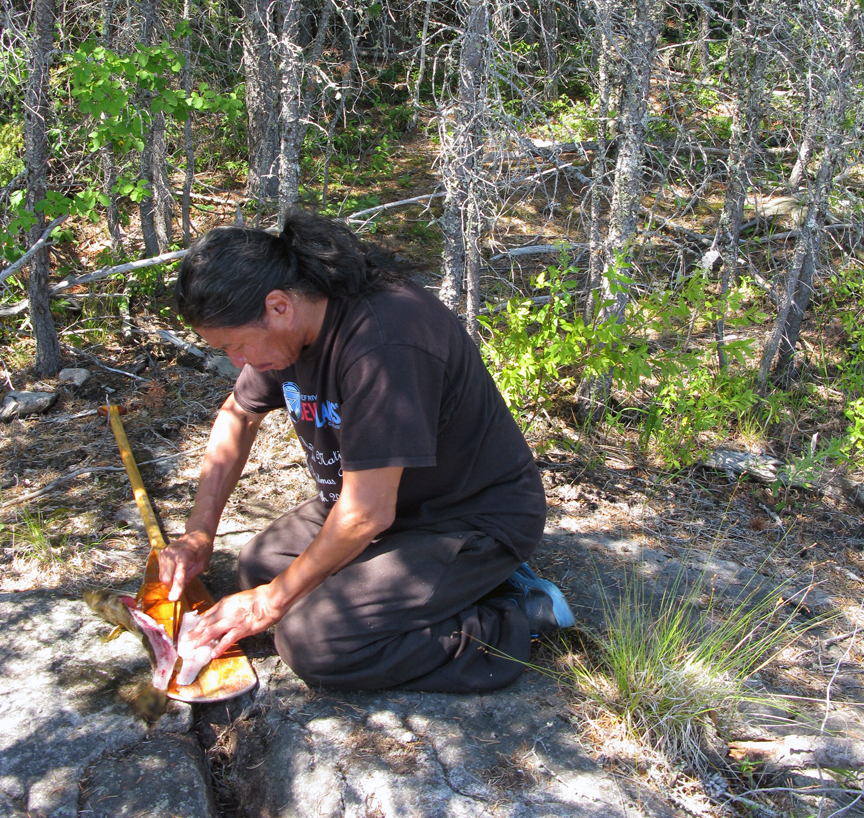
Historically, many people would smoke meat to dry it out, to preserve it. This was in the days before electricity and deep freezers, Frank explains. “Now that we have a freezer, I still smoke meat because I like the taste of it. It’s tradition.” 

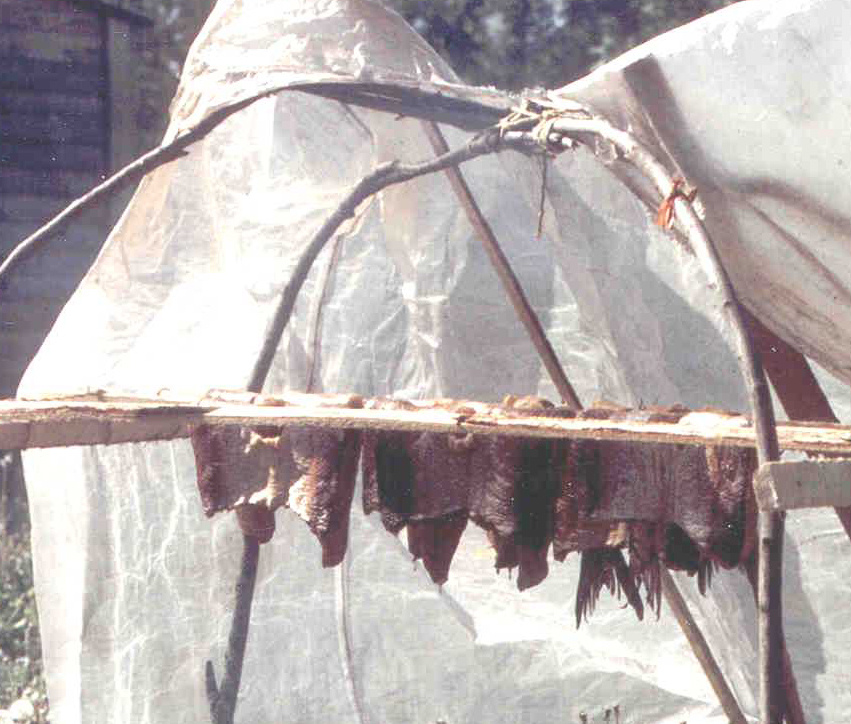
Frank hangs pieces of moose meat on sticks and smokes them.

 “There was someone who was drying meat a couple of years ago and he used spices,” Frank says. “That’s not the traditional way of doing it. I don’t use spices, just salt. That’s how it was done when I was growing up so that’s the way I do it.” 

Unlike fish, which is smoked for flavour and then boiled or cooked afterward, smoked meat is eaten right away.

Frank’s Tips on How to Smoke Fish
Frank has his own smokehouse where he smokes catfish, whitefish and goldeye. “We don’t smoke pickerel filets,” he says. “We fry those with flour and butter.”

Franks recommends using birch sticks to pierce the fish. He smokes six to eight whitefish at a time. The fire should have a small flame, he says. 

Frank closes the door and just lets it smoke. “You don’t want to dry it out,” he warns. “Just smoke it long enough to have the flavour.”

Try this Duck Fat Potato Recipe!
Fish, moose, and duck are favourite traditional foods along with delicacies like smoked meats, white fish, and pickerel caviar.

Little Grand Rapids First Nation Guardian Dennis Keeper says that duck is one of his favourite traditional foods. He notes that the ducks are especially fat this year, so he looks forward to trying this duck fat potato recipe:

https://www.foodnetwork.com/recipes/duckfat-potatoes-recipe-1957259

You can watch a video with British Chef April Bloomfield making Duck Fat Potatoes here: https://www.youtube.com/watch?v=93404IQdSSY

The recipe is on page 238 in her cookbook ‘A Girl and Her Pig: Recipes and Stories’.

How a Meeting with Hunters and Trappers Led to the Idea for a New School Program

June 15, 2020

Melba Green grew up in Bloodvein River First Nation. Today, she is a Pimachiowin Aki Guardian; a responsibility she takes very seriously. “This is what I’m supposed to do, help people, help the youth and watch over the land,” she says.

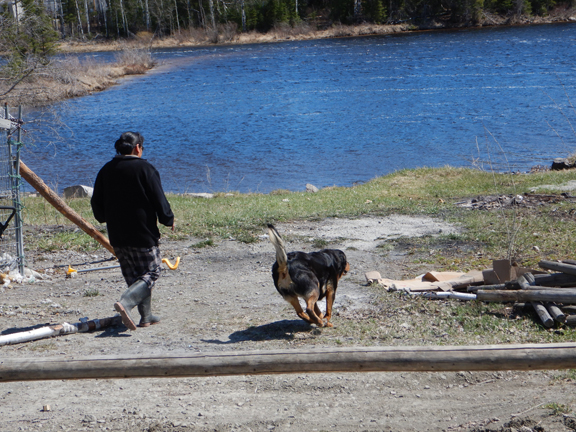
With her one-year-old Rottweiler Rocky by her side, she takes daily walks on the land. “I stop and listen to hear activities like gun shots, walking, people hunting or on a quad,” Melba explains. “I check on the water, the plants, medicines and trees.” 

Melba also listens to the concerns of people in her community. She has regular meetings with local hunters and trappers who talk with her about what is happening on the land. It was during one of these meetings that the idea for a new school program was born—Melba often talks to the students in the Miskooseepi School about what it means to keep the land. When she shared this at a meeting, she quickly had four male volunteers who wanted to share their knowledge and meet with students regularly to discuss the roles and responsibilities of men and women. Melba pitched the idea to women in the community and, once again, had eager volunteers.

Melba Reflects on Her Childhood
Anishinaabeg have very specific roles within their families and in their communities. Melba grew up the oldest sibling with three brothers and one sister. She says that when boys turn eight years old, they go out onto the land to learn how to hunt. Melba was surprised when her own young brother was being taken out into the bush. “I was scared that something bad might happen to him,” she remembers. My mom told me, ‘That’s just how it is’.” 

“Girls are supposed to know what our mothers do at home; cook, clean, help with the kids… That’s what we’re taught, through oral lessons,” she adds.

While many young people learn from their own parents or grandparents, some children may not have a role model to teach them. “But they do have guidance in the community and at the school,” says Melba.

Looking back, she notes that she ran to her grandmothers when she wanted to know something. “Now when I see young kids, a lot of their grandparents are gone.” 

The new program will help young people understand their roles and learn the skills needed to become responsible adults. The COVID-19 school shut down has put the program on pause but Melba and her group of volunteers look forward to implementing it as soon as they are able.  

The Roles of Men and Women
Male students will learn about:

  • Hunting and trapping
  • Fishing
  • Being respectful towards the land
  • Being respectful to others

Female students will learn about:

  • Harvesting plants and medicines
  • Responsibilities caring for the home
  • Their moon time
  • Parental responsibilities

Today’s Culture Shock  
Without a high school, after grade 9, students go to live with extended families in urban centres like Winnipeg, Selkirk or Riverton to finish their schooling. 

“It’s culture shock,” says Melba. “We have to do our jobs to help the youth. We want to show them that there is another way of life.”

The new program will do just that—help students learn to survive on the land and live healthy lifestyles.

Bloodvein River First Nation is looking forward to completion of a new K-10 school within the community in August 2021. New K-12 schools being constructed in Poplar River First Nation and Little Grand Rapids First Nation are also expected to open in August 2021.

Elders are Our Scientists

December 17, 2019

There has been much dispute about global warming and climate change but Anishinaabeg have long known that poor land use planning can have damaging results. The Elders who came before us have taught us to respect the earth. Pimachiowin Aki is a gift from the Creator, and Anishinaabeg have a sacred responsibility to care for it.

Years ago, Elders spoke about the impending changes in weather patterns and cautioned us that we must work together to make a difference for current and future generations, says Pimachiowin Aki Board Co-Chair William Young. “We have our own scientists,” he says, referring to the Elders in the communities. 

William generously translates as we speak with Bloodvein First Nation Elder Leslie Orvis. Born in Bloodvein, Leslie has worked all over Manitoba as a commercial fisherman, and is an experienced hunter and trapper.

Leslie sees the changes that Elders talked about long ago. “They used to be able to do various things, like make it rain. Now that’s all changed,” he says.  

While we may no longer be able to call upon the clouds to open up, the Elders in Pimachiowin Aki are the knowledge keepers. Sharing their traditional knowledge is invaluable. They talk about the effects that global warming has on the wildlife in their communities. 

At the end of November, Bloodvein was experiencing rain and unusually warm weather for about a week and a half. “When it rains this time of year,” Leslie says, “it freezes onto the twigs, trees and bushes, which the moose and rabbits rely on to eat.“      

Lack of food for wildlife inevitably affects the trappers and hunters.  

“The wolves are starving,” William adds. Recently three wolves were spotted on the road walking at night, desperately searching or food, coming closer than normal to residents’ homes.

Communities Affected by High Waters 

Dennis Keeper, a Pimachiowin Aki Guardian who observes the lands and waters in Little Grand Rapids is very concerned about the unusual weather patterns and erratic water levels that he has witnessed over the last few years.

“Usually at this time of year, the water levels drop and the current slows down,” he says. But this year is different. The lake froze once in the fall and then opened again near the end of November. Yet in June and July, water levels were lower than normal. Dennis says that in 2018 Little Grand Rapids had low water levels all year.

Pauingassi First Nation, 18 kilometres north of Little Grand Rapids, is experiencing its highest water levels ever, with some parts of the community swallowed up and becoming islands. The high waters prevent trappers from accessing their trap lines. 

“We have to rely on outside food, says Dennis. “It puts pressure on the community.”

It also affects communities’ access to transportation. Typically, for about one month each winter, people use winter roads to travel to and from the communities of Pimachiowin Aki. The roads are a direct route across the lakes. But those roads won’t open until the lakes freeze, and Dennis worries that the roads won’t be open for as many days as needed. 

 “It takes a month of minus 30 degrees Celsius for it to freeze,” he explains. It takes six to eight weeks to get the roads passed as driveable, which results in 22 to 30 days of winter road driving. The slow freeze-up can also result in the trucks having to carry smaller loads, cutting the weight of the loads in half from 80,000 pounds to 40,000.

This is unsettling news for Little Grand Rapids, which is expecting 1500 loads of supplies this winter via the winter road. The trucks will be carrying materials to build the community’s own much-needed high school this spring.  

“Global warming is not a myth,” Dennis says. “Come over here and see it for yourself.”

Elder Leslie says, “There will be days ahead that will be hard, and we have to prepare our youth by teaching them skills like hunting, trapping, fishing and survival.” He believes that we can, and should, all work together toward sustainable hunting in order to build a brighter future for all.

Why Do Moose Avoid Travel in Winter?

December 17, 2019

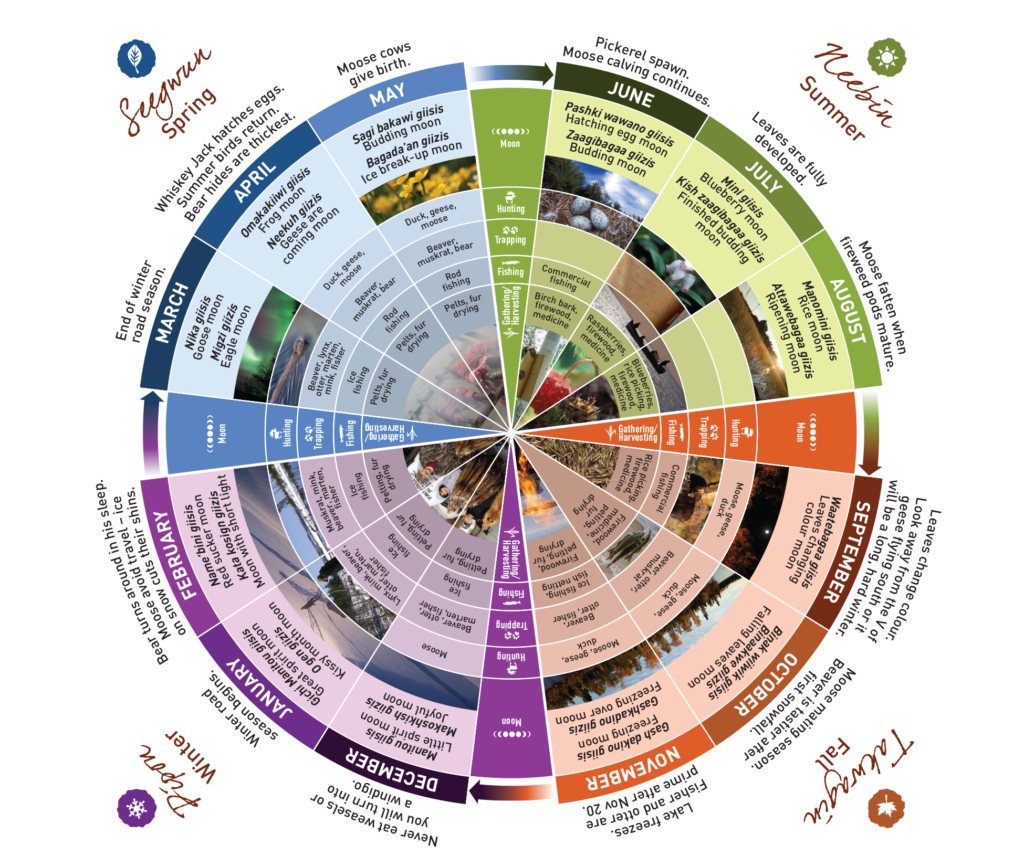
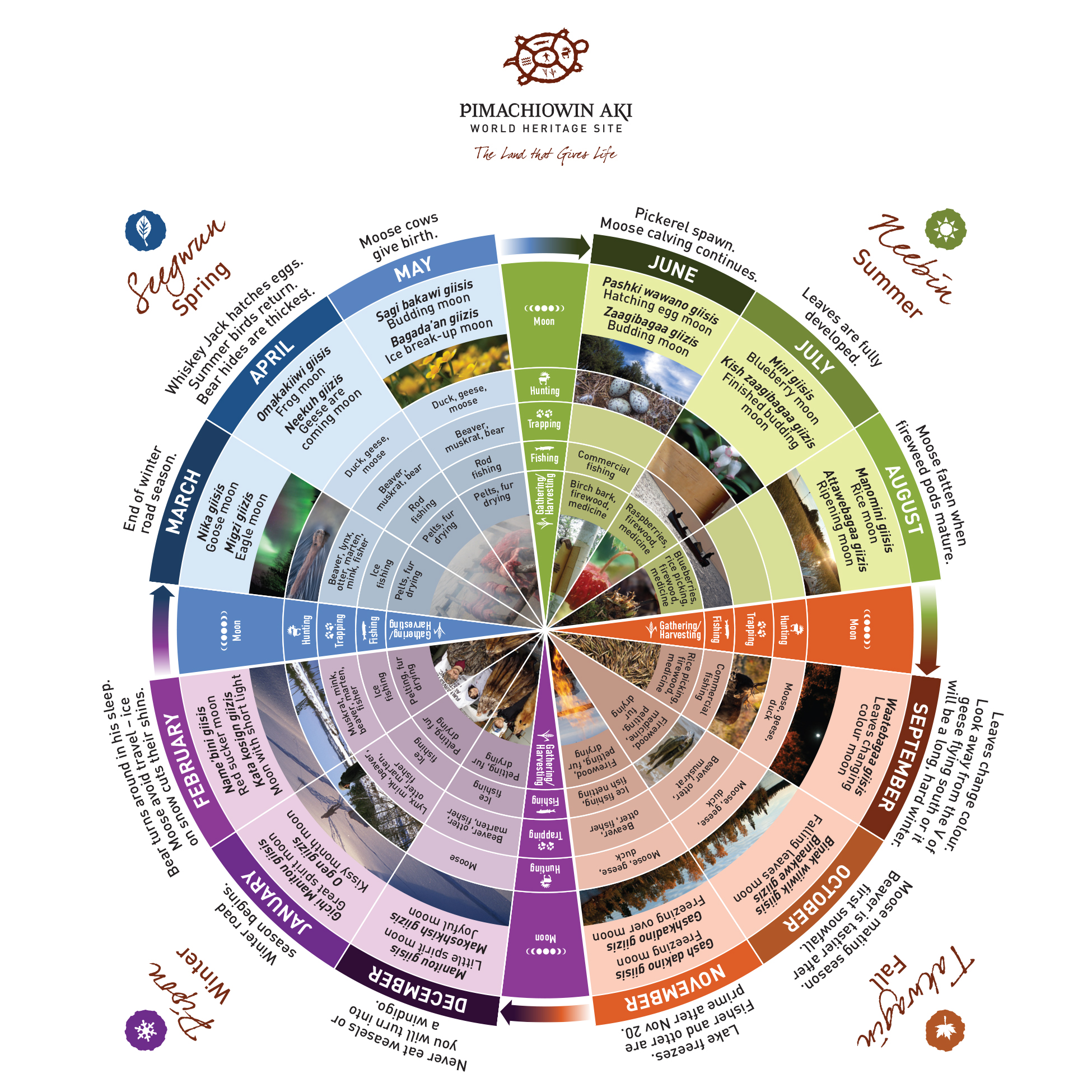
Each season brings its own gifts to Pimachiowin Aki. As the landscape, wildlife, plants and trees go through seasonal changes, life on the land changes, too. Use our calendar to gain seasonal knowledge and trace our traditional land use activities throughout the year.   

In February, Moose avoid travel because the ice on the snow cuts their shins.

Download the calendar

The Eyes and Ears of Pimachiowin Aki

September 16, 2019

Anishinaabeg were placed on the land by the Creator and have a sacred responsibility to care for it, guided by the principles of Ji-ganawendamang Gidakiiminaan (Keeping the Land). Keeping the Land includes making sure that the traditional knowledge that has been passed down for generations is never lost. 

Pimachiowin Aki Guardian Colin Owens lives by these words and is working to share his knowledge with youth in his community of Pauingassi. He is an experienced trapper and fisher who is on the land year-round.  

Fishing is an important skill to have. Children in Pimachiowin Aki are fishing with a rod from about the time they can walk. Summer for youth in communities across Pimachiowin Aki may be a vacation from school, but that doesn’t mean it’s a break from learning. Last month, Colin took students from the Pauingassi school out on the water to show them how to fish using nets—his favourite way to catch whitefish as soon as they start swimming, in June. Whitefish, filled with nutrients and medicine, are important to the community, Colin says. 

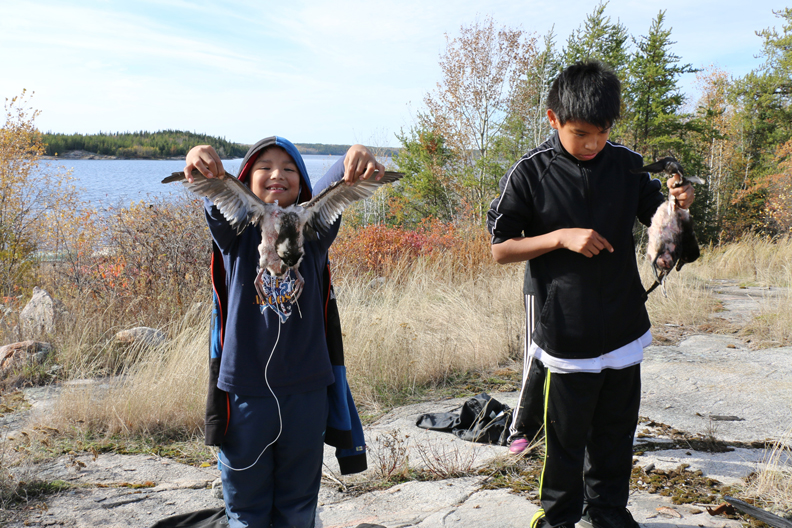
This fall, Colin will be busy monitoring hunting activities “to make sure the hunters are not being wasteful,” he says. He will also spend more time with the students, teaching them how to harvest ducks and smoke fish.  

An important teaching that Anishinaabeg pass down to the next generation is showing respect for animals that have given up their lives. This is done by ensuring that no part of a harvested animal is wasted and by gibimi-giiwewatoon (giving something back to the land) after harvesting. For example, hanging duck wings in trees to respect the spirit of the harvested animal.

Guardians are stewards who keep Indigenous knowledge alive. They travel across Pimachiowin Aki, acting as the eyes and ears of the land and waters as they monitor the health of ecosystems and cultural sites. Guardians share their knowledge and concerns with authorities, community members and visitors.

Pimachiowin Aki’s Guardians program is similar to the highly successful  Indigenous Guardian programs  that operate across Canada. There are Guardians in the four First Nation communities of Pimachiowin Aki. Colin Owens has been the Guardian in Pauingassi First Nation since 2017, and was the Resource Assistant to the First Nation’s Lands Coordinator for many years before then.

Learn more about Pimachiowin Aki Guardians

⟨
⟩

Footer

Stay connected

Sign-up for seasonal news from Pimachiowin Aki.


  • Facebook
  • Twitter
  • Instagram
  • YouTube

  • Contact
  • Visit
  • Shop
  • Donate
  • Legal
  • Privacy Policy

© 2026 Pimachiowin Aki

Built by PeaceWorks