• Skip to primary navigation
  • Skip to main content
  • Skip to footer

Pimachiowin Aki

World Heritage Site

  • News
  • Resources
  • Visit
  • Home
  • Shop
  • Donate
  • Contact
  • About Us
    • Pimachiowin Aki Assembly of Partners
    • Board of Directors
    • Timeline
    • Communities
      • Bloodvein River First Nation
      • Little Grand Rapids First Nation
      • Pauingassi First Nation
      • Poplar River First Nation
    • Annual Reports
  • Keeping the Land
    • Our Work
    • Cultural Heritage
    • Wildlife and Habitat
    • Sustainable Economies
    • Guardians Program
      • Colin
      • Melba
      • Owen
      • Dennis
    • Education
  • The Land That Gives Life
    • Boreal Forest
    • Calendars
    • Climate
    • Cultural Sites
    • Habitation
    • Harvesting
    • Language
    • Named Places
    • Plants
    • Travel Routes
    • Water
    • Wildfire
    • Wildlife
  • Fast Facts
  • Search
  • Facebook
  • Twitter
  • Instagram
  • YouTube

Indigenous Traditional Knowledge

7 Days of Cultural Experiences

June 23, 2026

LnRiLWhlYWRpbmcuaGFzLWJhY2tncm91bmR7cGFkZGluZzowfQ==
IEBtZWRpYSBvbmx5IHNjcmVlbiBhbmQgKG1heC13aWR0aDogNzgxcHgpIHsgICB9IEBtZWRpYSBvbmx5IHNjcmVlbiBhbmQgKG1heC13aWR0aDogNTk5cHgpIHsgICB9IA==

Photographer Ōtake Hidehiro shares notes and photos from his time in Poplar River First Nation.

1. Sunday

Evening | Arrival

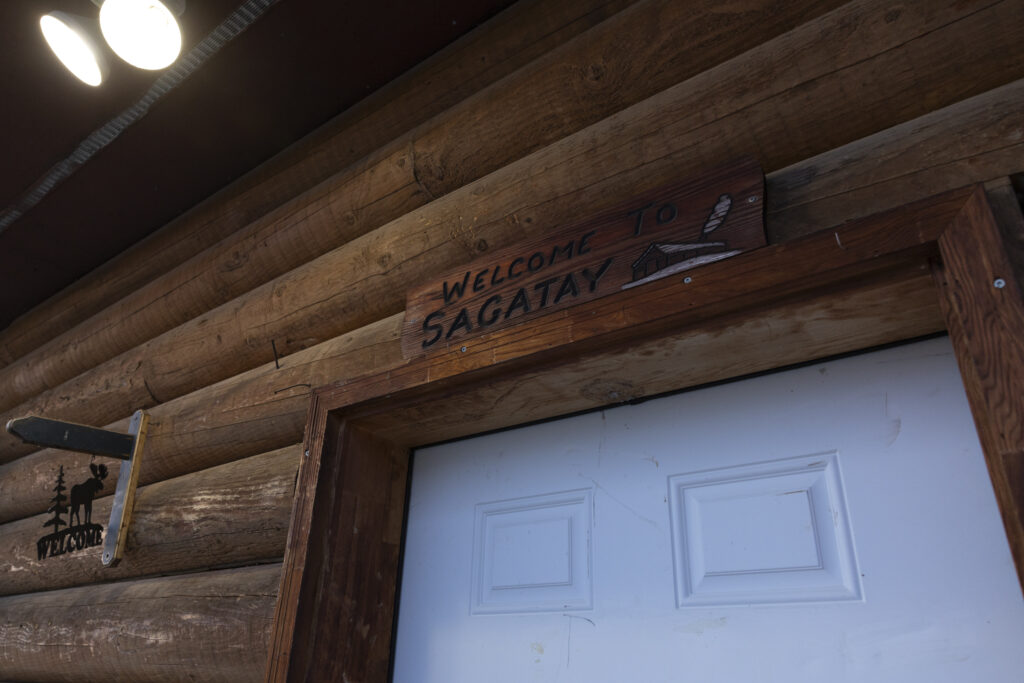
I’m currently enjoying my stay comfortably at Sagatay Lodge in Poplar River.
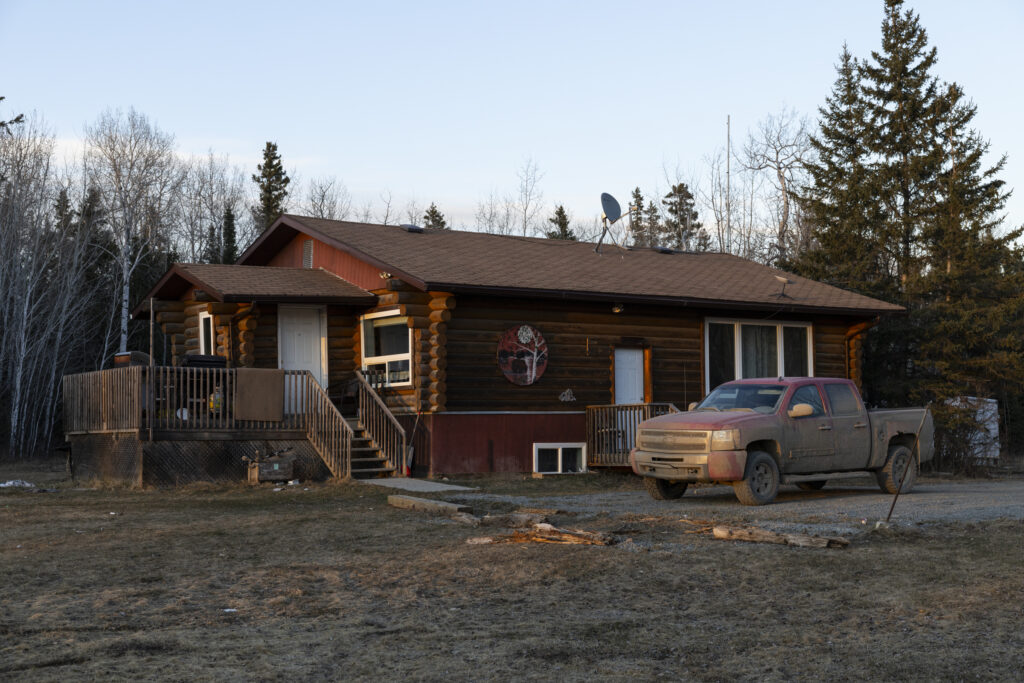
As soon as I arrived, Ray came to pick me up, and we were happy to see each other again. I also got to see Sophia and Norway—everyone is doing well.

Of course, it was wonderful to see Paul again as well. His big smile is as charming as ever. He has become very successful as a comedian and now stars in and writes for the popular TV series Acting Good. He’ll be returning to Winnipeg tomorrow to continue filming Season 5.
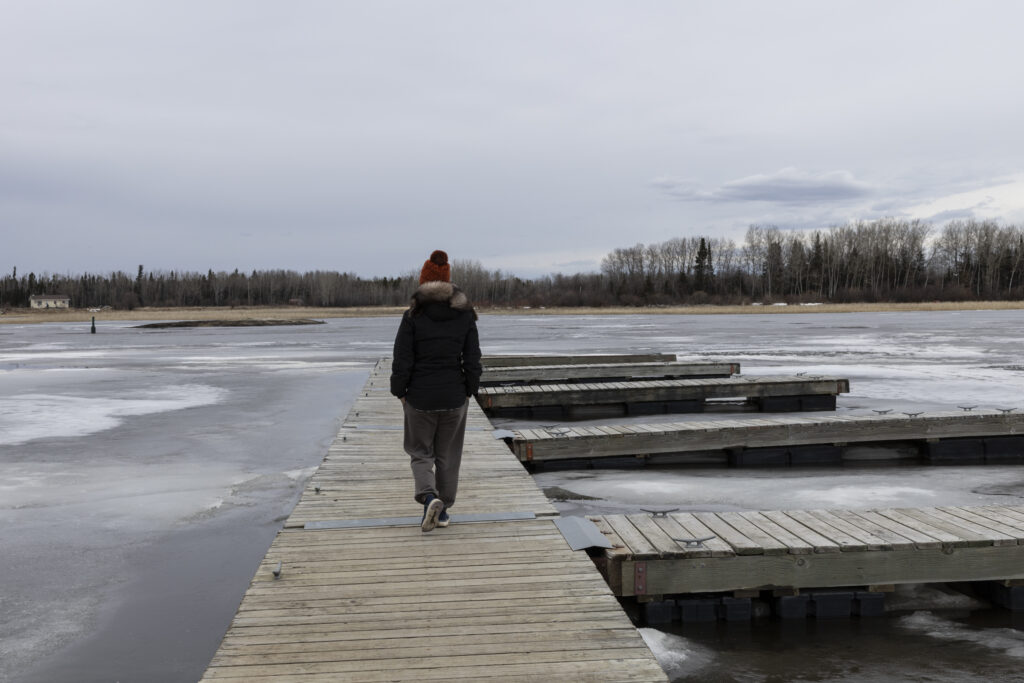
I was also happy to make a new friend, Mumilaaq, who is from Baker Lake in Nunavut. In the evening, she drove me around town and showed me the area. The dock at Fishing Station was still frozen.

2. Monday 

Morning | Snowfall
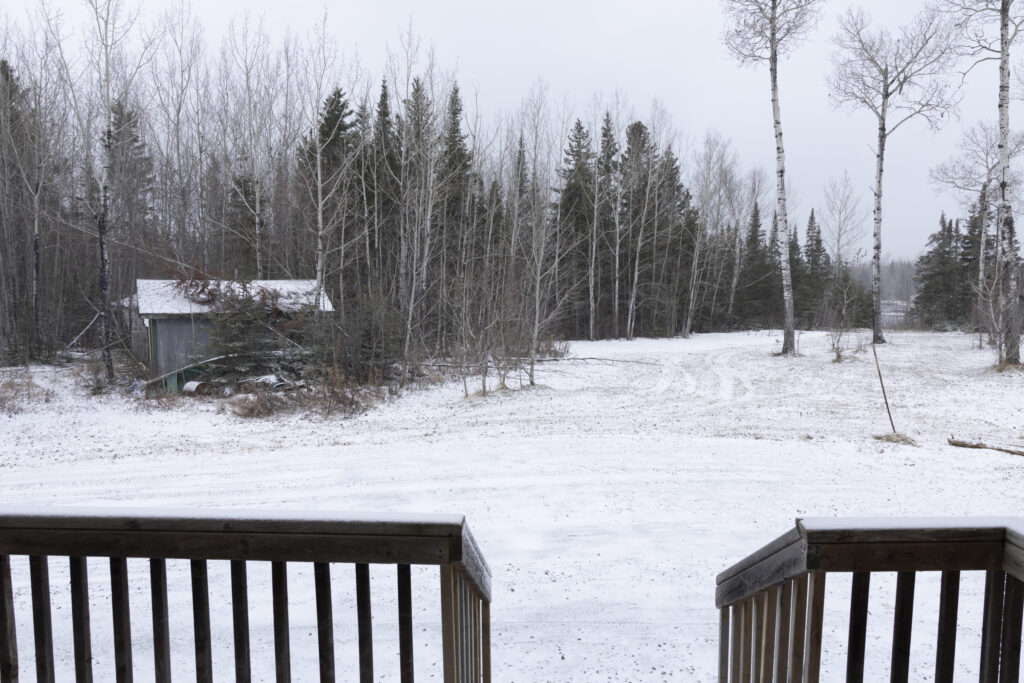
I was surprised to wake up to a snowy landscape—winter seems long this year.

Evening | Dance Workshop
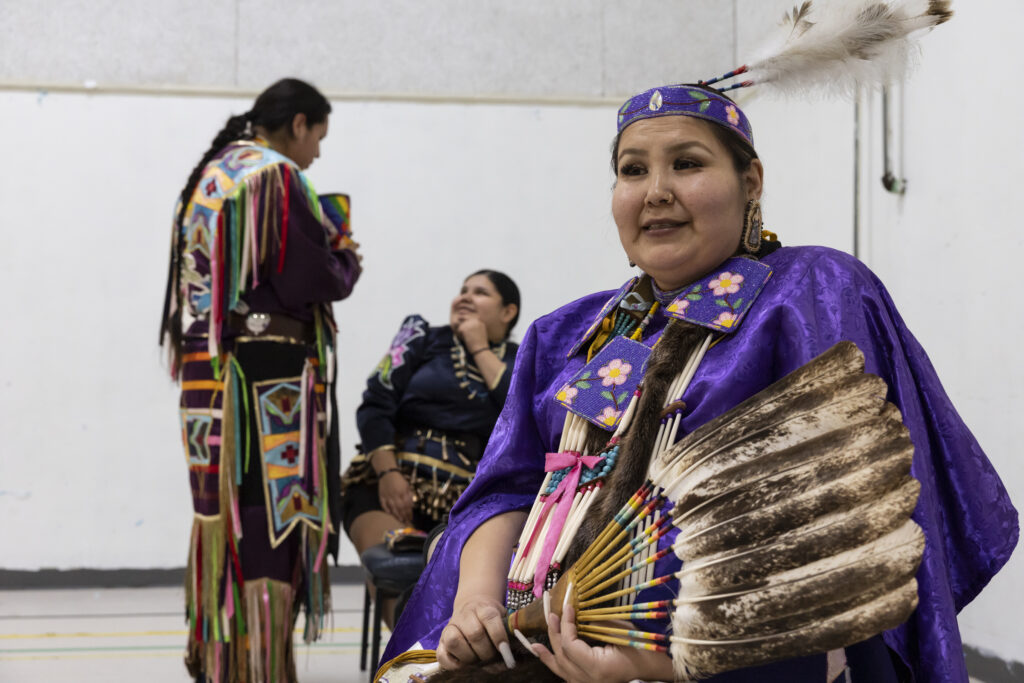
A family from Winnipeg who teaches dance arrived. They hold monthly workshops. The family consists of Tahnee Flett, the mother, and her children Dreyden and Jayden. They are originally from Opaskwayak Cree Nation but have lived in Winnipeg for 20 years.
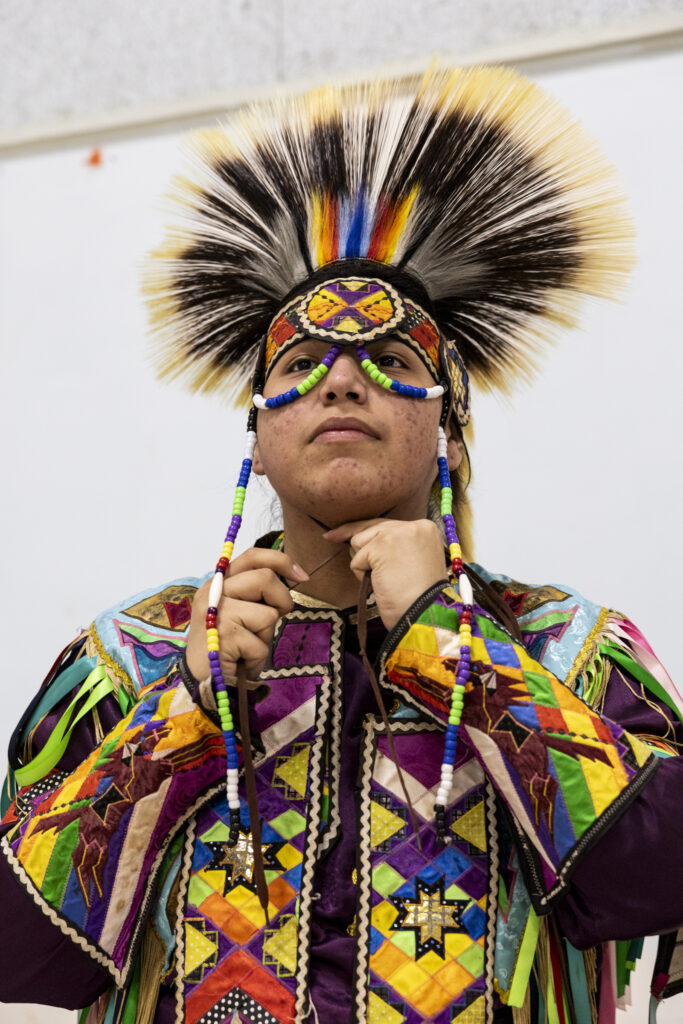
Dreyden, from a young age, has been a Glassdance dancer and began using a sewing machine during COVID. He has explored everything from traditional regalia to high-fashion design, runs his own brand, models internationally—including in New York and Tokyo next month—and, I heard, has even received comments from Lady Gaga! The family travels to Indigenous communities, sharing teachings through dance.

The workshop, held at 7pm in the old school gym, lasted about two hours. It was the second session, with the first one taking place two weeks ago. 
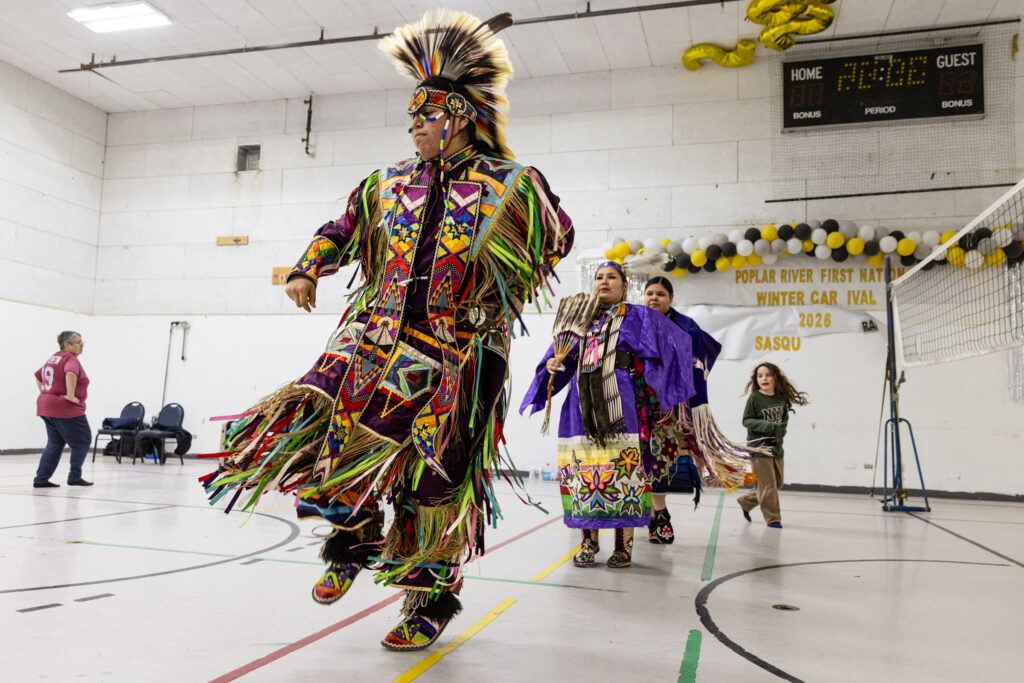
The session included dances as an opening ceremony, warm-ups, Glass Dance, Jingle Dance, and Traditional Dance. Participants could choose which dances to practice, move to the drum rhythm, play a stopping game, and end with a closing dance.
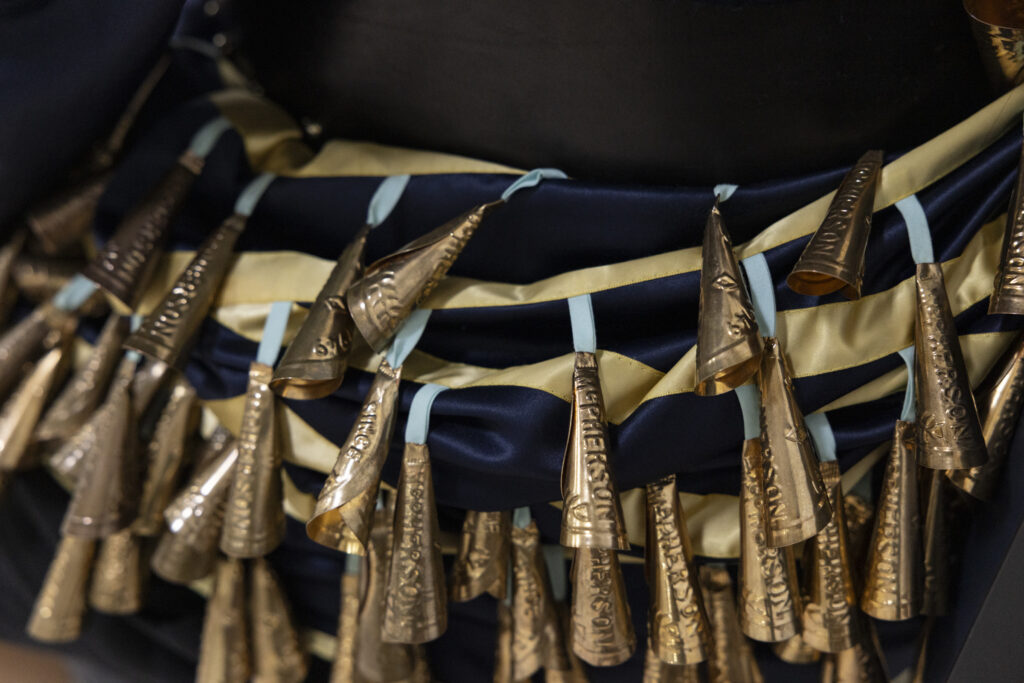
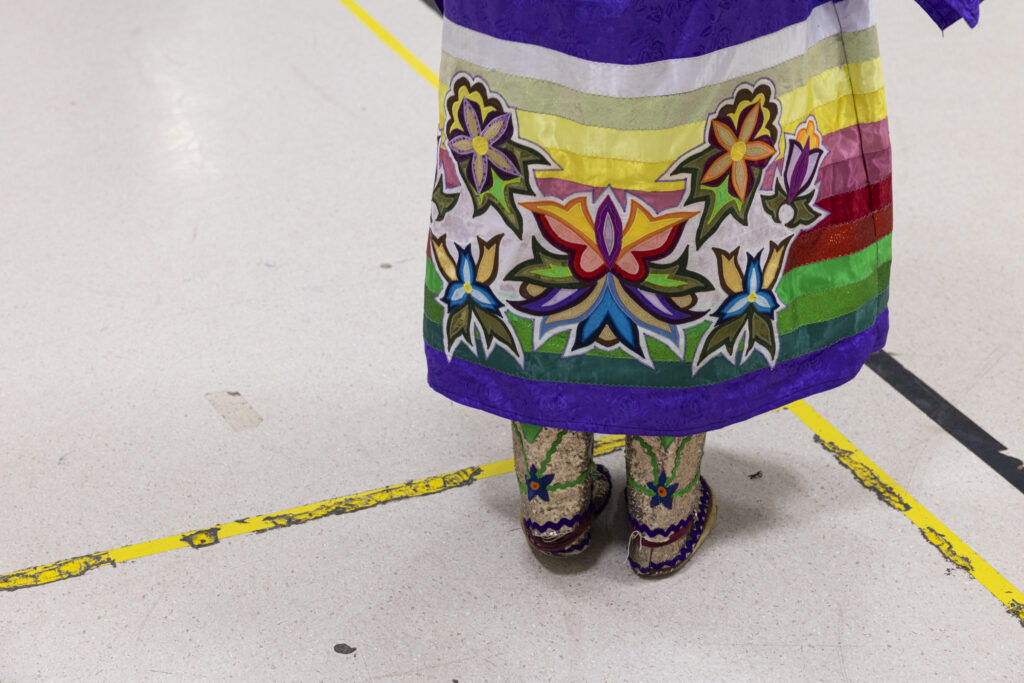
The Flett Family will return in two weeks.

3. Tuesday

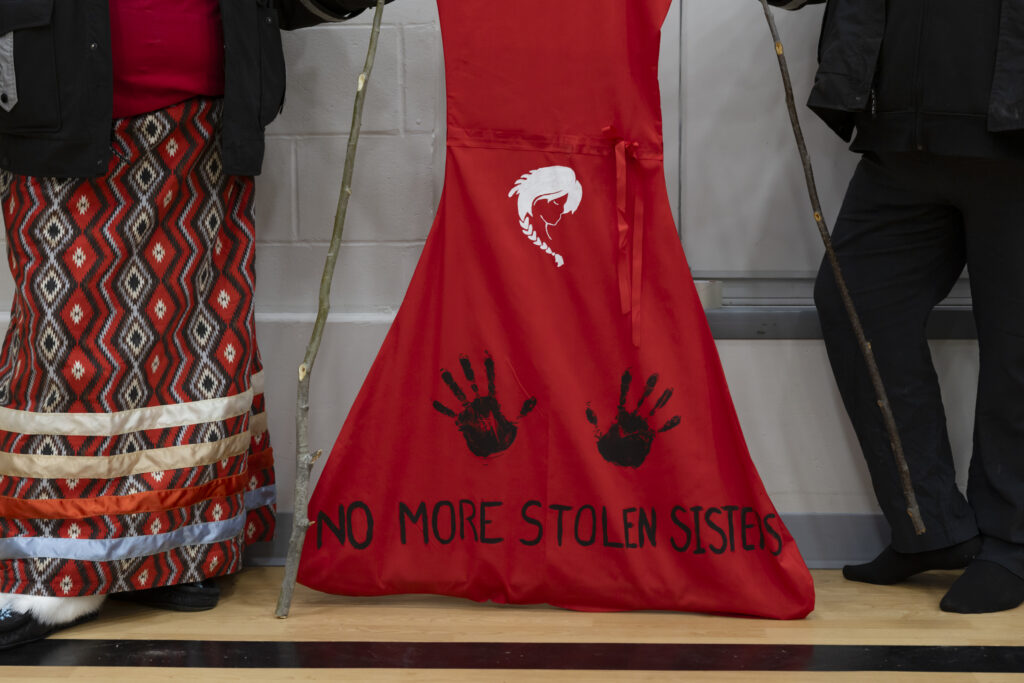
Afternoon | MMIWG 2SLGBTQI+ Event
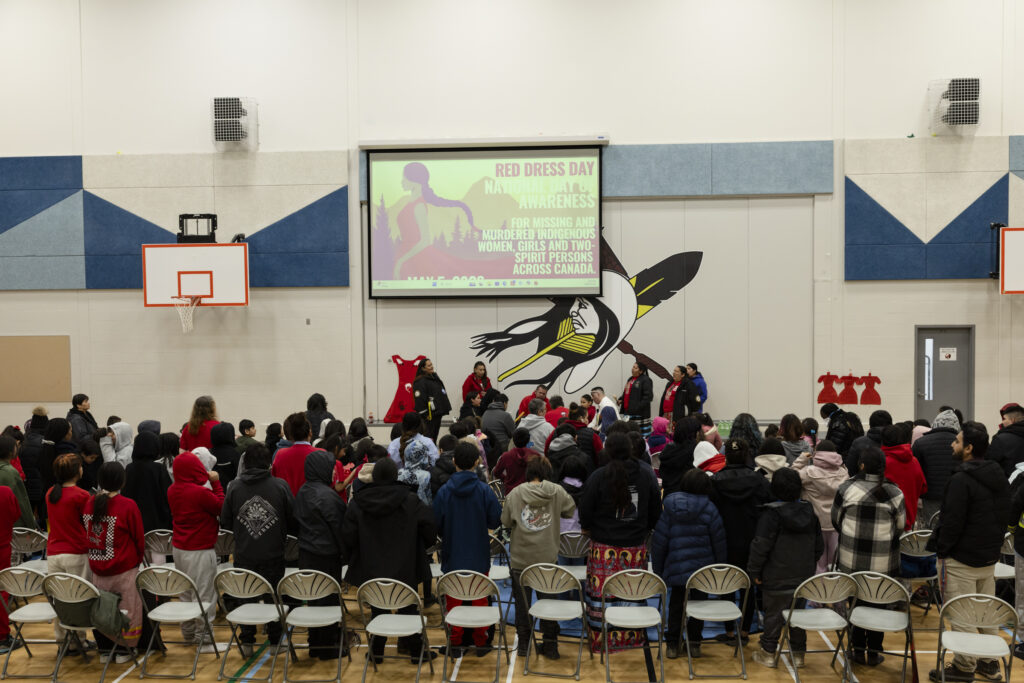
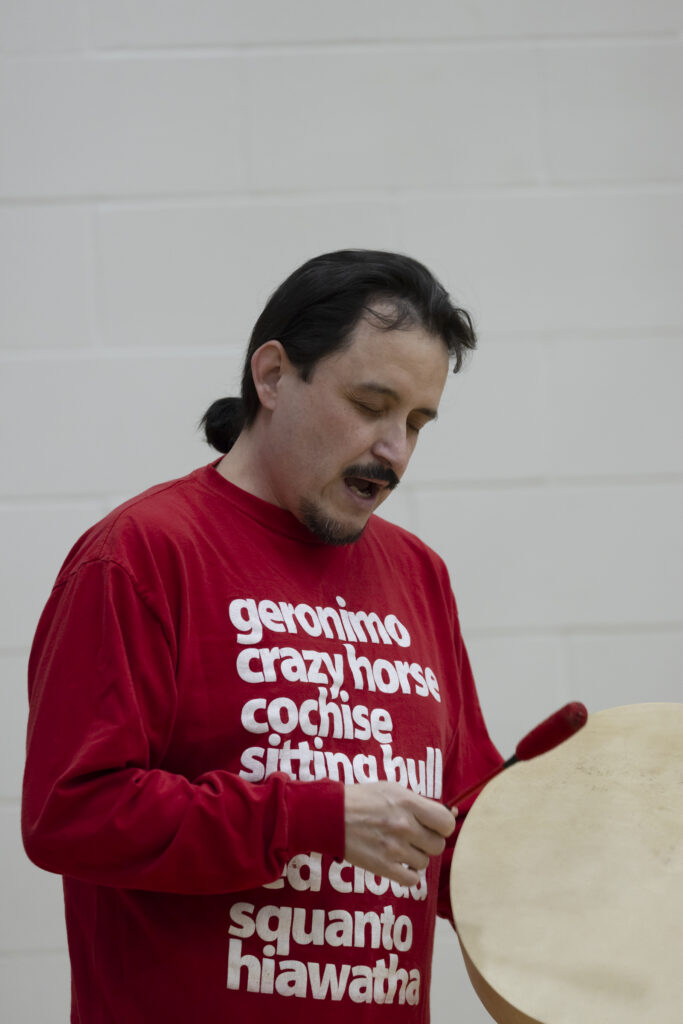
We gathered at the school at 1pm for a Missing and Murdered Indigenous Women, Girls, and 2SLGBTQI+ event, which began with a drum performance.
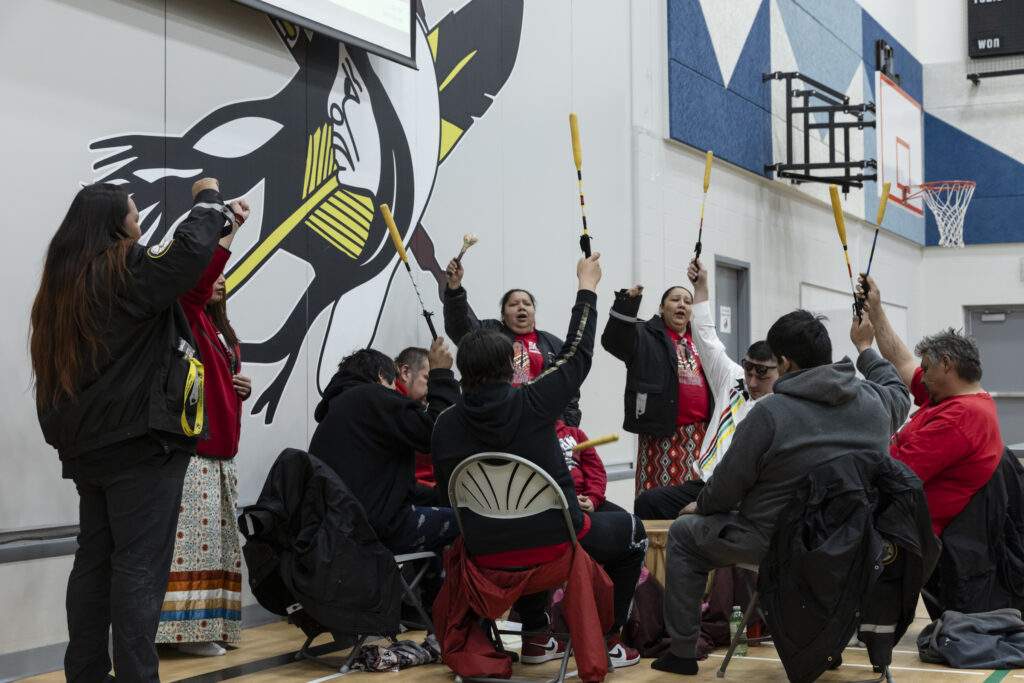
I was given permission to take photos, and I considered it a great honour to be entrusted with that opportunity. 
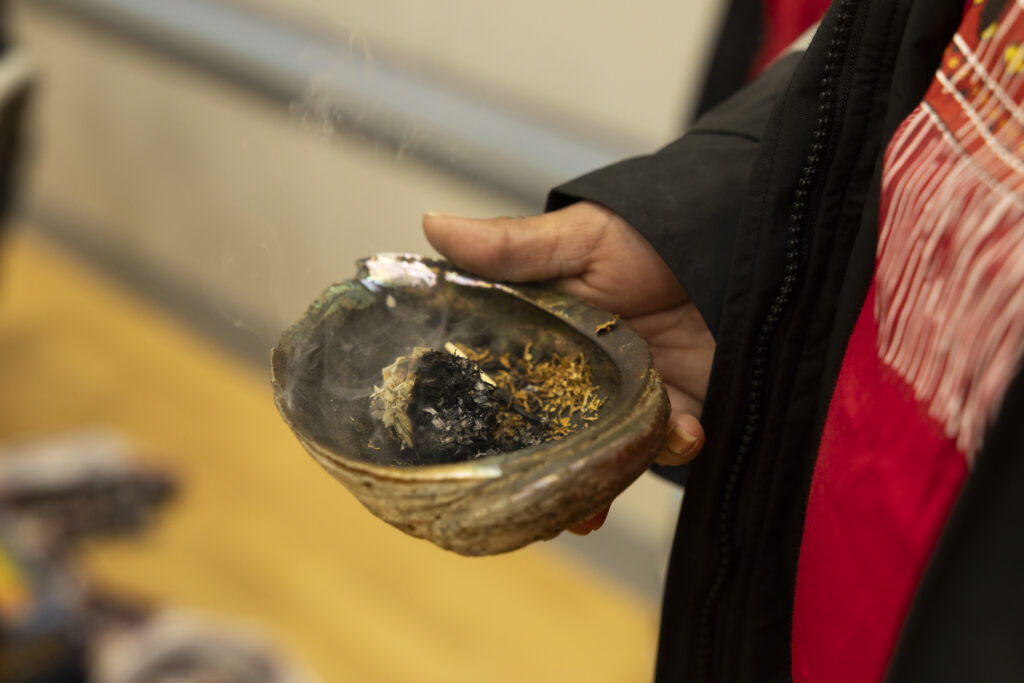
After that, was the Norway Requiem, followed by a speech from Sophia, and several memorial speeches.

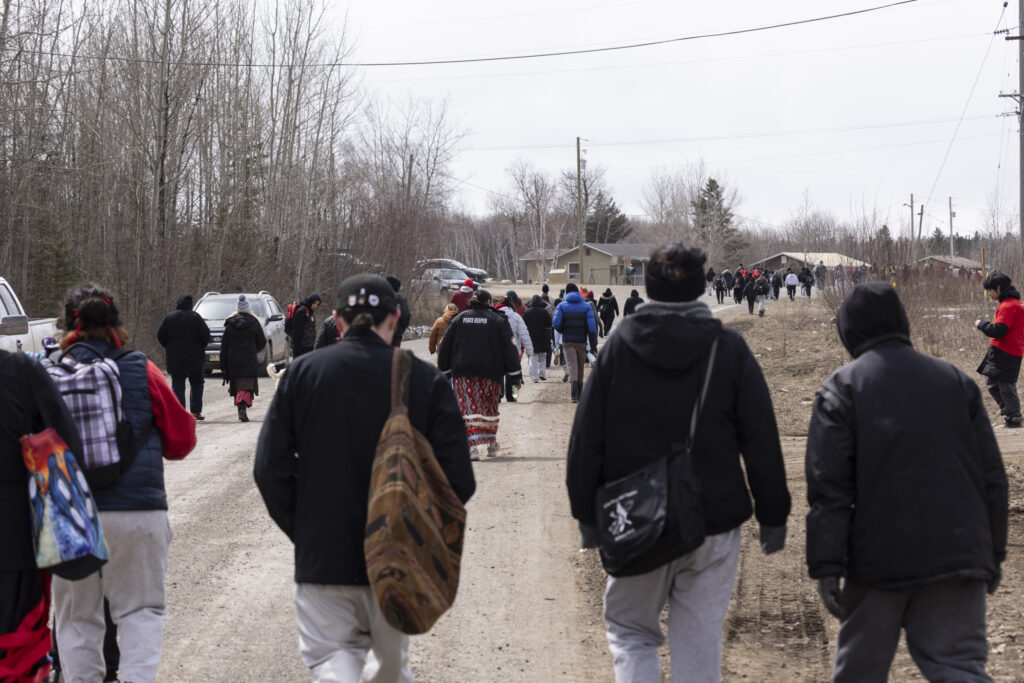
Students in grades 5–12 marched to the Band Office, while younger children marched around the school. I joined everyone and walked to the Band Office. There, I greeted the Chief, Council members, and office staff.

Back in 2012, I was asked to photograph portraits of Residential School survivors. Apparently, the book featuring those portraits is often used as school teaching material.
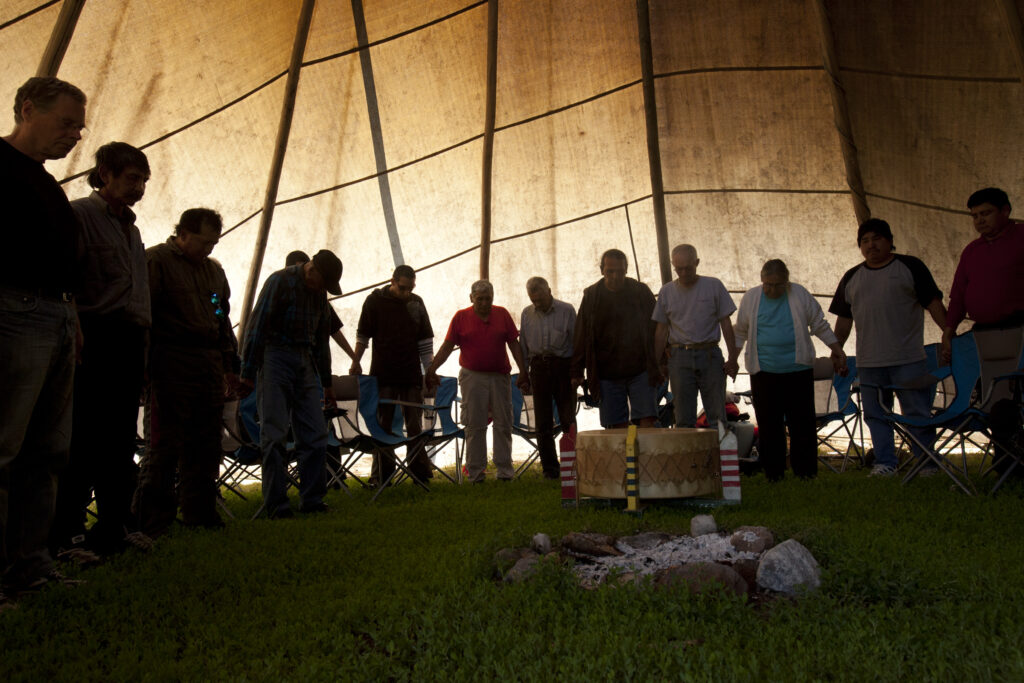
While the Band Office is currently being renovated and the portraits aren’t displayed, they were usually exhibited as panels. It was a great conversation starter to know I took them.
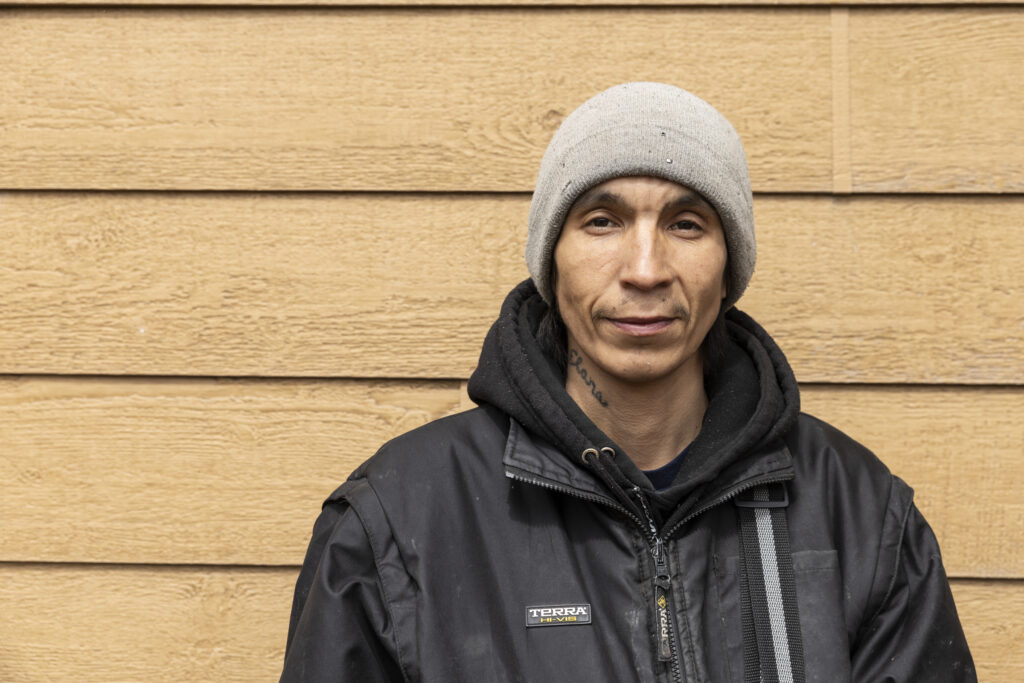
I also photographed John Charles McDonald and his grandson Edward Franklin at Weaver Lake in 2010, and I got to reconnect with Edward.


Evening | Duck Hunting

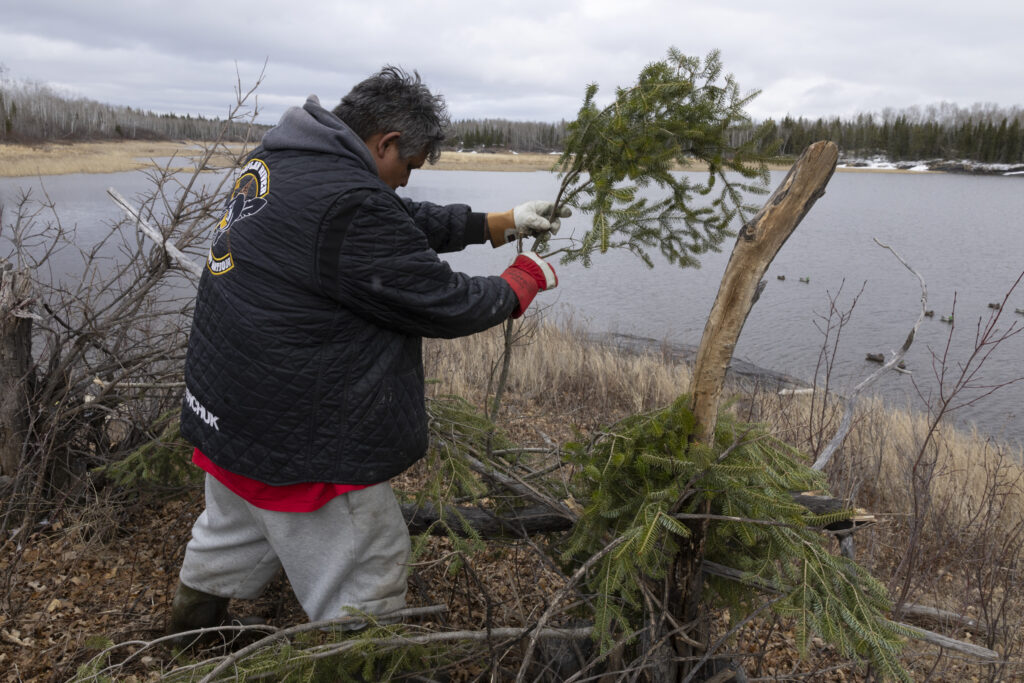
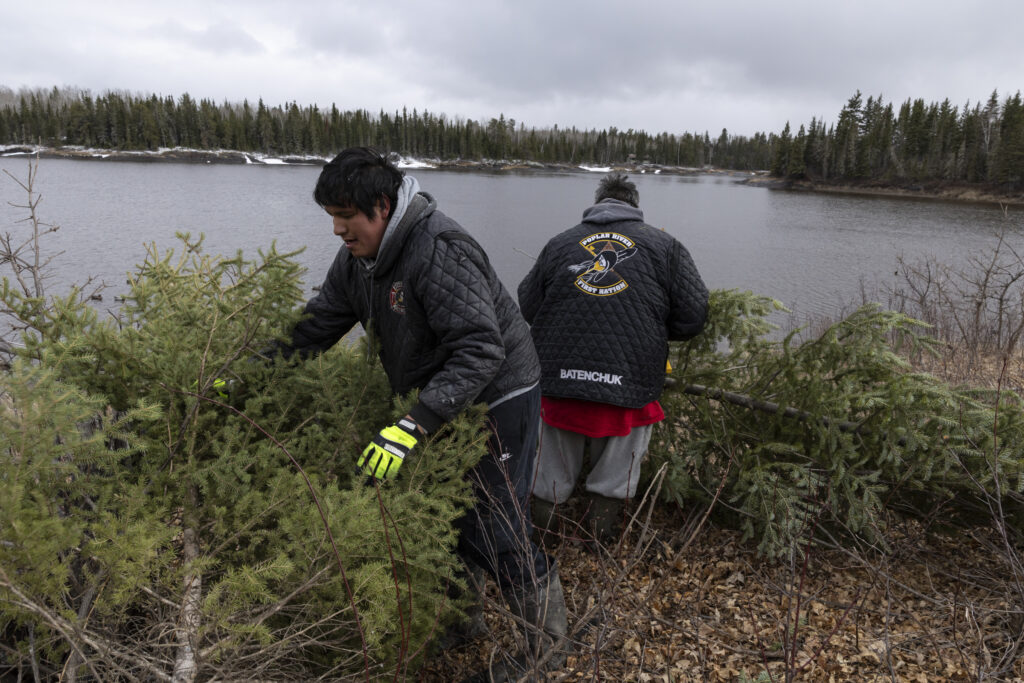
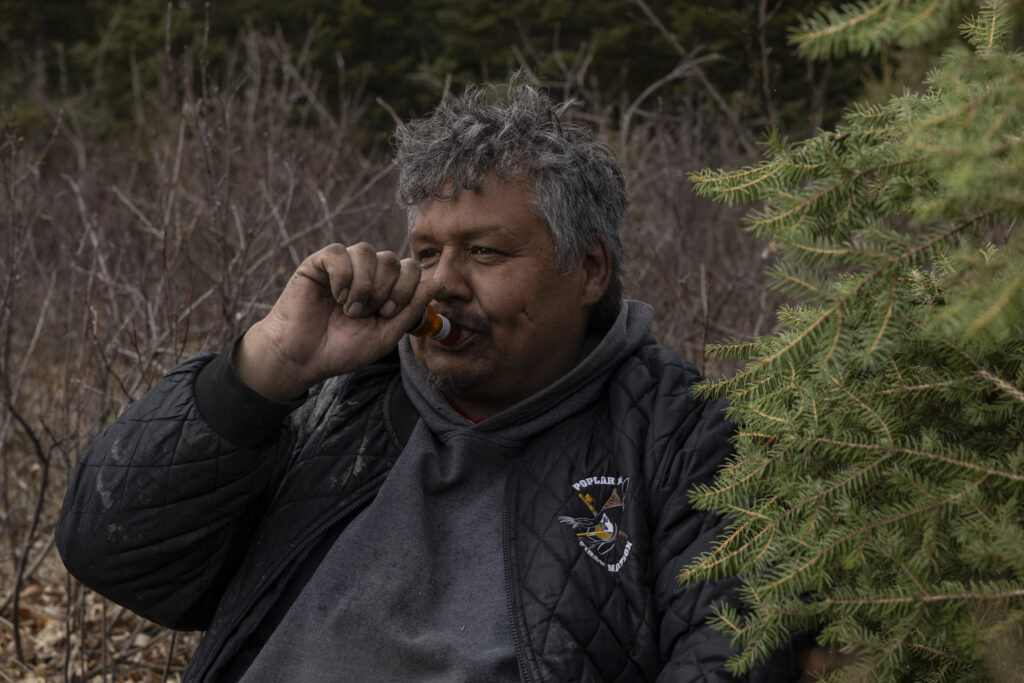
That evening, I went duck hunting with Desmond Batenchuk and Barry Bittern, departing from the other side of the Rapids. We fired at ducks whenever we saw them and got one bird early on.
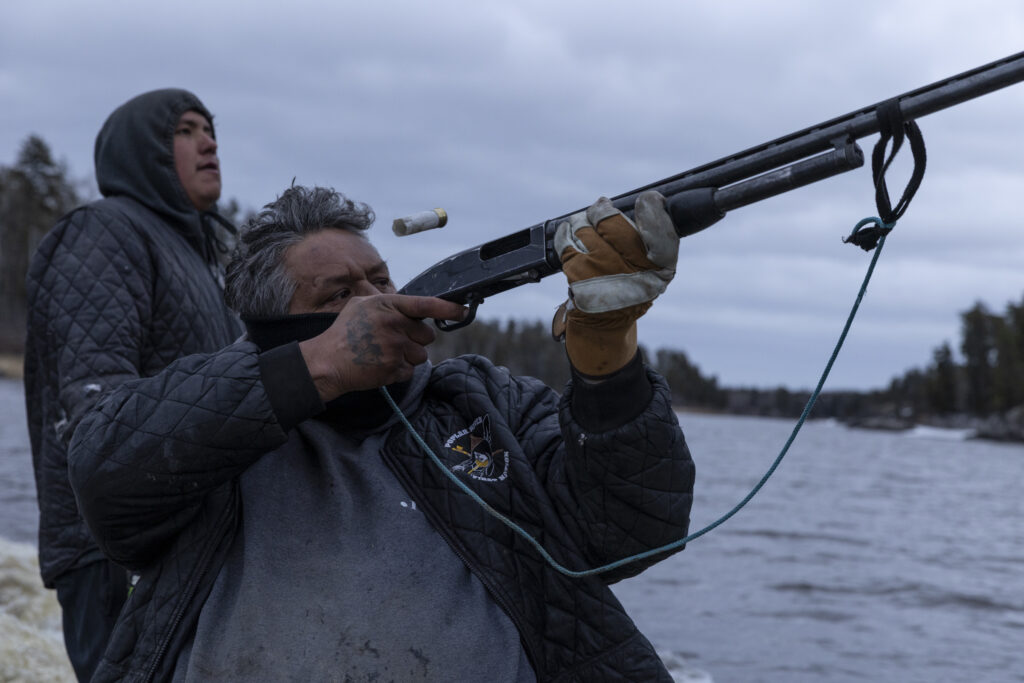
We went further, set up decoys in the water, and made a blind.
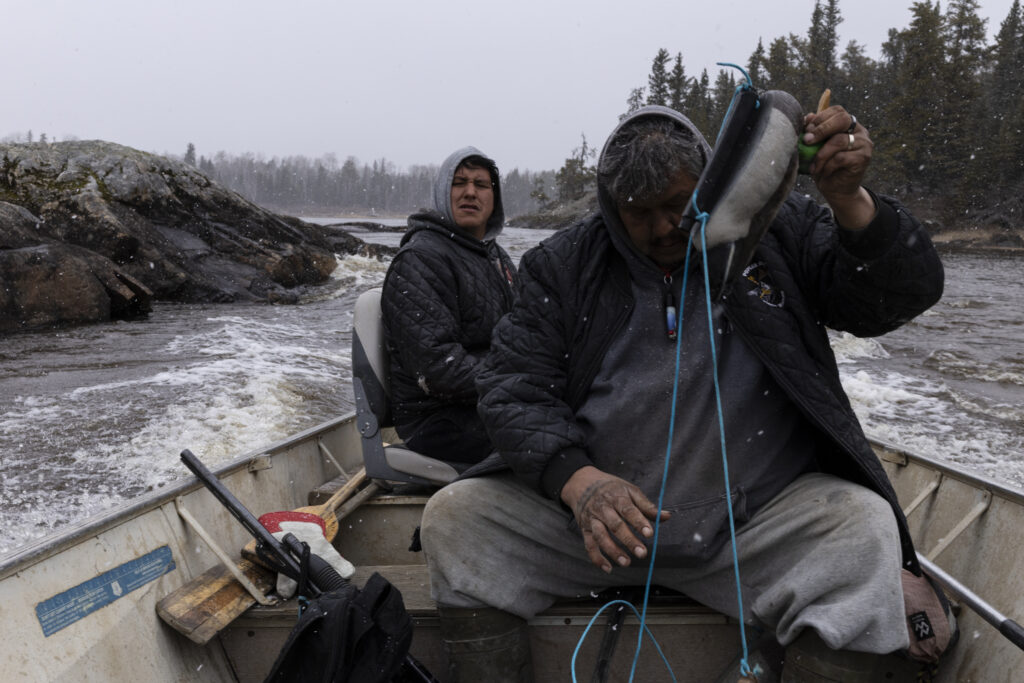
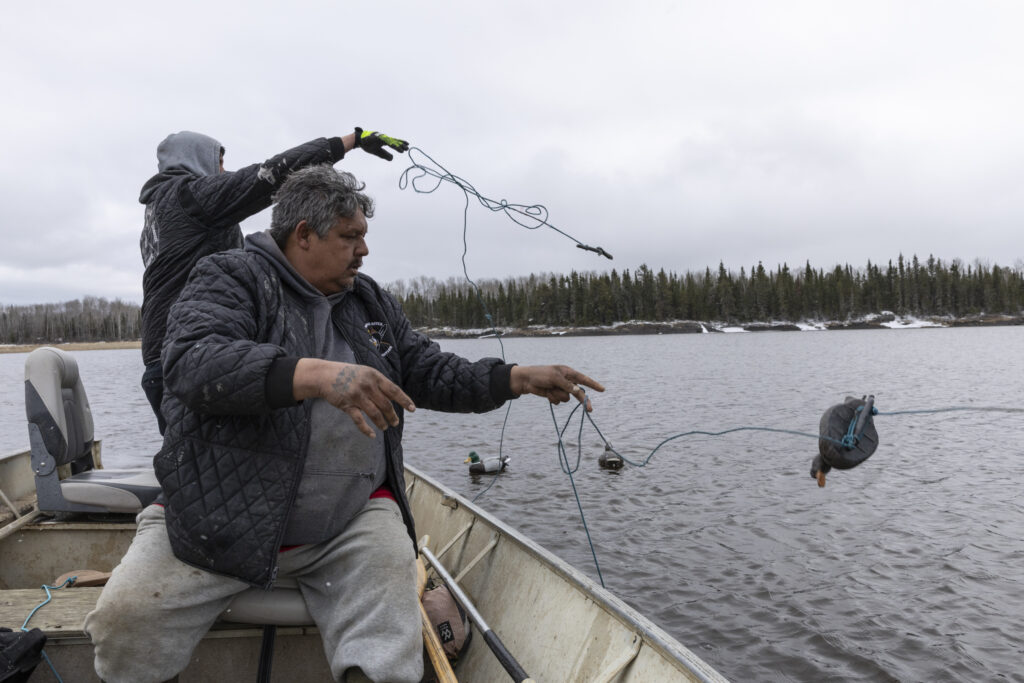
We called ducks with sounds, and when they came close, we shot, getting two more.
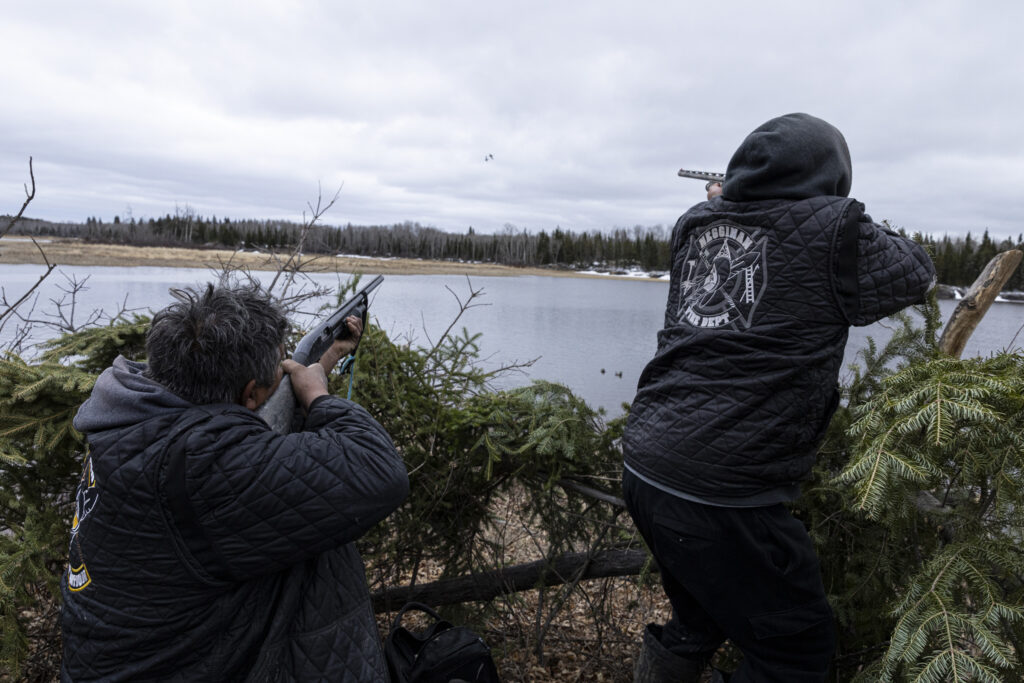
On the way back, we shot whenever we spotted them, ending up with eight ducks in total.
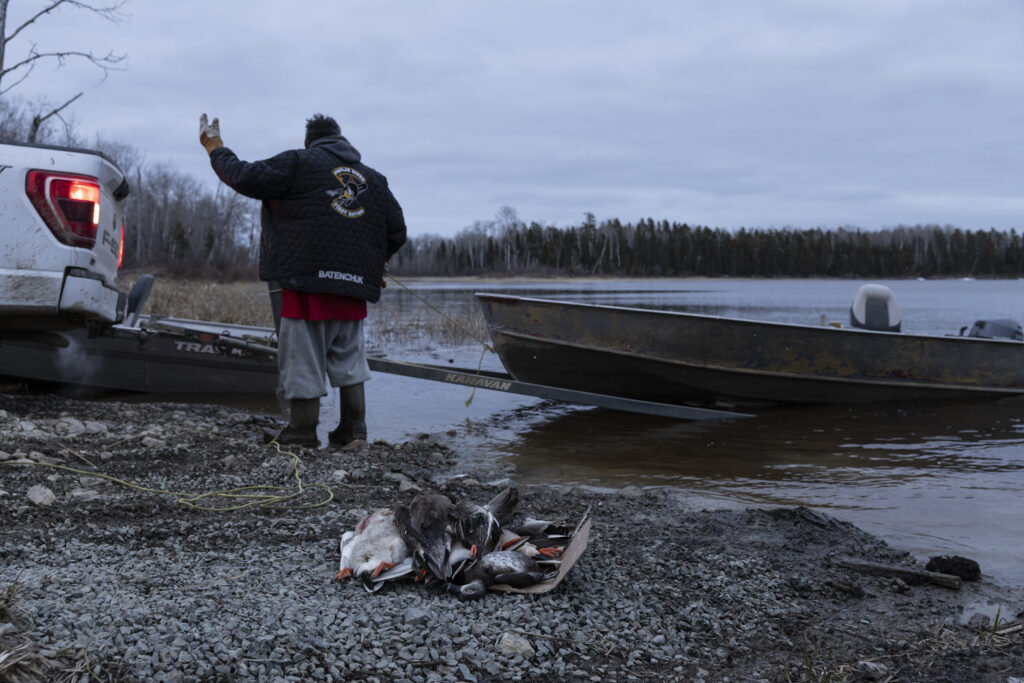
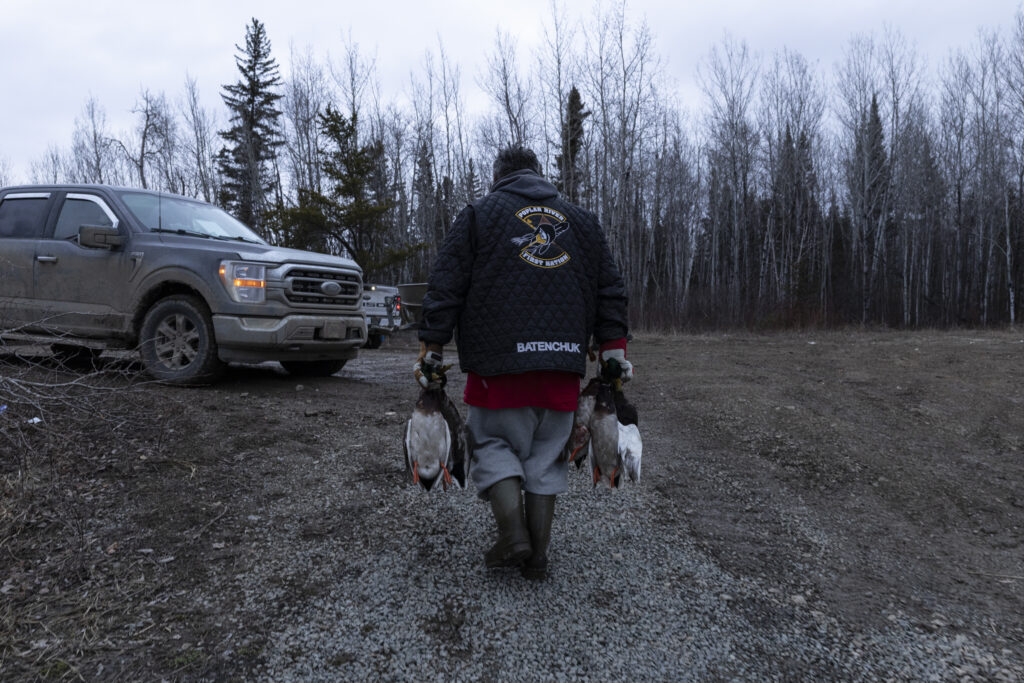
4. Wednesday

Morning | Duck Cleaning
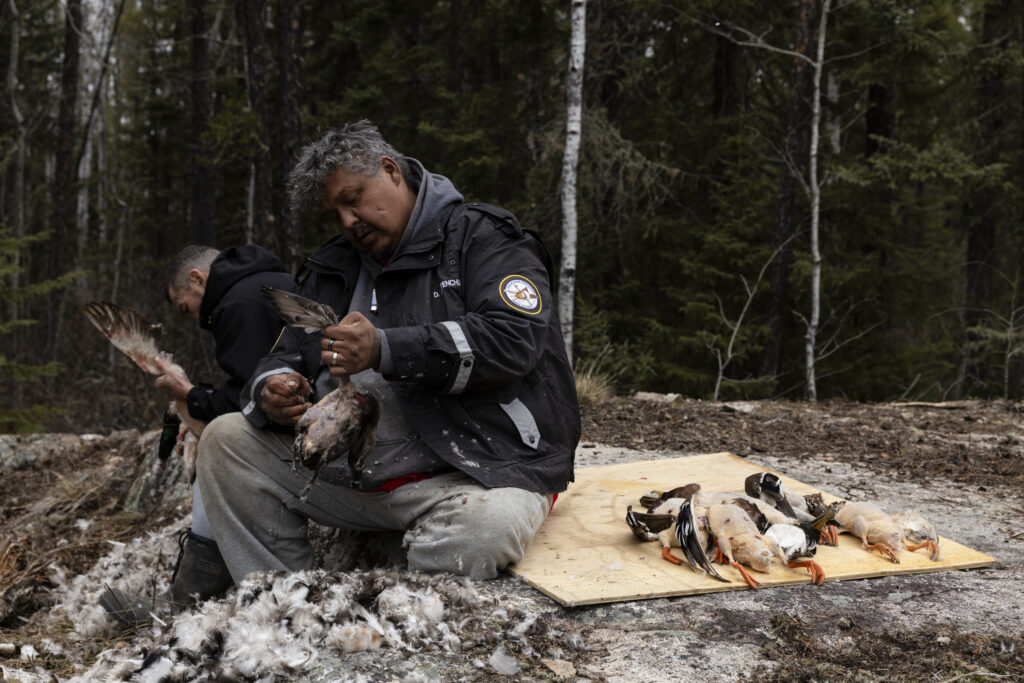
We met at Desmond’s house at 10am and quickly drove to a road that was originally planned as an all-season route to Poplar River.

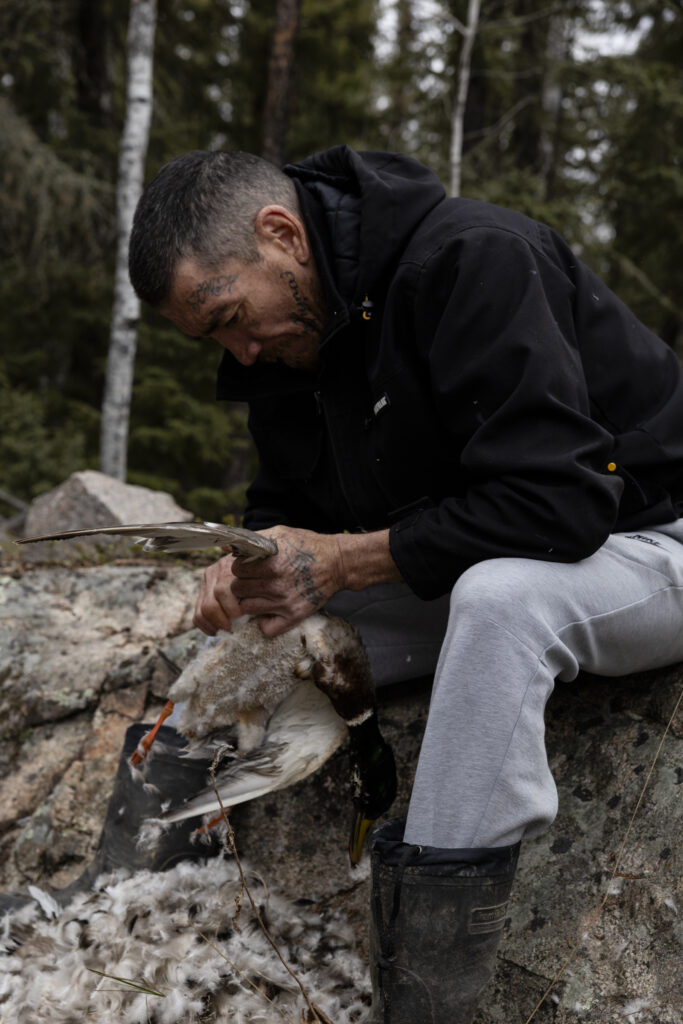
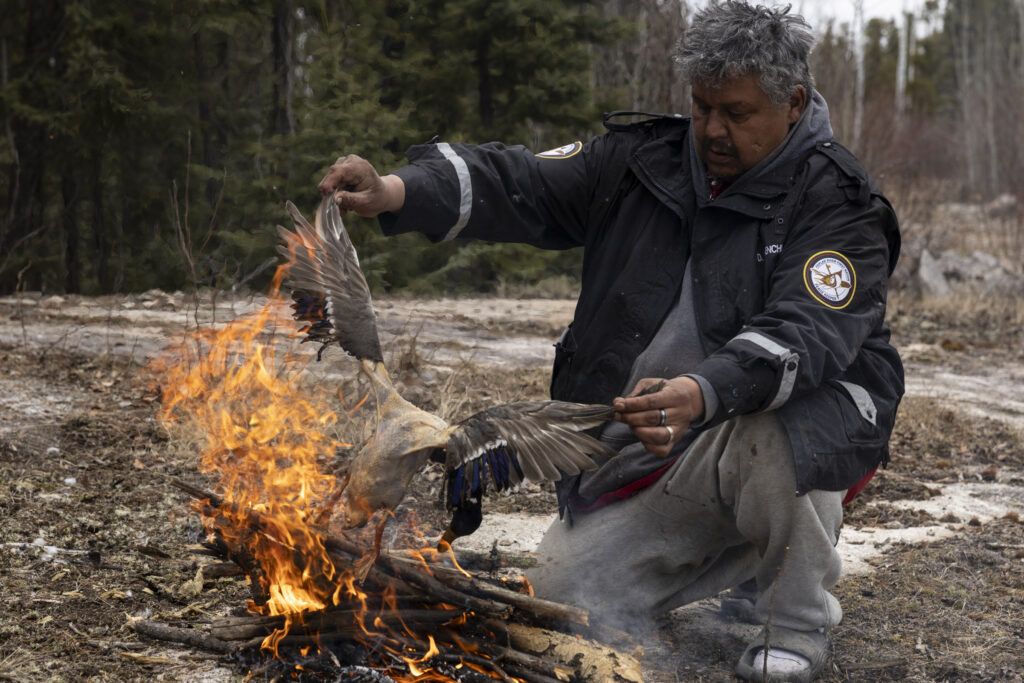
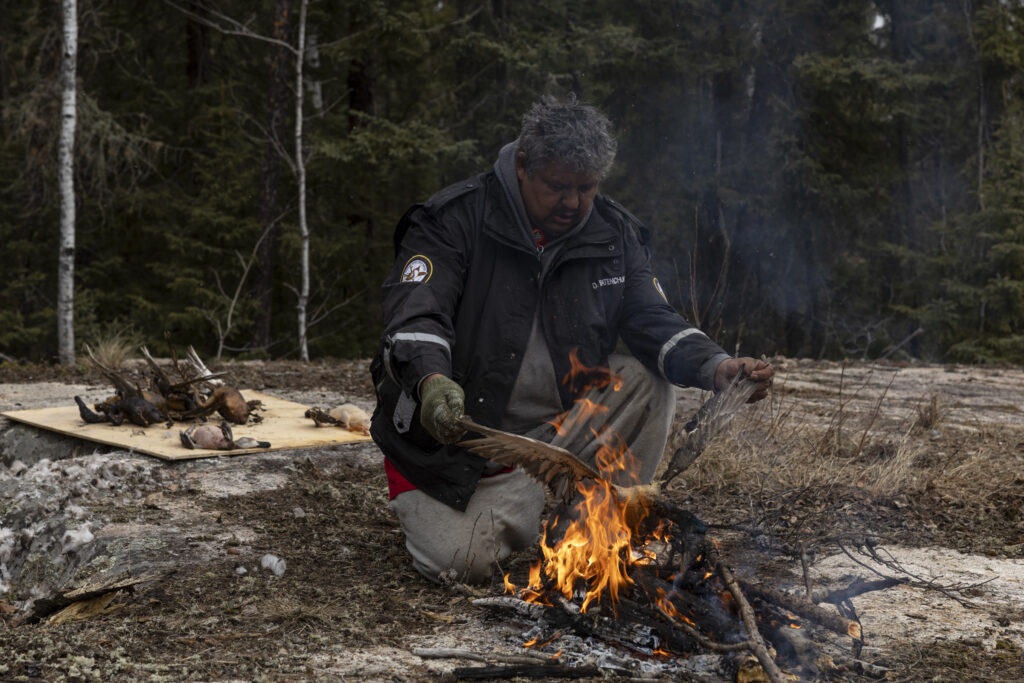
At an open area along the way, we plucked the ducks and seared them over a fire. Redman Douglas came along to help.
Afterward, we returned home to clean the ducks. Desmond’s 14-year-old daughter Jana helped. She has been assisting since she was 6–7 years old, so she is very skilled.
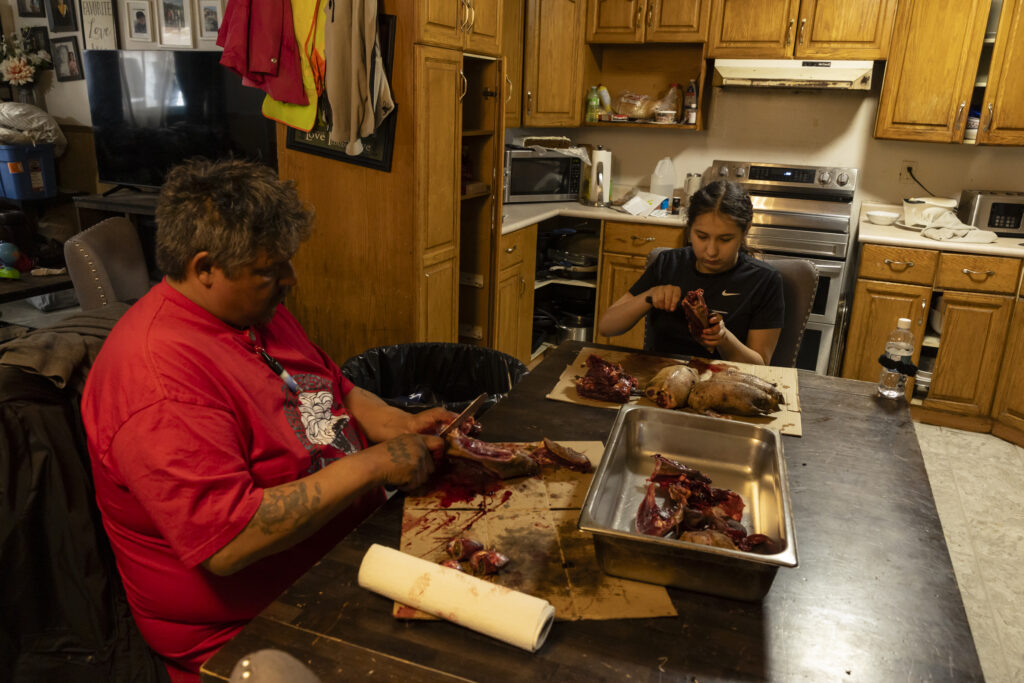
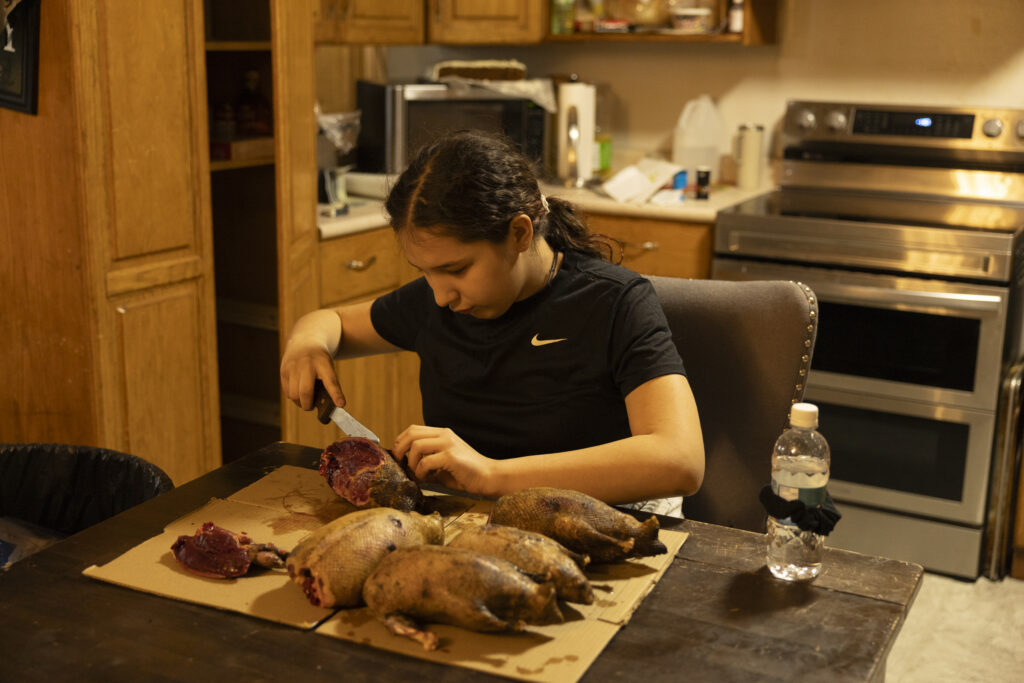
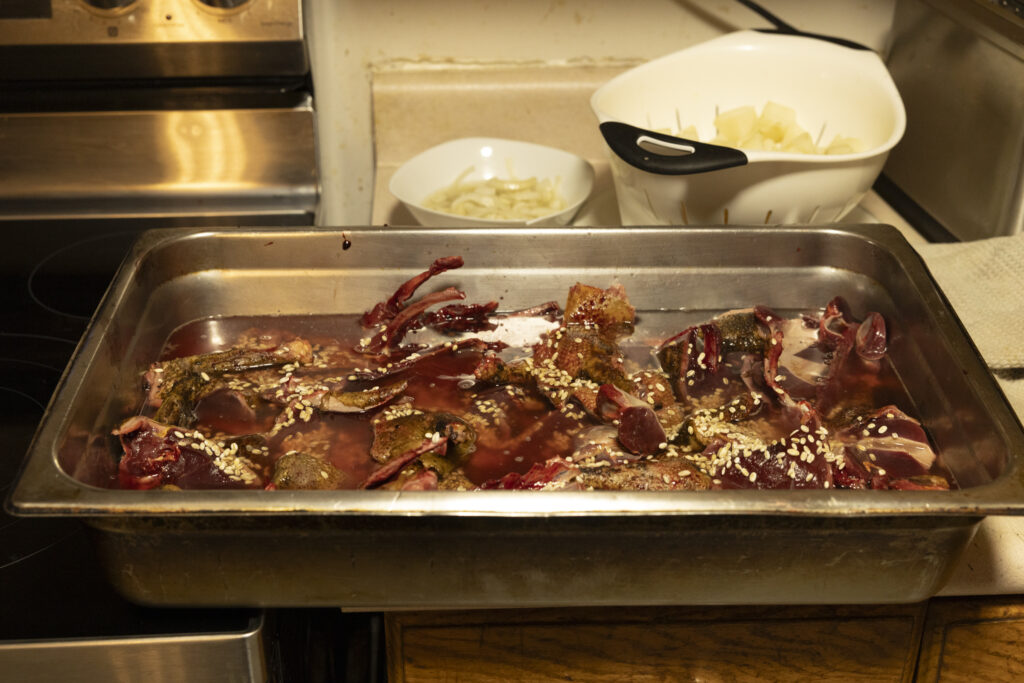
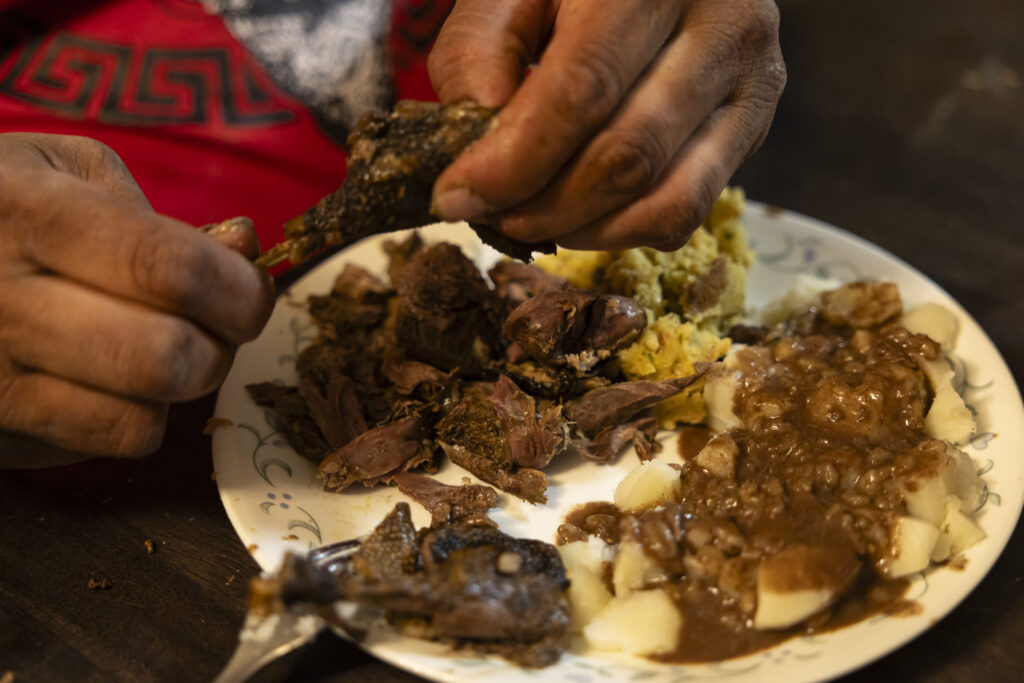
We also separated the gizzards and hearts, washing the gizzards further before cooking them. The ducks were placed in a roasting pan with water and barley, without seasoning, and roasted at 350°F for 3–4 hours.
Afternoon | Fishing Nets

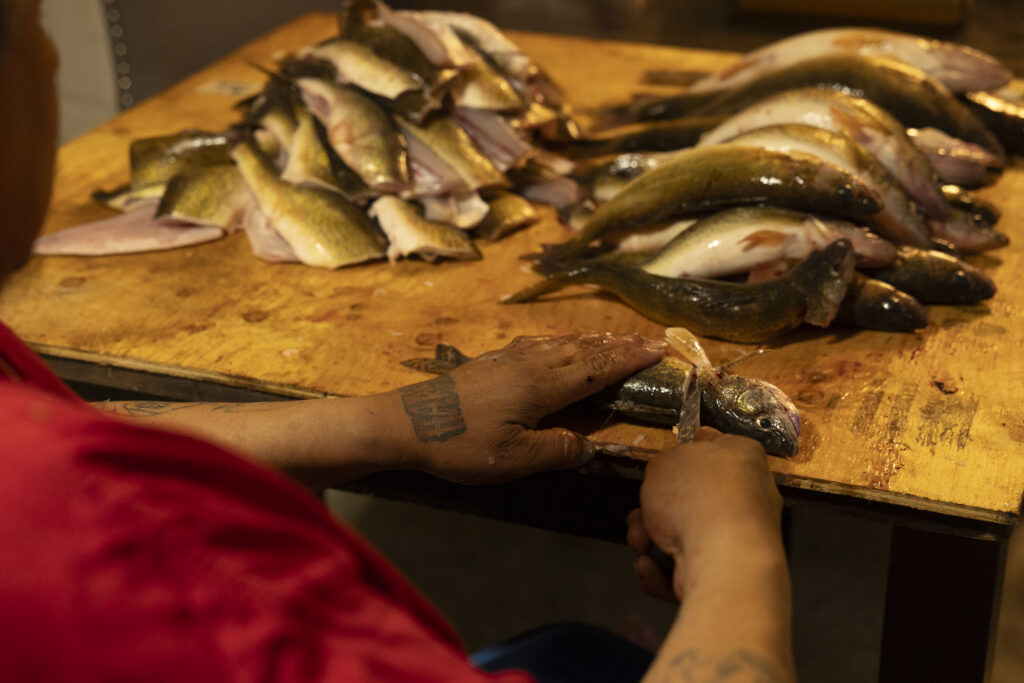
While waiting for the roast, we checked the fishing nets. We set off by boat from beside the house to inspect the nets. At this time of year, pickerel (walleye) also come to spawn, so we caught a lot—a good haul.
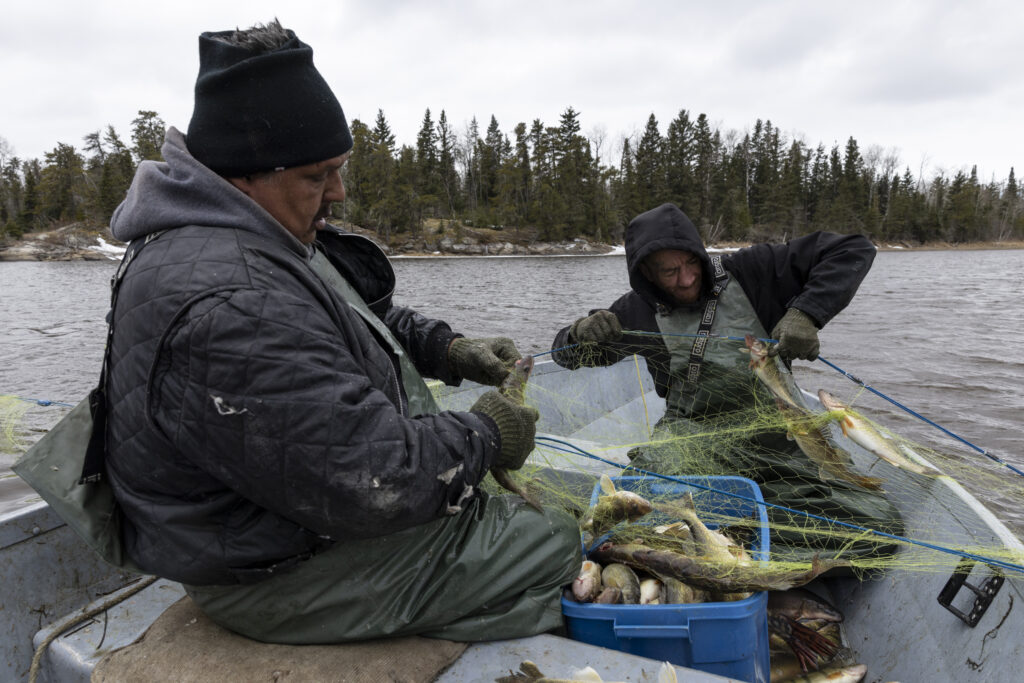
We kept a large pike and many pickerel, and counting the fish at the bottom of the boat, we filled four tubs.
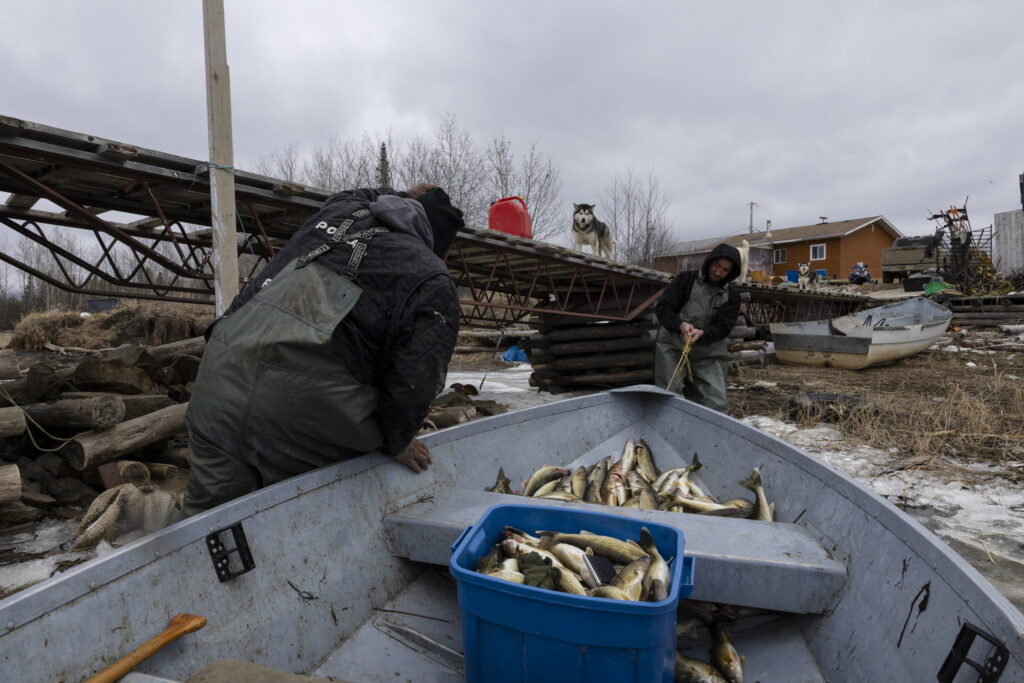
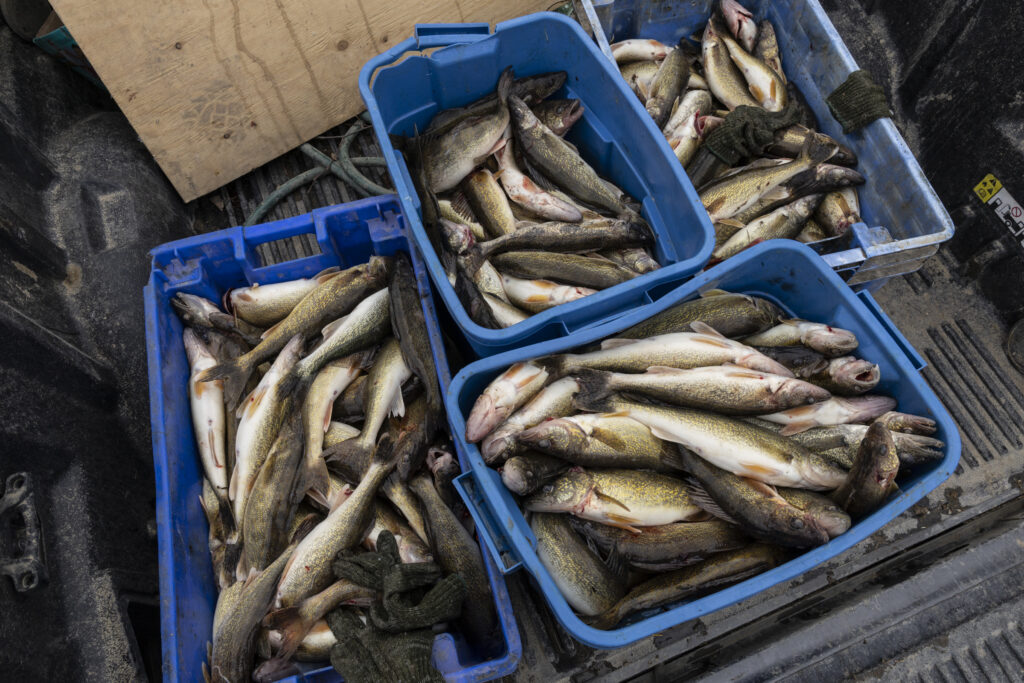
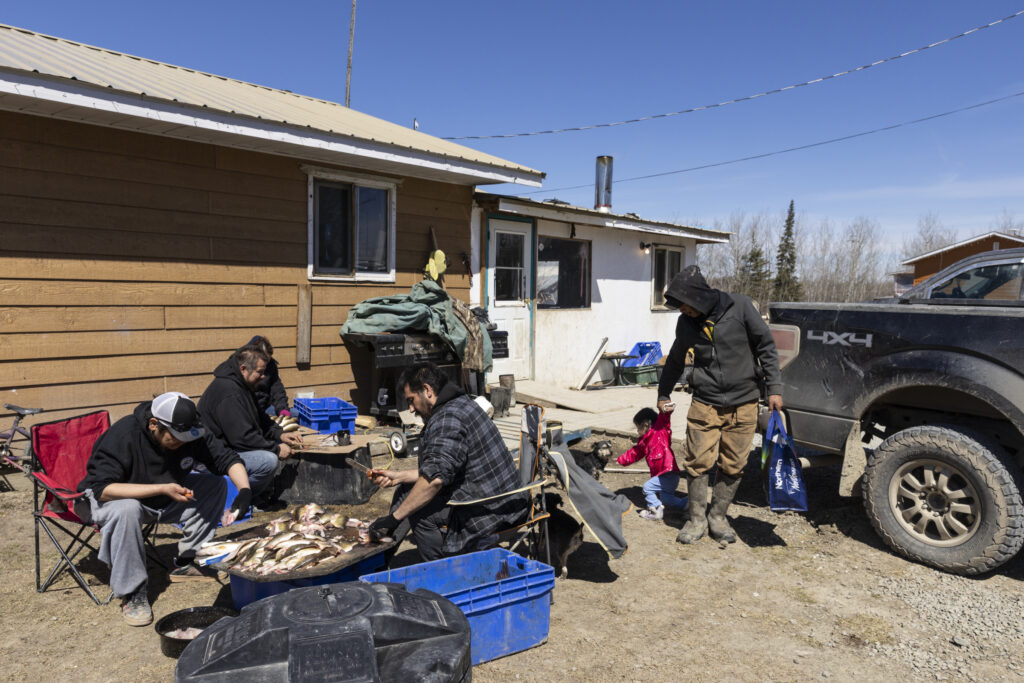
We started cleaning the fish immediately.
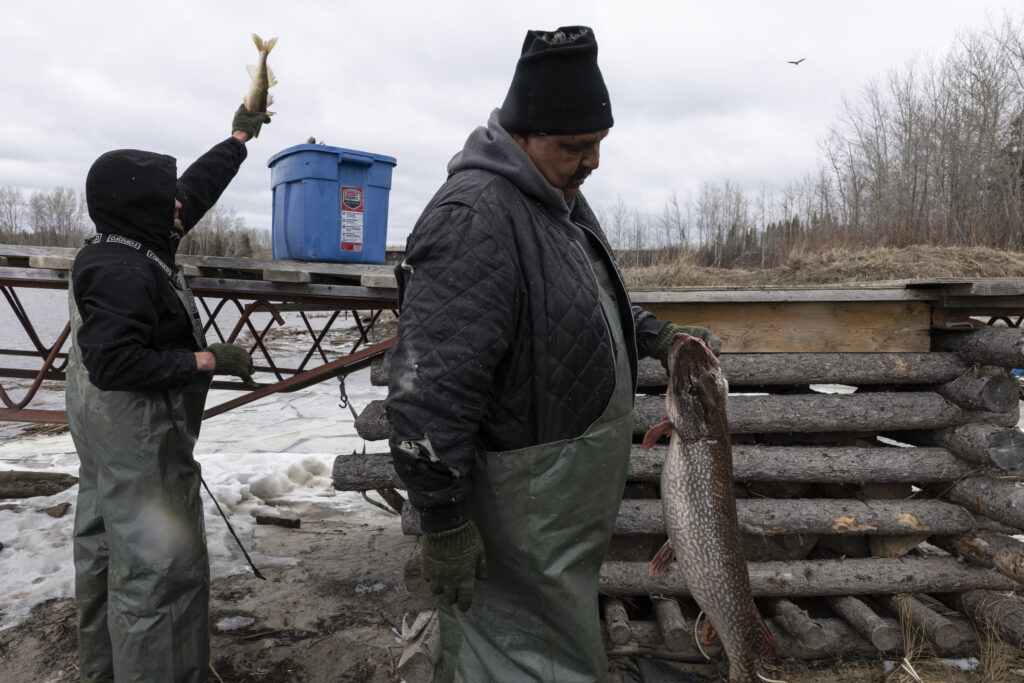
Redman helped, and later Desmond’s daughter-in-law Heavenly and his wife Harmony joined us, so we divided the work. Processing fish is very much a community effort, with everyone helping wherever they can. Working together like this is simply part of daily life here. Friends and neighbours came to collect fish as well, reflecting a wonderful spirit of sharing.
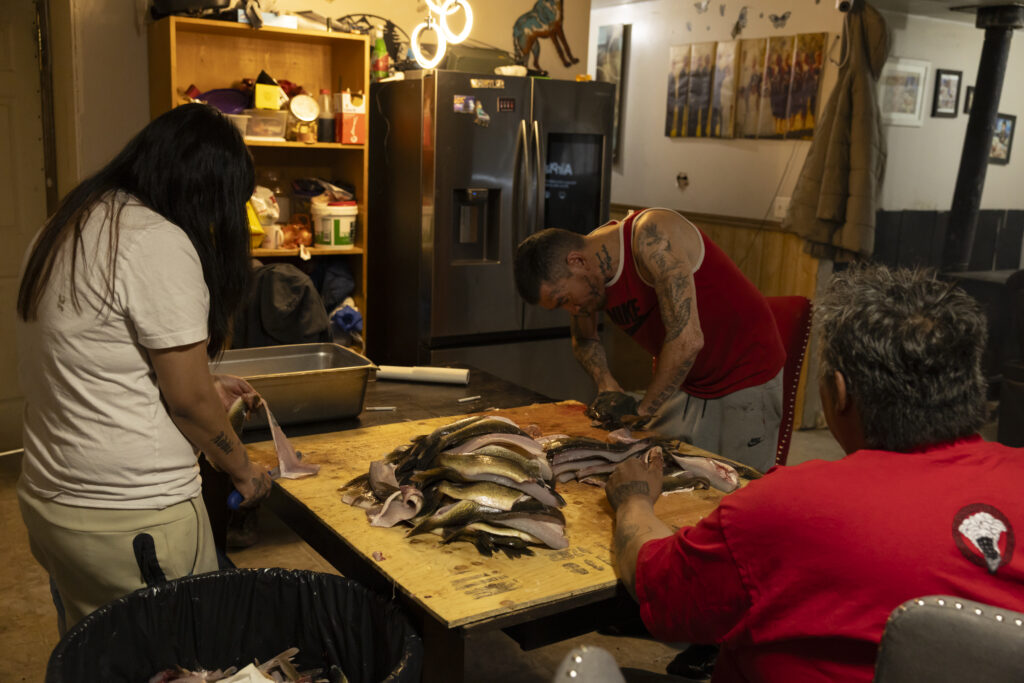
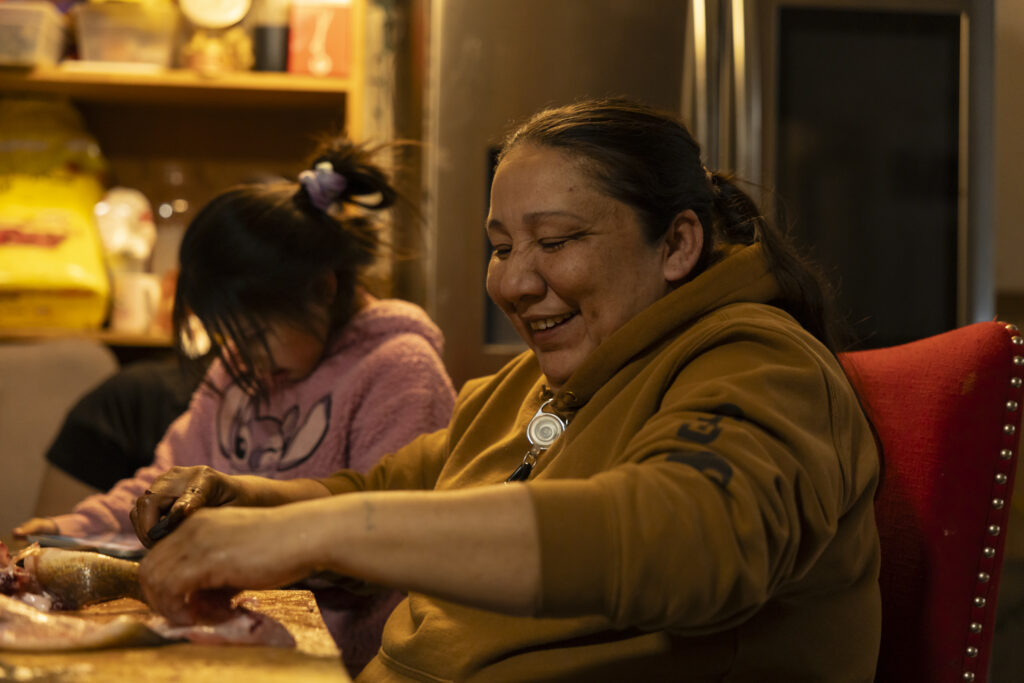
Desmond has lived a life dedicated to fishing and hunting.
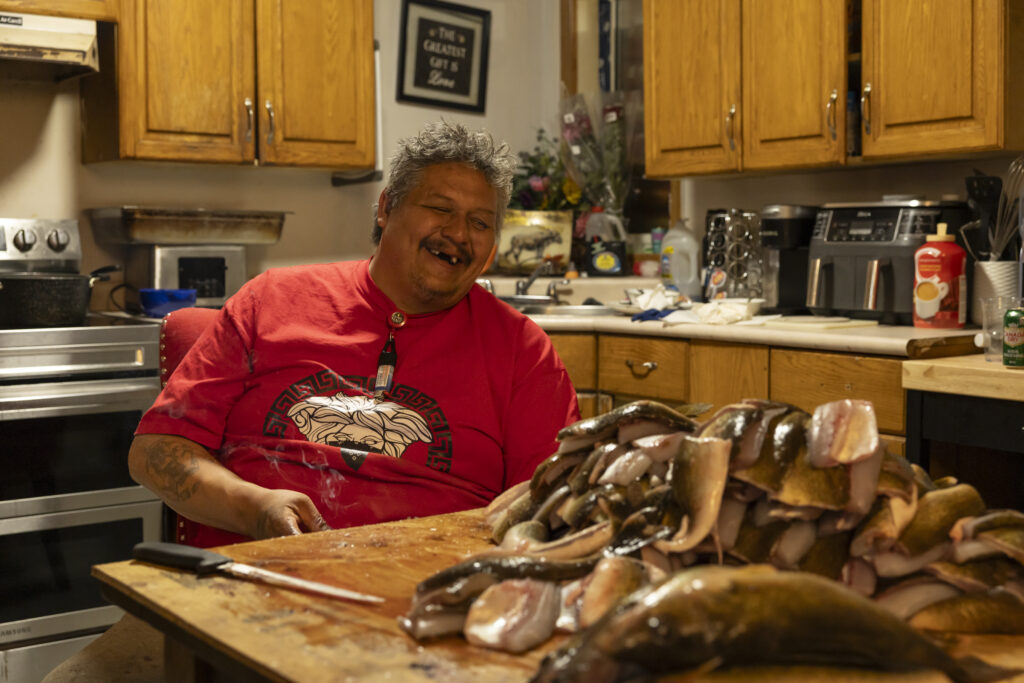
Born in 1980 at Big Black River, he worked hard with his mother growing up. In his childhood, there was no electricity or refrigerator, he told. After establishing a fishing base in Poplar River, he moved there. He often went trapping with Hubert Hudson (brother-in-law). With a basic supply of food, they would spend about a month in the woods, sourcing all other food locally. He ate beaver and caught rabbits. Desmond married Harmony in 2004, and they have six children. He is now 46 years old.

Evening | Roast Duck
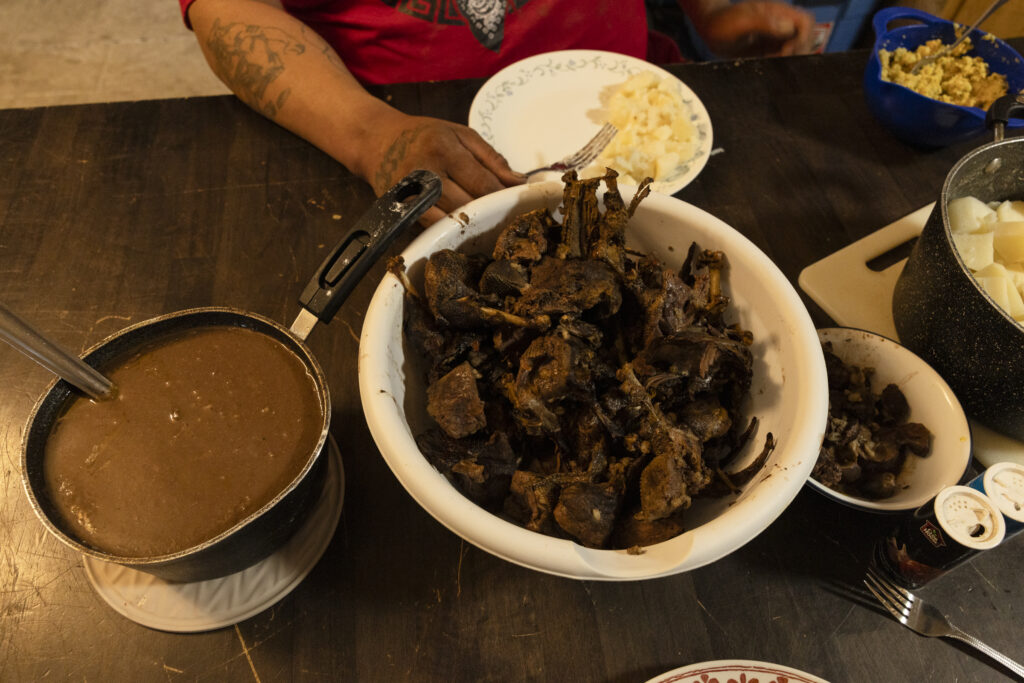
The roast duck was ready, and Desmond’s grandson Axel (6 years old) loved it.
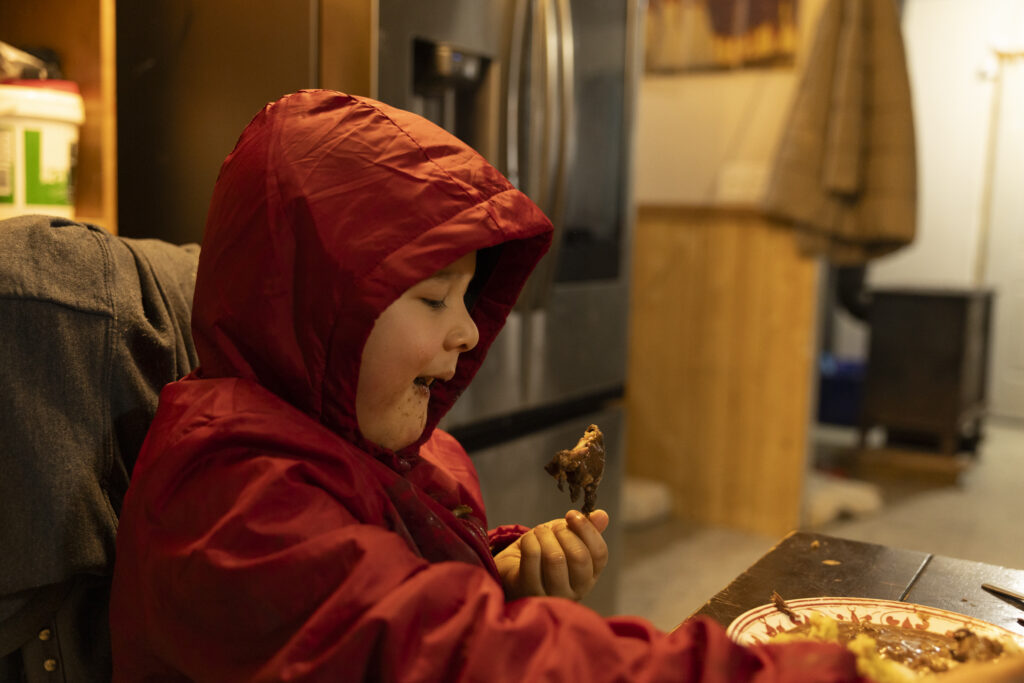
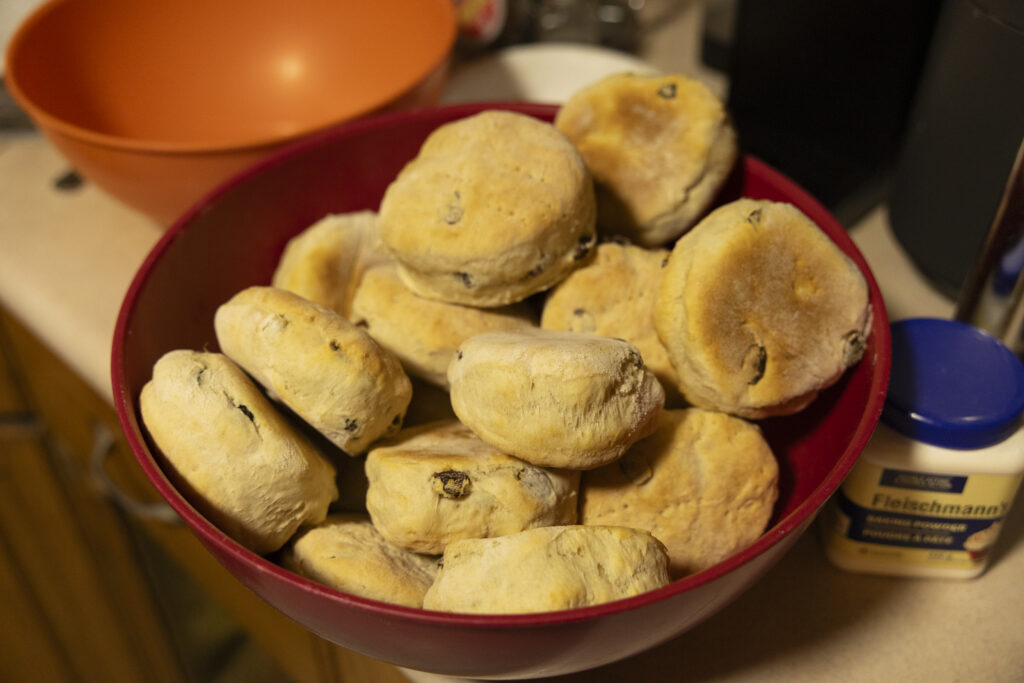
I enjoyed it too, with potatoes, gravy, and stuffing Desmond made as a side. It’s truly amazing to have such delicious, natural food sourced right next to your home.
5. Thursday

Morning | Snare Fishing

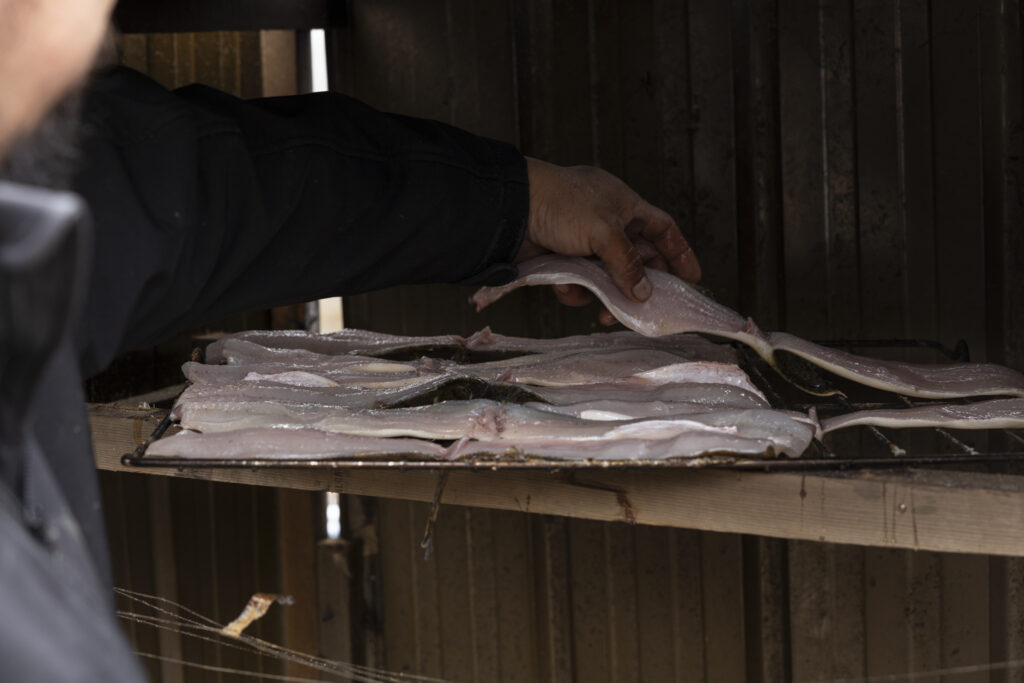
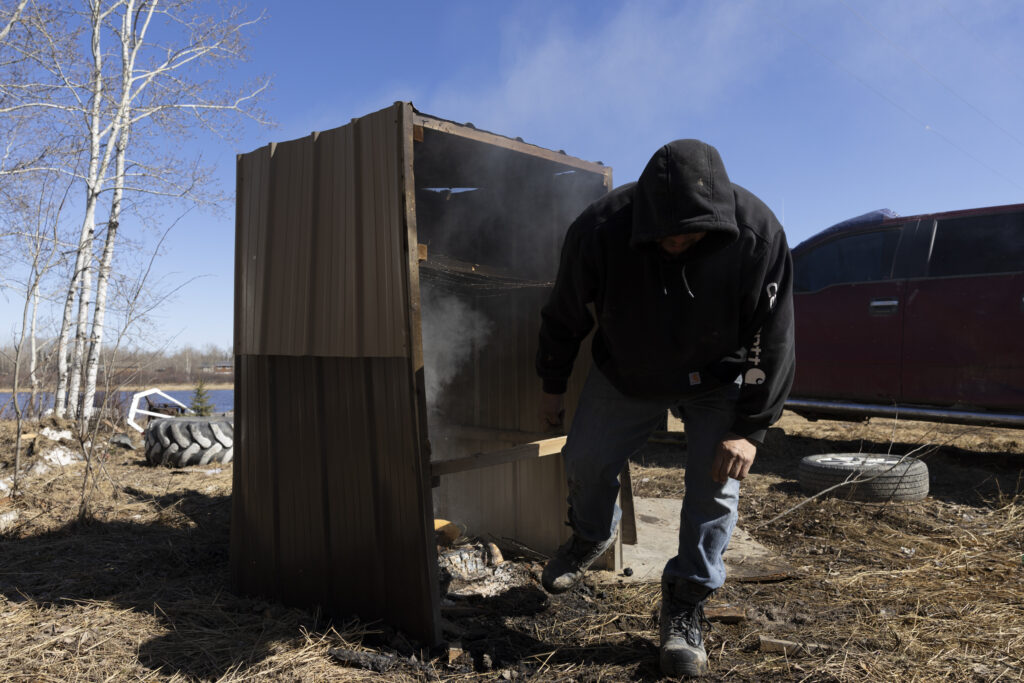
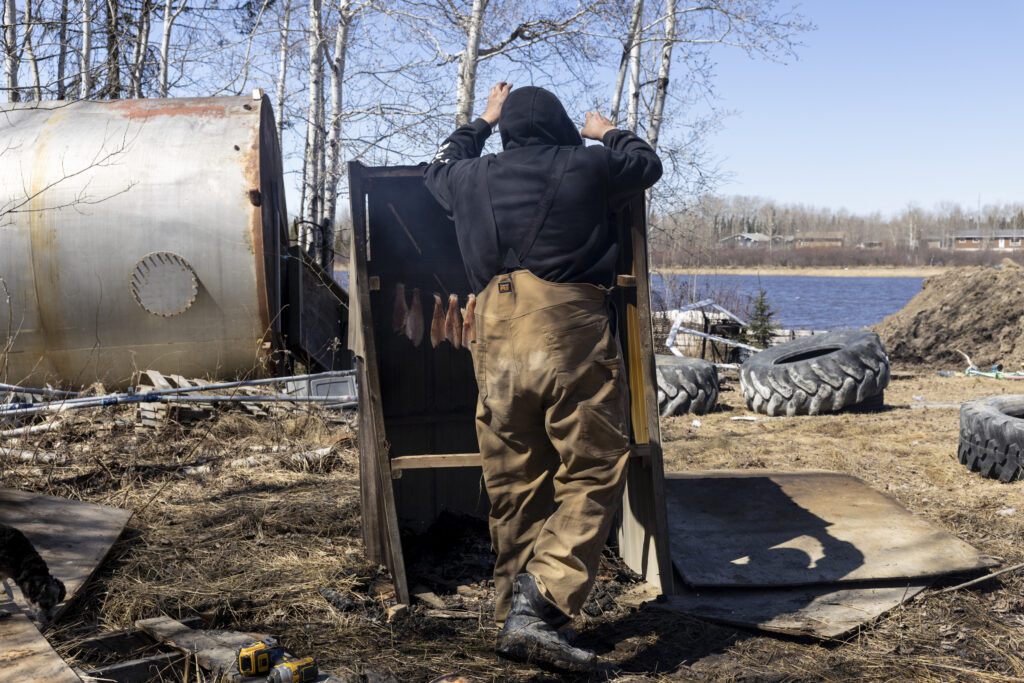
I went to Desmond’s house around 10am and his neighbor Perro gave me a slice of smoked walleye. It usually takes 5–6 hours to smoke. I had tried smoked whitefish before, but this was my first time tasting walleye, and it was very good. Perro had also started smoking a sucker that had been brined overnight. It is thick, so it takes more time to dry… maybe around 24 hours.
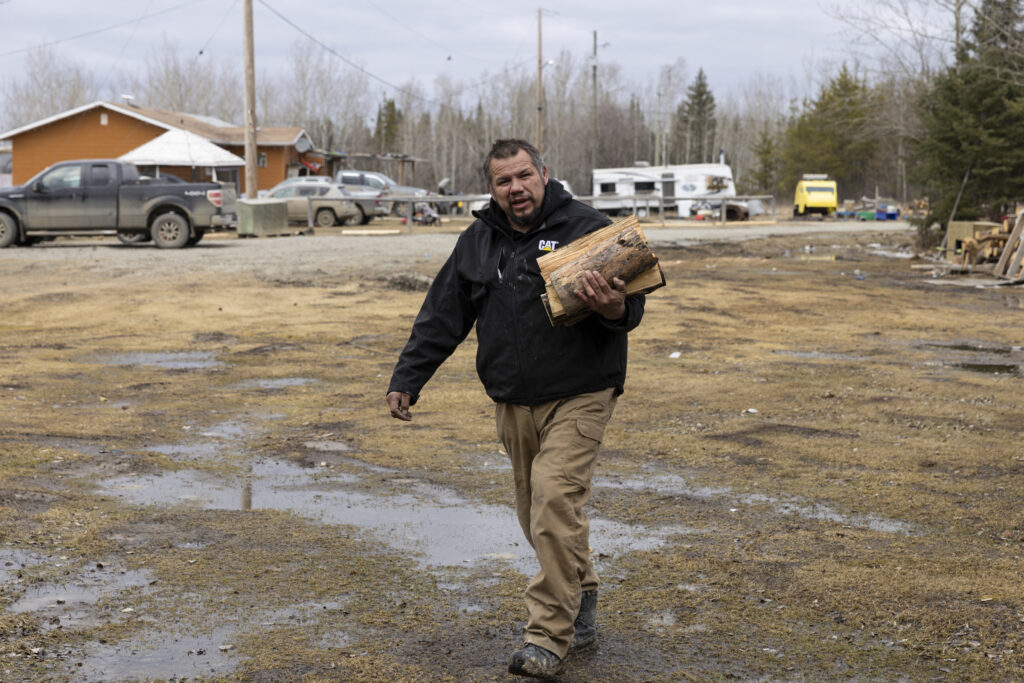
Desmond came home, and we headed to the rapids together. In the slower, swirling pools, we could see fish—northern pike and suckers.
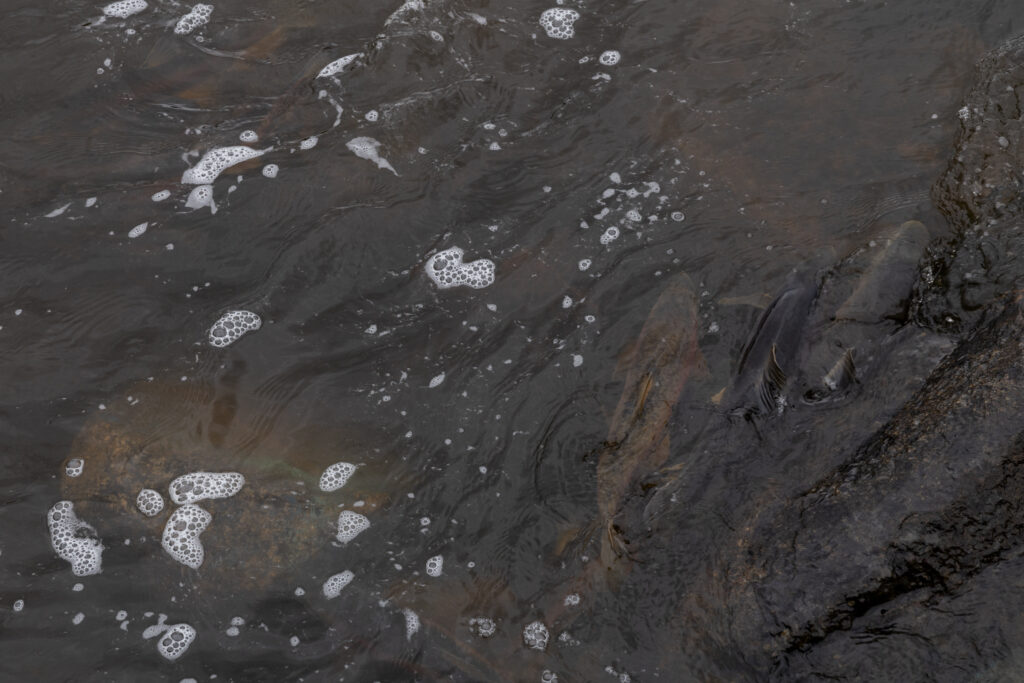
According to Desmond, walleye should also be spawning upstream, but they were probably gathered in another part of the falls where the current was faster. Desmond tried to catch one by hand, but he couldn’t catch any.
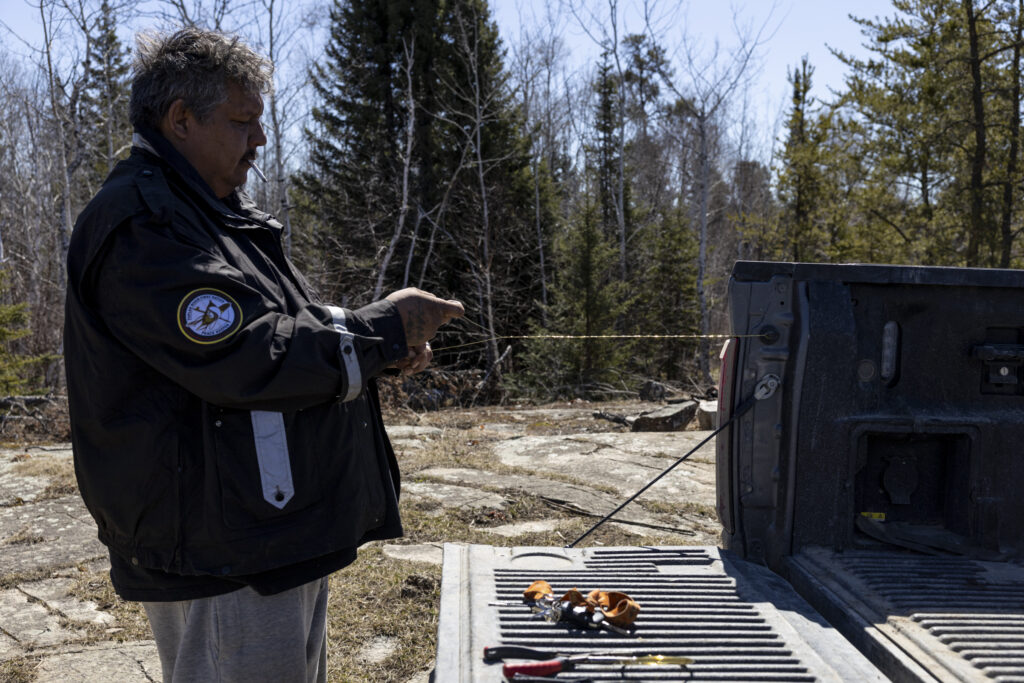
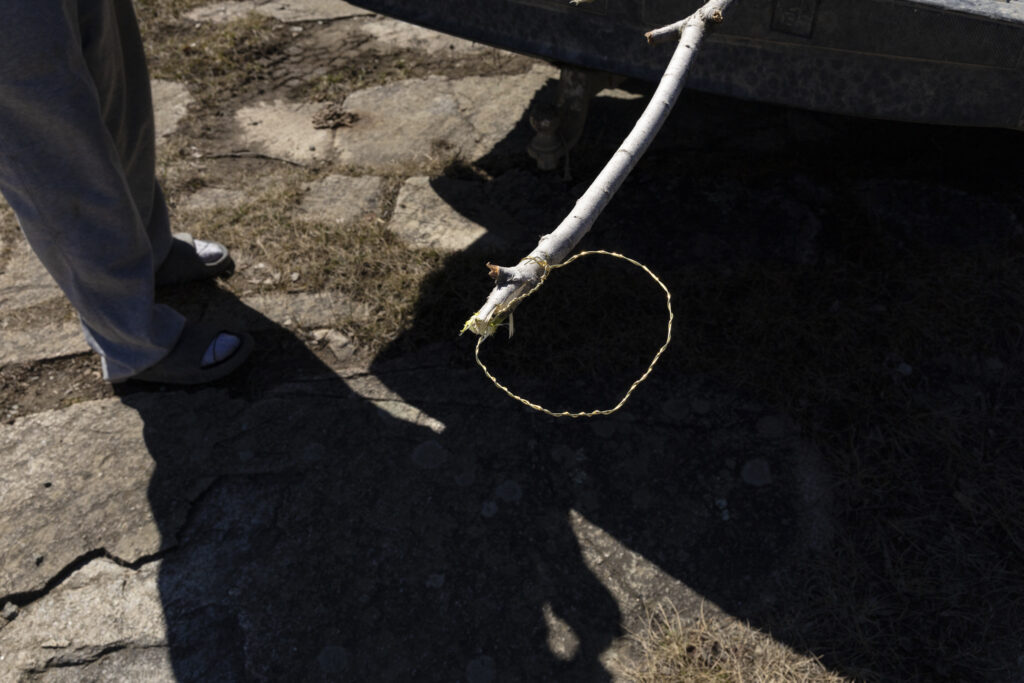
Back in town, he bought a rabbit snare, which is a 20-gauge, 0.9 mm × 6.4 m golden wire. He made it into a loop and attached it to a 2.5 m aspen stick. Desmond said the last time he did this was around six years ago—just for fun.
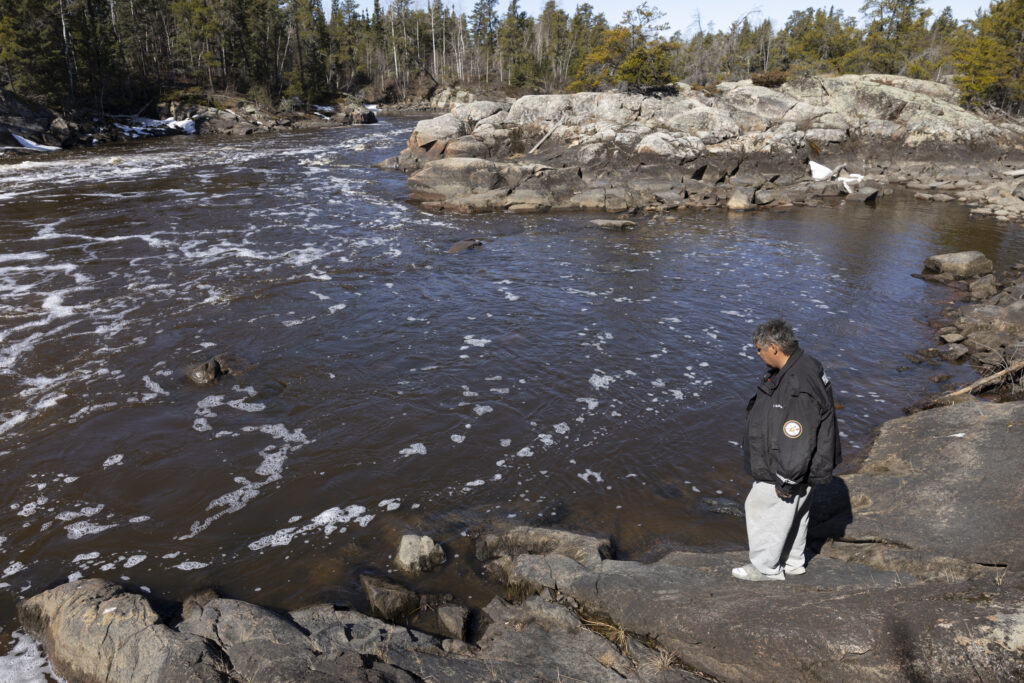
Standing on a rock near the water, Desmond focused intently, like a hunter. At one point, he looked back, moved a stick quickly, and caught an impressively large pike! It was so fast!
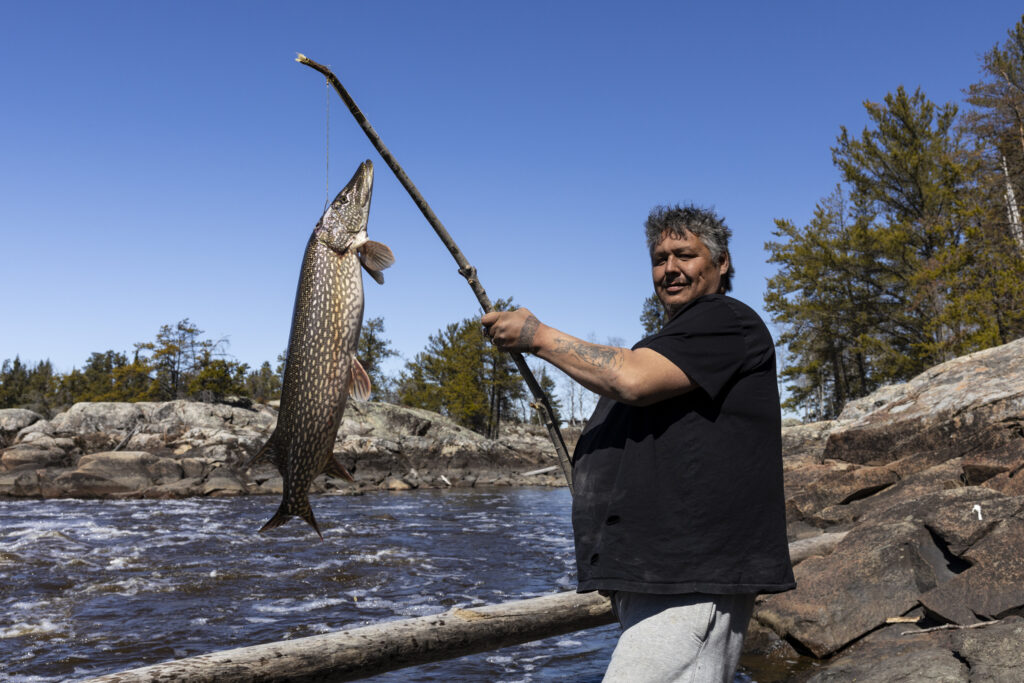
He caught and released several more pike and suckers. It was amazing to see that he could catch fish without a hook or line. Desmond said you can use the same snare system to catch grouse.

When we returned home, Perro was cleaning the fish caught in the net. Apparently, he had caught about four tubs, and many people came by to get a share.
6. Friday

Morning | (Late) Eddie Hudson
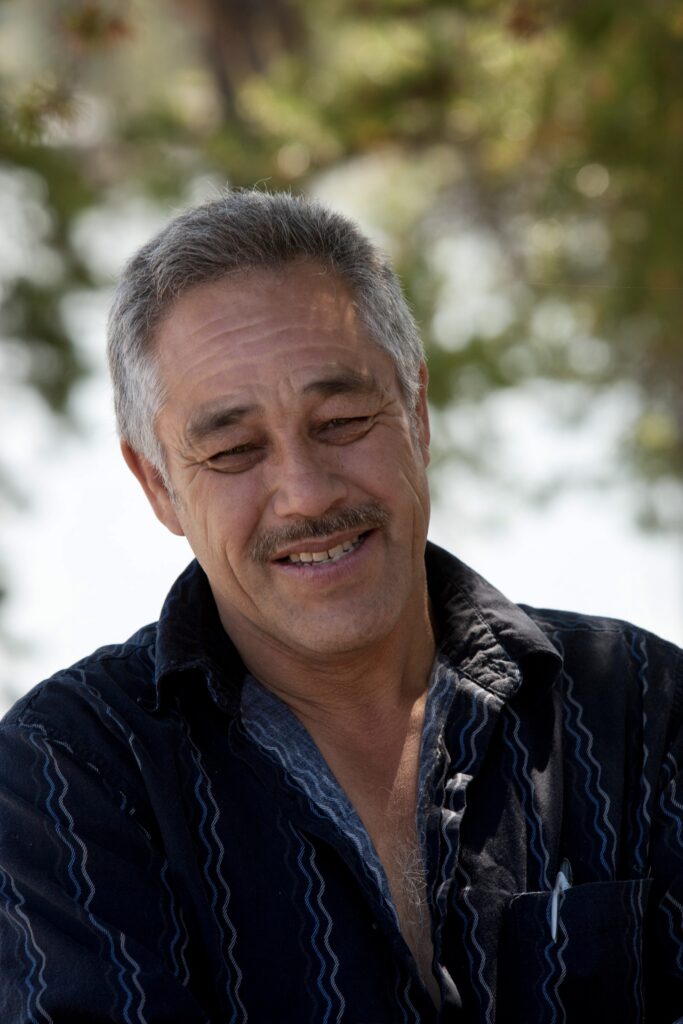
Eddie Hudson’s funeral took place. Many family members had gathered, and I heard that numerous relatives had arrived in Poplar River the day before on six flights. A few days earlier, Norway had offered drumming and songs to help send Eddie’s spirit onward. I heard the service was quite lively. It was held at a Pentecostal church. The store and schools were closed.

Eddie’s passing made me reflect on the many years of friendship and connection that I have developed since my first visit to the Weaver Lake Healing Camp in 2010. It was there that I first met Ray, Sophia, Norway, and many others from the community, including Eddie.

I also remember watching the 2018 meeting in Bahrain live online when Pimachiowin Aki was officially inscribed as a UNESCO World Heritage Site.
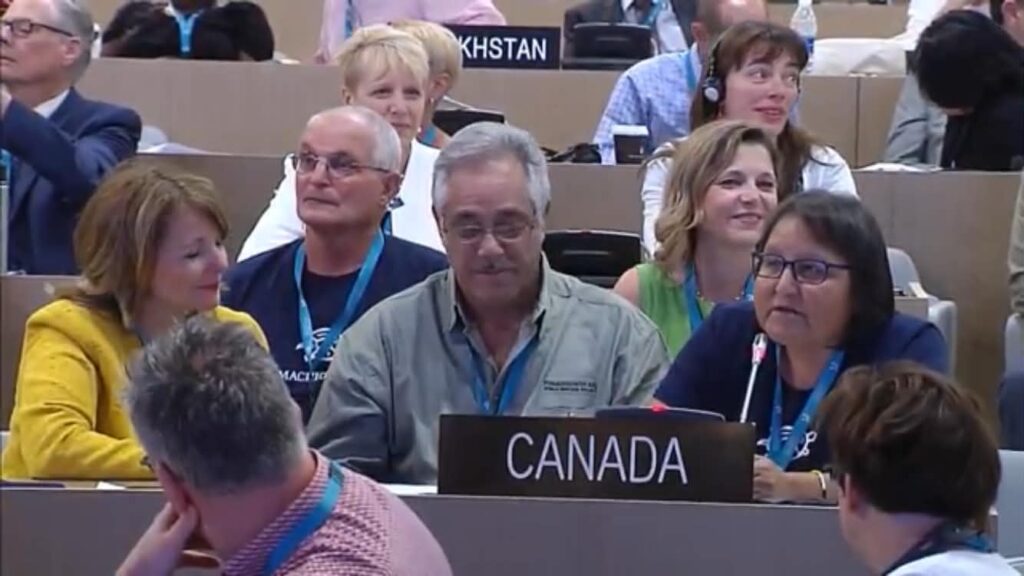

I was deeply moved when Eddie and Sophia hugged each other at that moment. The two of them made enormous contributions to the protection of this land. Rest in peace, Eddie.

Evening | Family Dinner

Norway had invited Mumilaaq and me for dinner, saying that his wife Cassandra’s meatloaf was the best in Poplar River. The meatloaf truly was excellent. Their daughter is there, along with their youngest child, Jake.
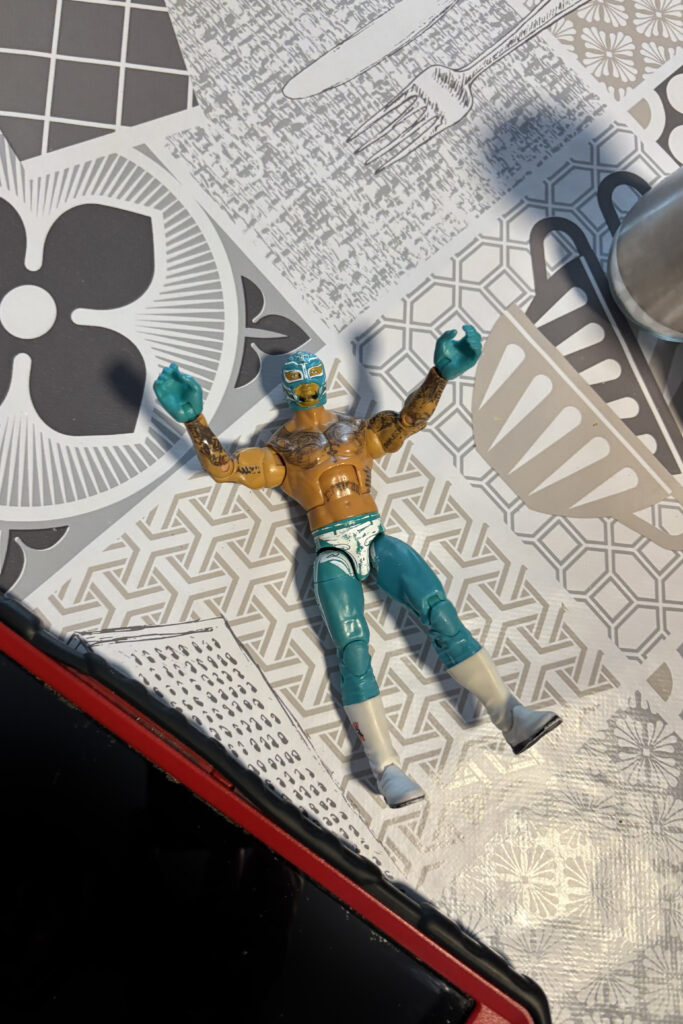
Jake was absorbed in professional wrestling figures handed down from his older brother. When I was little, professional wrestling was hugely popular in Japan too, but I was interested to see that professional wrestling continues to be enjoyed in Poplar River today.

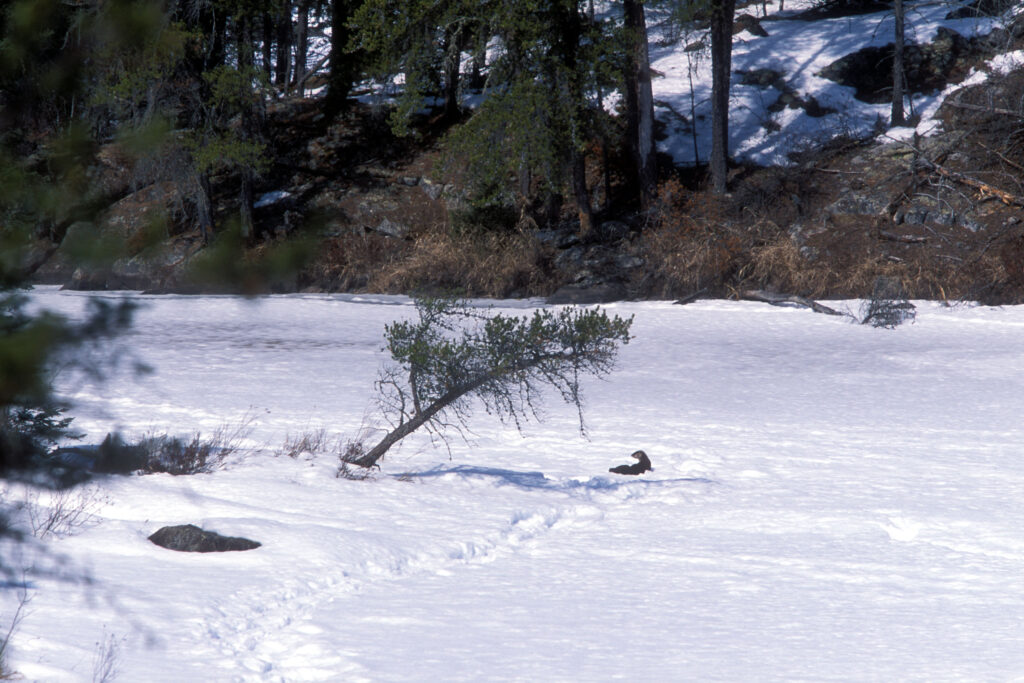
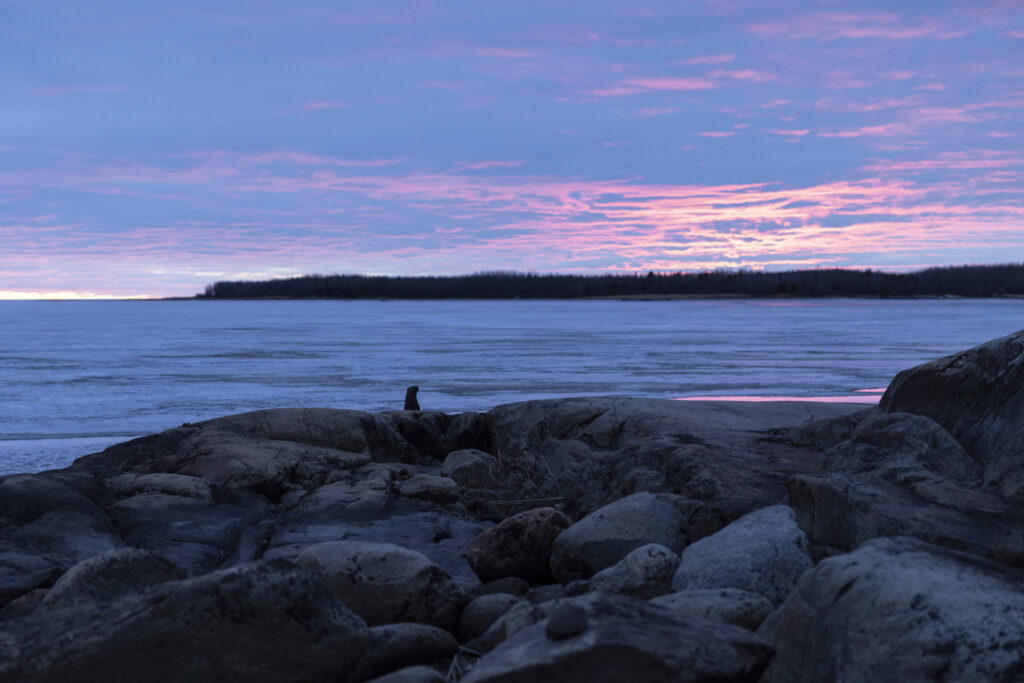
After dinner, I walked along the beach with Mumilaaq. As distant clouds glowed with the colors of the sunset, an otter suddenly appeared!
7. Saturday

Afternoon | Around the Community

There was a Mother’s Day gathering starting at 1pm. When I went to Old School, Harmony, Desmond’s wife, and several familiar faces were preparing food. They were grilling a large amount of marinated beef steak.

I went to the Northern Store to put gas in the truck I had borrowed.
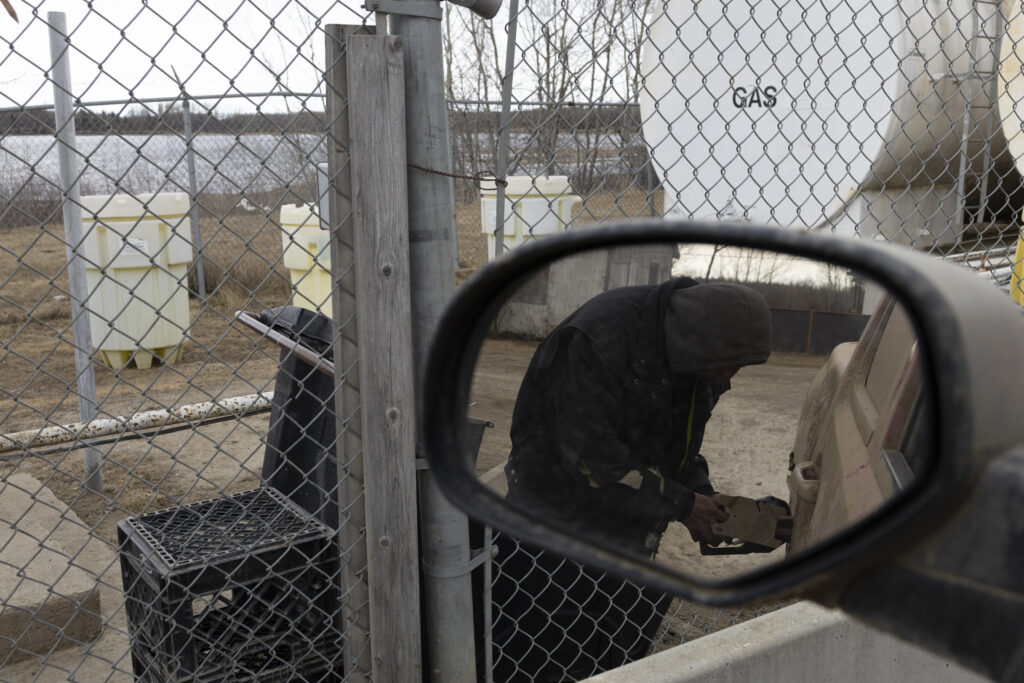
First, I paid at the register, then showed the receipt at the pump outside so they could authorize the fuel. Even 100 dollars only bought about 36 litres of gas.

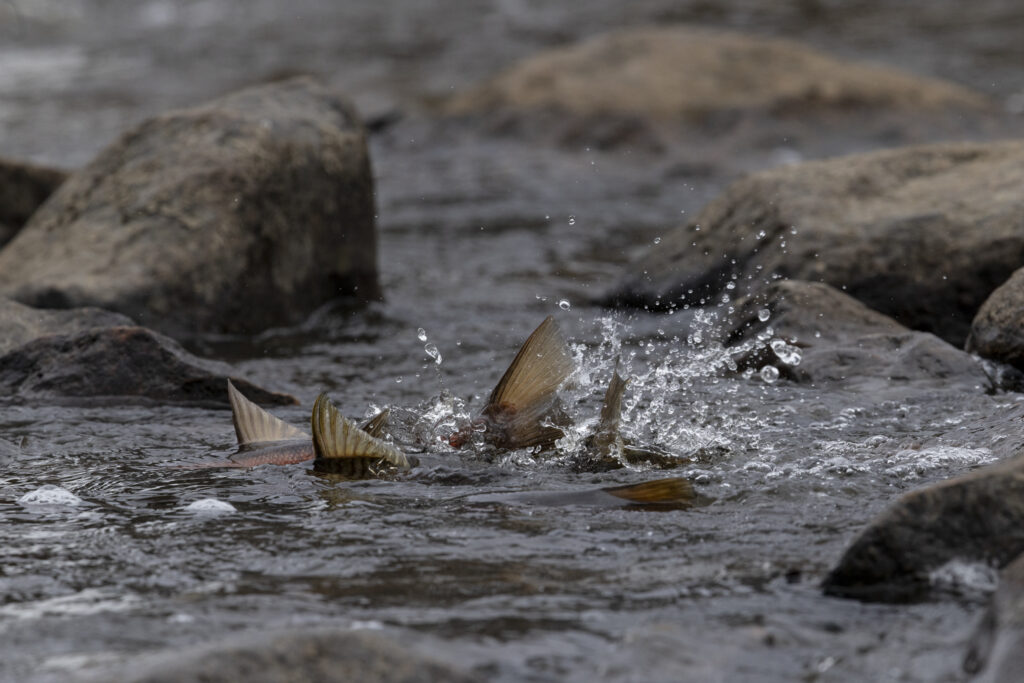
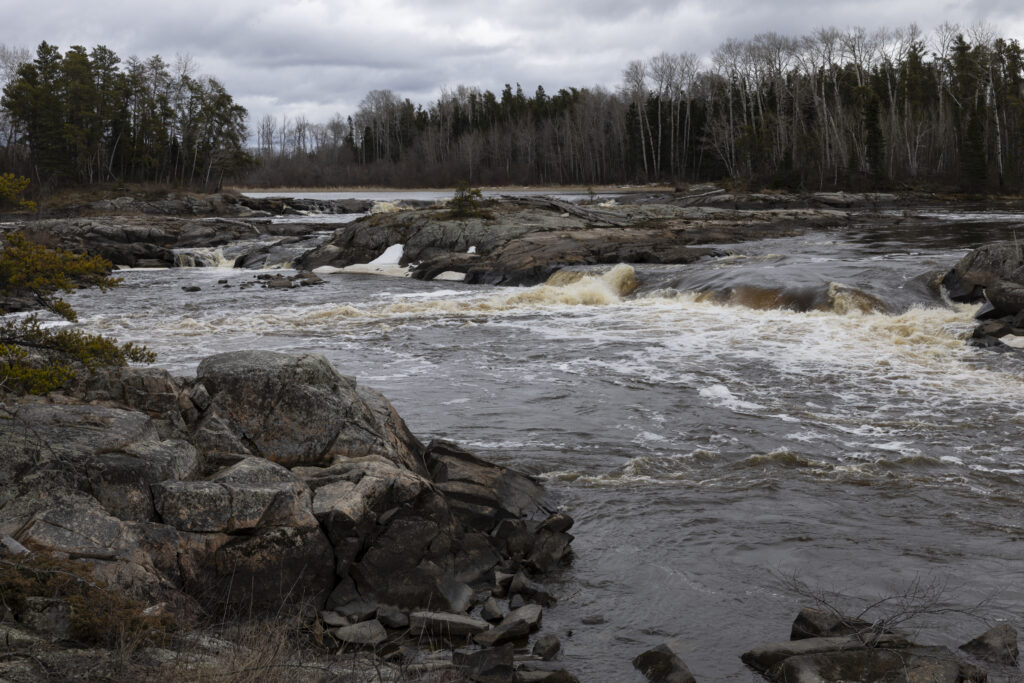
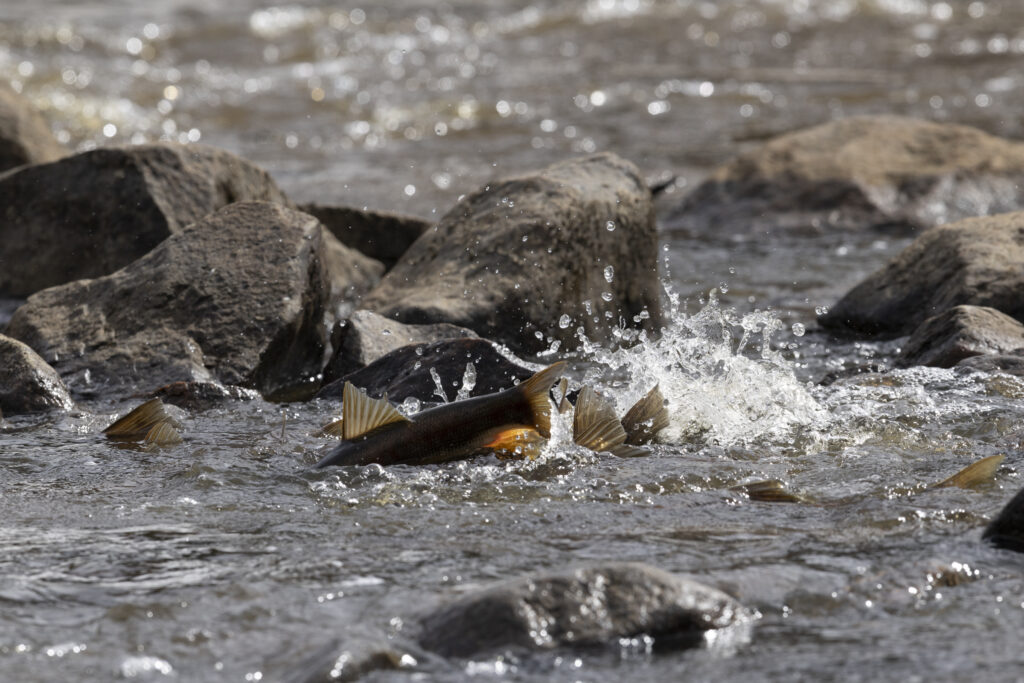
I went to the rapids. It started snowing, and the wind was strong and cold. We could see suckers gathering below the falls. In the shallower water, there were many dorsal fins visible.
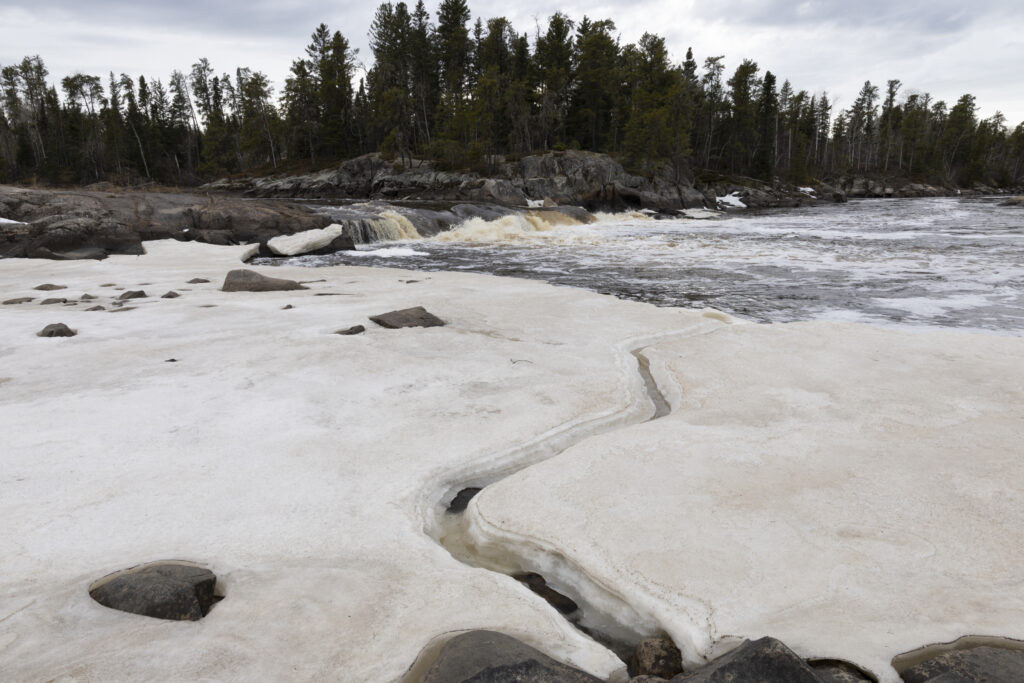
Just a few days earlier, that area had still been covered with ice.
The spawning may have started. I do not know whether it began at that exact moment or had already started somewhat earlier. New groups kept arriving one after another to spawn.
Evening | Dinner

In the evening, I had dinner with Ray and Sophia. Ray grilled steelhead for dinner, with corn and wild rice on the side. The wild rice was mixed with raisins. It was delicious.
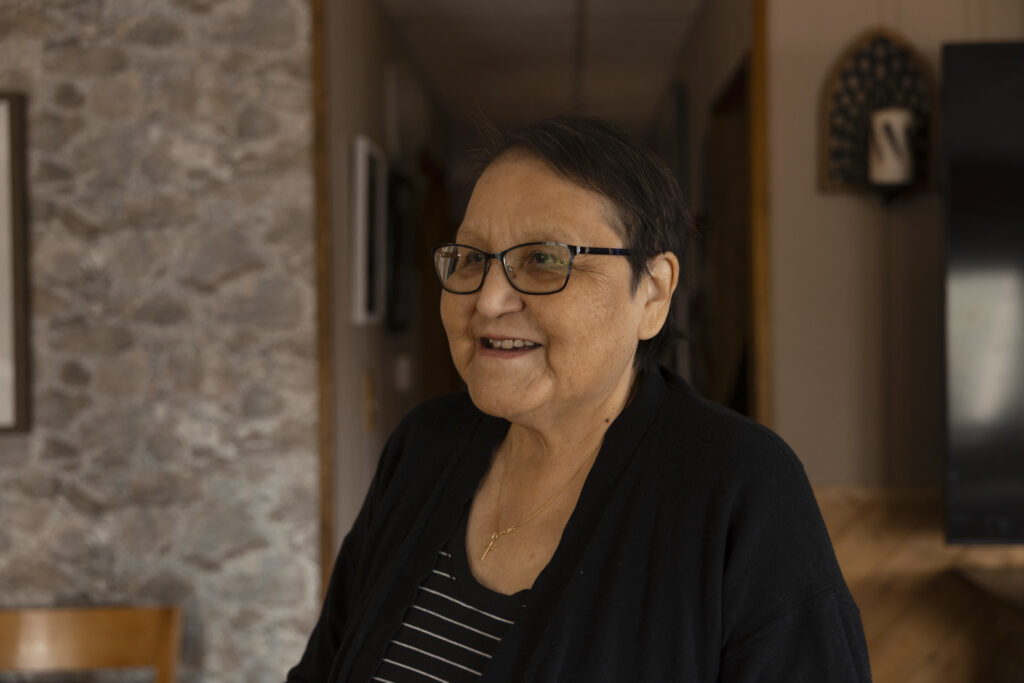
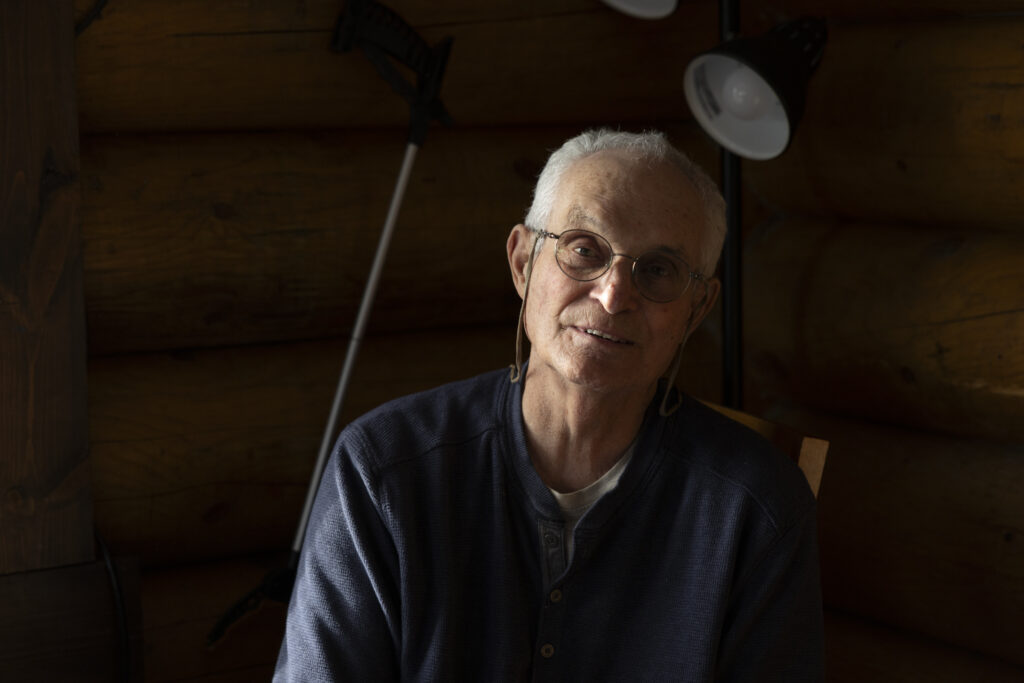
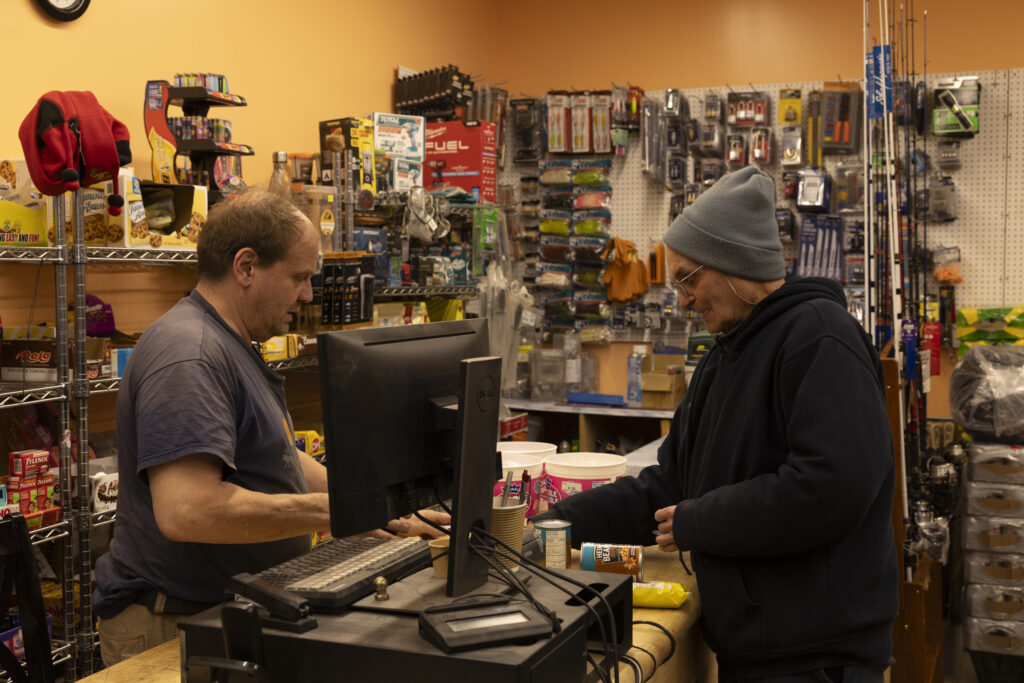
After dinner, they showed me where the community grows vegetables. On the way there, they also showed me another store in town. It’s main branch is in Berens River, and this was their second location.

The person working there was from Finland and had only arrived this January. The shelves were not very full yet. Once the lake melts, supplies can be brought in by barge.
Sunday | Departure

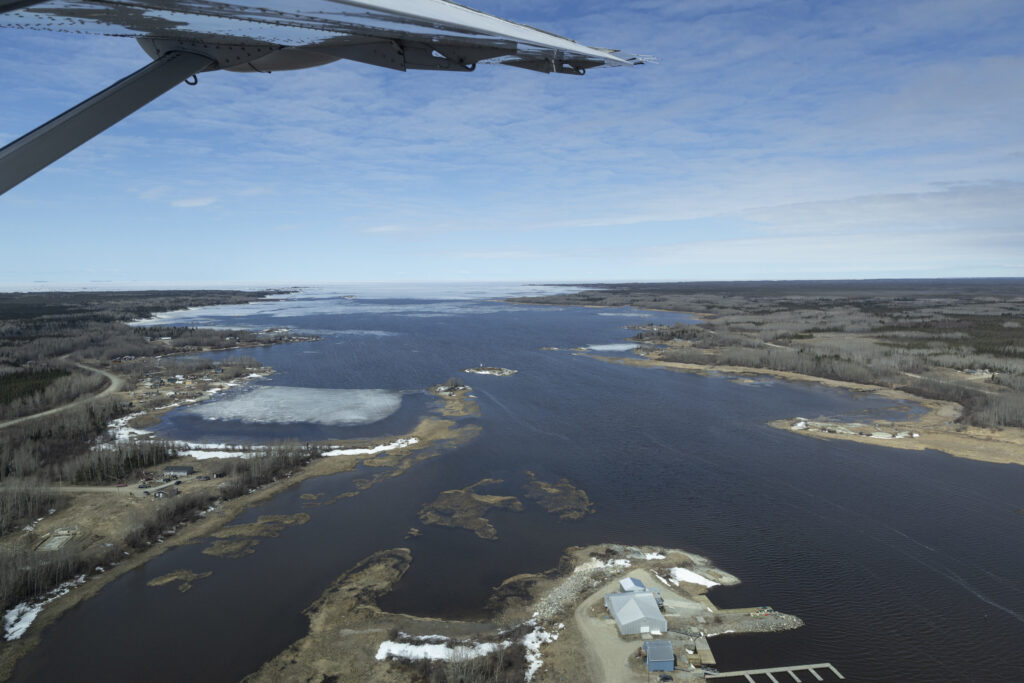
The past days have been full of experiences and truly fulfilling. I landed at St. Andrews at 1:15pm. It is Mother’s Day.
Photos: © Ōtake Hidehiro

Up Next for Hide

Hide’s work will be featured in an upcoming exhibition in Toyama, Japan. Learn more here:
Camera Museum Exhibition Page

Hide will be giving several talks throughout Japan this summer and fall, sharing stories from his travels and photography. Follow: instagram.com/hidehirootake
Foundations – Is Our Past Our Future?

September 12, 2025

By Doug Gilmore

Recently I found myself reflecting on the early days of Pimachiowin Aki. Many fond memories quickly floated to the surface. At the time my role was Park Superintendent of Woodland Caribou Provincial Park, located in Northwest Ontario near the town of Red Lake. Woodland Caribou Park is part of the Pimachiowin Aki World Heritage Site. I recall that I was very excited to take part in the Pimachiowin Aki World Heritage Site process, although at the outset the site had yet to receive that wonderfully appropriate name.

It was in my role as park superintendent only a few years earlier that I had initiated and led a planning process for Woodland Caribou Park. That project was one of my first exposures to working closely with First Nation Communities. To expand on the previous sentence, I must add that this exposure cemented my understanding and belief that working together with Indigenous people is extremely beneficial. Looking back, coming from my Wemtigoshi background, I can easily admit at the outset to looking at things from one perspective, but keeping an open mind to all possibilities.  It took no time at all to come to the realization that this was the only way forward and that any product which may result from our efforts would be the better for our working closely together.

At an early Pimachiowin Aki meeting, members from each community expressed very clearly what was important for their community. Things like protecting the rock paintings, not to over harvest the animals, acting carefully around areas that act as water filters for the watershed were comments common to most. People spoke about the high levels of unemployment in their communities and the desire that this project could help to alleviate that. It was clearly stated that their traditional lands used to provide a livelihood for their people but this no longer was the case.  Community presentations included the desire from their Elders to “protect traditional lands”.  One individual recalled a comment from a grandparent that “we need to protect our lands” and it came with a warning that “there may be difficulties ahead”. Another spoke about how he was raised by his grandparents. They taught him how to preserve food in the summertime and spoke about how they used the land and how he wanted to keep the teachings of his grandfather. He gave an example where people used dried moss as diapers and that one of the teachings of the moss was to put it back in its place.

Someone much smarter than I at an early meeting summarized all the comments by describing the activities of the people on the land as the cultural foundation of the project. The term Living Landscape was used, reflecting on the strong linkage between the land and the people. Strong linkage? I have come to understand it as an inseparable linkage.

Fascinating… an education in real time.

In the months and years to come the World Heritage process continued to be an educational one, enlightening me on what it meant to grow up in a remote First Nation Community where at one time it was normal or part of everyday life to go out on the land or trapline to perform livelihood pursuits. This once normal activity would slowly or in some cases abruptly change to where it became more and more difficult to access the bush to carry out livelihood activities on a regular basis.

The World Heritage process also included working as a member of parallel planning processes with Little Grand Rapids and Pauingasssi First Nations for the part of their traditional territories that lies in the Province of Ontario. This included many opportunities to visit these communities, meet with elders and community members in workshop and open house events. It also included travelling to Weaver Lake as a guest of Poplar River First Nation to attend a Pimachiowin Aki meeting and workshop there.  
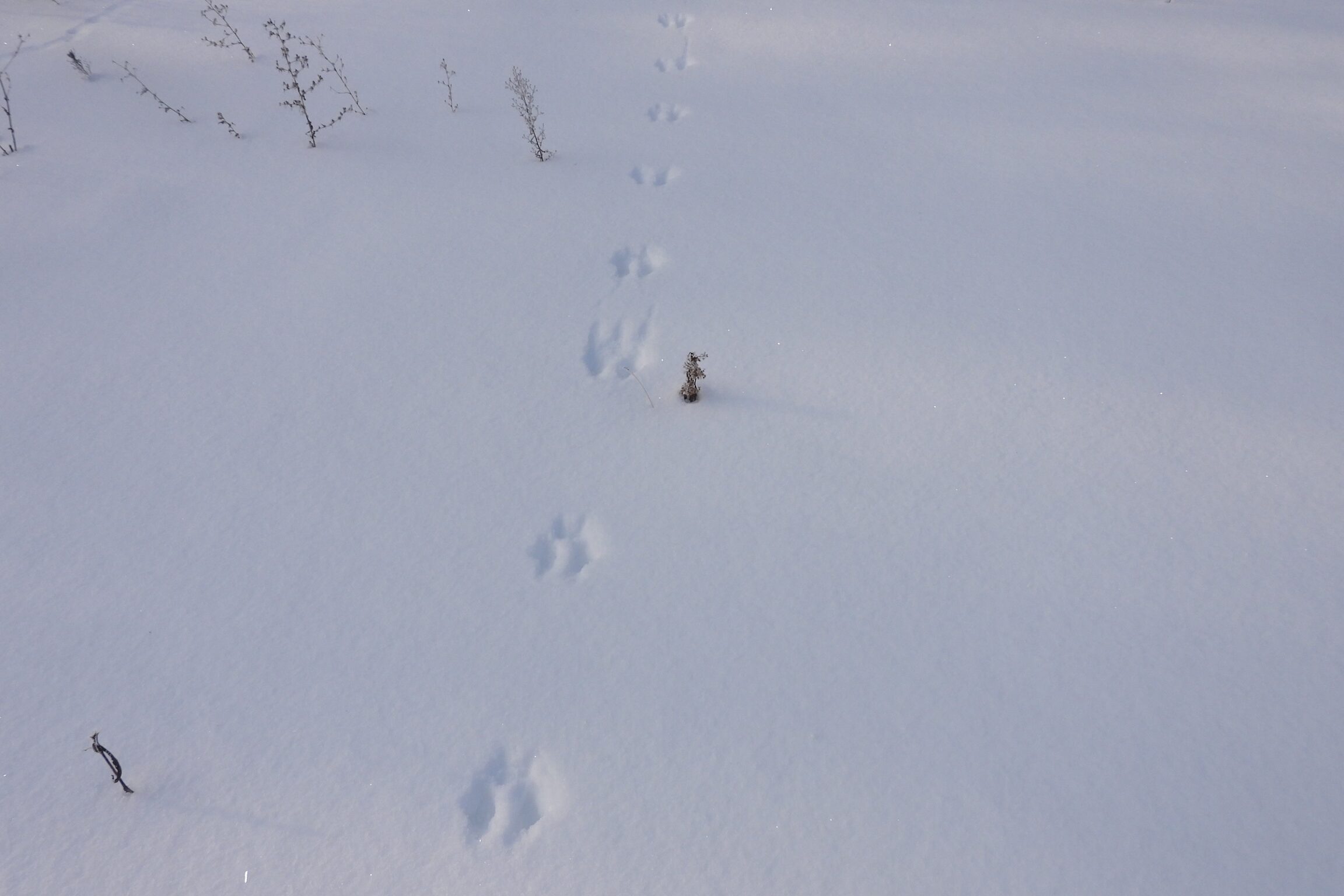
Photo: Otake Hidehiro
The workshop events were perhaps the ones that were most impactful for me as we were able to spend a few days in the communities allowing for a less frenetic pace for the exchange of information. Remaining with me are memories of sitting with the late Russell Keeper pouring over maps of his trapline and of him describing in detail the landscape of his youth and how it supported his present-day activities on the land. What also sticks with me is the pride in the voices of various community members as they relayed stories and teachings of their family members and how they are determined to bring them forward and keep them going. Equally impactful was the coordination and care shown by the land use planning representatives for each community, Augustine Keeper and the late Joe Owen, and on the performance of their duties and the responsibility that the community had entrusted them with.
It was brought to my attention that although I was working in partnership toward our common goal, I was sometimes guilty of describing Indigenous land activities as happening in the past, not in the present. Not intentional of course but my background being what it was I periodically fell into the trap of just copying what I heard or read. There is a term for this, a term identified to me by an Indigenous planning partner as “the Invisible Indian Syndrome”. It’s a real thing, definitely! What an eye opener. You’re never too old to learn.

The take away from my perspective is this, the Indigenous people of Pimachiowin Aki gain their life from the land, they always have. Their links to the land are real and permanent and it is through Pimachiowin Aki that they will share it with the world. The stories, traditions and culture they choose to share with the world will be the foundation for the site into the future. For me I think this is unique, for them it’s probably everyday life. 

Wisdom of the Living Landscape: 21 Quotes from Knowledge Keepers

September 12, 2025

1. There is a big circle we call The Circle of Life. Every living thing The Creator made fits on this circle side by side. Every living thing, including the smallest insect, was given jobs to do. Plants and trees for example were given many jobs, cleaning the air, medicines, as food for the birds, animals, fish and people. Some of the animals, birds and fish where given the job to feed us and much more. Our job as given to us by The Creator was to take care of all life on earth.

Albert Bittern (November 2013)

2. As Annishinaabe people we want to leave a lasting legacy to protect and preserve of this area for the benefit of the planet.

Sophia Rabliauskas, July 1, 2018 (remarks to the World Heritage Committee following inscription of Pimachiowin Aki on the World Heritage List)

3. We want to keep the area the way it always was, to keep it for our children, grandchildren and unborn children, so that they can use and care for it as we have.

Victor Bruce, March 200

4. Traditional knowledge was offered to others only if the Elder felt it was appropriate.  People weren’t forced to know about the tradition, but they would be noticed by the Elders as time went by.

Joe Owen, March 2014

5. Teachings are shared through drumming, singing, community gatherings, offerings. For as long as we remember, the Elder that has the most knowledge and wisdom is the community leader. This Elder would perform traditional drum songs, provide medicine for healing, and use many other traditional methods.

Solomon Pascal (in translation, January 2014)
Whitehead Moose, 2007

6. The Creator has a match and that match is the Thunderbird. He brings that match to the land when the forest gets too old and can’t grow anymore. So the thunderbird comes to earth. After the forest is burnt new growth starts. Animals get tired of eating old food. Just like you and me. The Creator knows that animals need new food. The fire there brings fresh food to eat. As an example: rabbit favours new growth area. When you look at rabbit I think it is like a food chain for animals. Rabbits have three litters a summer. Fox, lynx, marten all depend on rabbit. The Creator has to care for all animals so he sends Thunderbird to earth to make food for rabbit. We like to eat rabbit, too. So he burns for us, too. Where fire comes to a rock area, blueberries come after the fire. [That] feeds a lot of animals. We eat blueberries, too. Fire makes good food areas.

Whitehead Moose, June 2006

7. This place is sacred to me. Why? For as long as I can remember my family trapped, hunted, gathered, had ceremonies. My parents and great grandfather would sing pow-wow and play the drum. They used to do this by the end of the day to give thanks to Manidoo, Creator.

Melba Green, March 2014
Giiwiich, Photograph A115, American Philosophical Society

8. Since stones are grammatically animate, I once asked an old man, Alex Keeper (Giiwiich), ‘Are all of the stones we see about us here alive?’ He reflected a long while and then replied, ‘No! But some are.’ This qualified answer made a lasting impression on me.  

A. Irving Hallowell, 1930s

9. After the Creator finished making everything on earth, he decided to create human beings. He took pieces of mud from the four directions and made them into the shape of a man. Then he took a miigis [cowrie] shell, blew his breath into it and placed it in the man he had made. The man came to life. The Creator gently took this man in his hands and lowered him onto the earth and said, “This is my beautiful garden and I am asking you to take care of it.

Abel Bruce and Albert Bittern

10. There is a cliff-rock-painting of a snapping turtle [on a certain river]. When someone travels along over there, they’d cut some tobacco. They would hope to kill a moose, they would say. Sure enough, that was exactly what would happen. That person would get the blessing to kill a moose. This is the reason they put tobacco in their pipe. They would say, I will kill a moose, as they placed tobacco in their pipe. That was the purpose of the cliff rock-paintings.

Kenneth Owen
Ed Hudson

11. The head of the family would make the decisions in regards to the land. If there was a shortage of beaver or muskrat for example they would leave that area alone for a while, until these populations increased. They did this to ensure future use of these resources.

Ed Hudson, September 2013
Joe Owen, 2008

12. The most qualified wildlife hunter that existed in the boreal forest region. People are very concerned that nobody will carry on or replace such skills.

Joe Owen, 2010

13. Well, the women wear the bells too.  Goodness did they sound good when they were sliding their feet and dancing … Mii wa’a igi ikwewag, igi Gichi-Ikwewag! These were the women. The Grand Women!

Maangoons Strang (Little Loon), 1992

14. The medicines have kept us alive and helped to cure sickness. The bush is our drugstore and we are grateful for all those plants that are happy to give up their lives to help us.

Abel Bruce and Albert Bittern

15. Most people think about a landscape as a physical and natural backdrop for life, a sort of stage upon which life happens. But in the Ojibwe way of thinking, the landscape is alive; it is full of human and non-human beings that engage with the people who know a certain place thoroughly.

Pauingassi Lands Management Plan 
Sophia Rabliauskas, Pimachiowin Aki Press Conference, November 2010

16. The water represents life to the Anishinaabe people. The Creator gave the responsibility to women to create life and to care for the health of the water. Life begins by being surrounded by water in our mother’s womb. In our ceremonies it is the women’s responsibility to carry that water and share it with others. In our stories and teachings, it has always been the grandmothers who watch over the water and they are still carrying out that sacred responsibility today. We were also taught that the water is very spiritual and that we need to acknowledge that spirit in our prayers each day.

Sophia Rabliauskas, December 2011

17. Ji-ganawendamang Gidakiiminaan is itself a tradition of monitoring, of keeping the land by watching over the land.

Enil Keeper, October 2014

18. My dad told me that I had to have a net, hooks, and snare. If you ever go hungry, you can set snares for rabbits and set those hooks for fish. If you do that all the time, you won’t go hungry. If you use your gun to fish with, you won’t kill fish that way. You don’t kill everything with a gun.

Adam Owen, March 1984

19. We don’t laugh at or tease any animals. We hold them with much respect because it is not proper in our culture to tease animals, whether they are large or small. They will hear you when you don’t respect them and they will come after you, get even with you.

Anishinaabe Elder, in translation
Melba Green

20. Knowledge of when and what to harvest, trap and hunt has been passed down through generations. For Anishinaabeg, it’s like instinct.

Melba Green

21. It’s always important to respect people when you meet them because you don’t know what carries them or what watches over them. It’s not the person that you offend. That person may forgive you but the one that’s watching over that person may not forgive you. That’s why it’s important that we always talk polite to people. Even when we travel, we always travel with tobacco and offerings out of respect.

Clinton Keeper (in response to the Wiindigoo Story told to him by Maggie Duck)

Feature Image: Elder Abel Bruce © Otake Hidehiro

Place Name Changes on Early Maps    

March 19, 2025

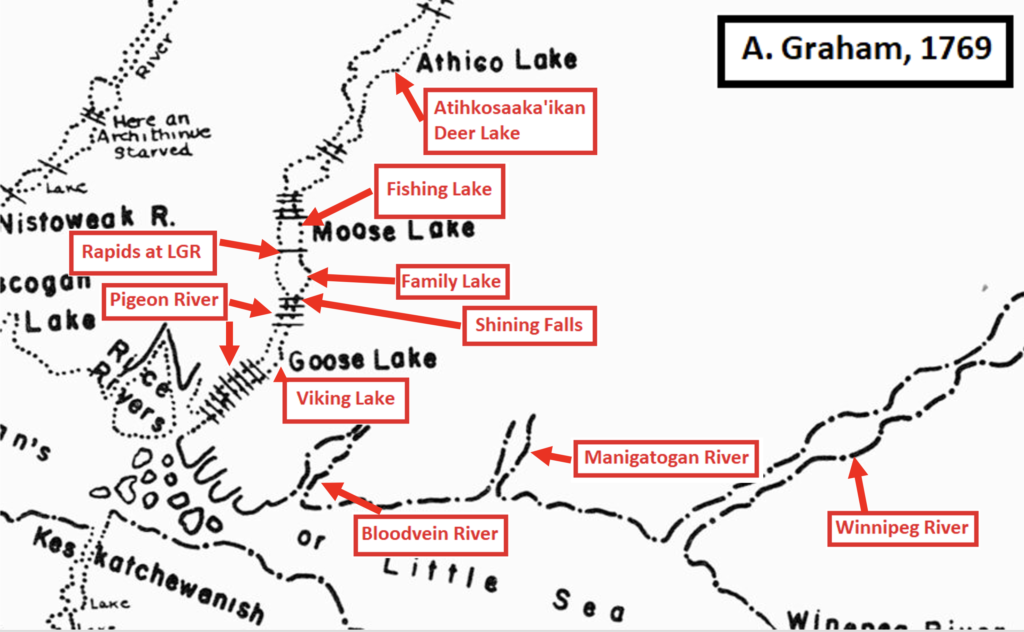
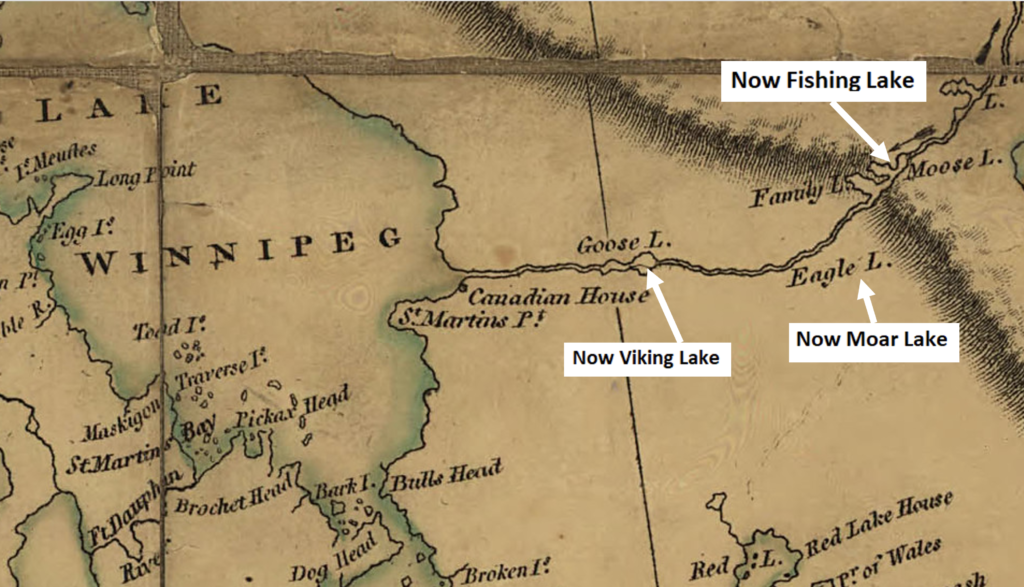
“This is one of the first maps that Hudson’s Bay Company (HBC) made,” said Gerald Neufeld, referring to the map below. “It was likely based on the first journey inland from the Hudson Bay and James Bay posts to look for opportunities to expand the fur trade. Tomison, the Hudson’s Bay Company (HBC) employee from the Severn River post, had not yet found the Berens River and Poplar River.”

Neither Poplar River nor Berens River appear on this 1769 A. Graham map, marked up by Gerald.

“As the years advanced, HBC became more aware of the east side of Lake Winnipeg, and so did their competition, the NorthWest Company out of Montreal.”

Lakes and Rivers Renamed

The 1802 Arrowsmith map (below) shows that familiarity with the region had advanced quickly, said Gerald. 

Today’s Fishing Lake, Viking Lake, and Moar Lake appear as Goose, Moose, and Eagle Lakes on this Arrowsmith map, 1802, marked up by Gerald.. 

From 1923-1926 the region’s lakes and rivers, once bearing Ojibwe names that carried stories and meanings, were renamed. “The Royal Canadian Air Force decided that if they were going to fly their airplanes in this region, they would need proper maps,” said Gerald.  

 No regard was given to traditional place names of lakes and rivers.

“The problem with their effort from today’s vantage point is that no permissions from Indigenous Peoples were obtained,” Gerald said. “They just went ahead and put names on the lakes and rivers. Some are Indigenous names, others are interpreted names that emulate the Indigenous names and many are names of fallen soldiers, aviators, and land surveyors. They got away with making the changes back in the 1920s, because most people in the region were unable to read or speak English.”  

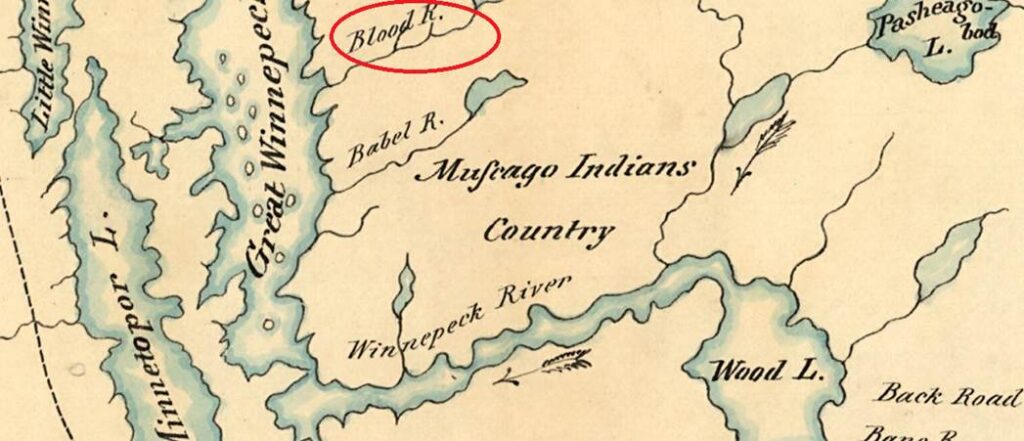
Today’s Bloodvein River appears as Blood River in a section of thisHudson’s Bay Company map (Peter Pond, 1785); marked up by Gerald.

Reclaiming Place Names

Land Guardian Melba Green of Bloodvein River First Nation explains the importance of named places. “Our Elders tell stories about places that were named after the plants and animals who live there, or ancestors who traveled across the land. Some names are based on the rocks or the water that flows there. Water gives life, and the land gives gifts and tools to use and to survive.  These names are in our language and remind us to be respectful. They give us important information, like what to expect, or what to watch out for when we’re there.” 

That’s why Gerald Neufeld’s work is important and why our communities are creating traditional place names maps that preserve our cultural heritage.

Little Grand Rapids First Nation and Pauingassi First Nation are in the process of creating place names maps to preserve the language, cultural identity, and knowledge of place and travel routes.

12 Named Places to Discover in Poplar River First Nation


5 Animal Track Patterns to Spot This Winter

December 11, 2024

Ever since November, when snow fell in Bloodvein River First Nation and was here to stay, Guardian Melba Green has been following animal tracks to gain clues about their winter activities, habitats, and movements.

“It’s good to see tracks. It means the animals live here, too, and walk among us. They are exploring and hunting. They roam alone or in packs.”

Bloodvein River First Nation Guardian Melba Green

Tracks are intriguing

“I like to think about what the animal was doing and why, based on its tracks,” Melba says.

Tracks might tell you if a fox chased a hare, whether the hare reached safety, or if a kill was made. Sometimes you can see that an animal has sped up in the snow, suggesting it was spooked. Some tracks leave you wondering. Such as, why did the squirrel turn around and head back up the tree? Did it sense a predator nearby? Or, what is this mark in the snow beside the lynx tracks? Was the lynx dragging prey from its mouth?

“It’s best to go tracking after a snowstorm,” says Melba. This is when snow is fresh and animals are out in search of food. “Old tracks are harder to identify.”


Look for tracks when snow is fresh.

Track Patterns

Melba notes that different animals move in different ways. The animal’s track pattern is the biggest clue and first thing she looks for, she says. Here are five track patterns to spot this winter.

Identify the track pattern first.

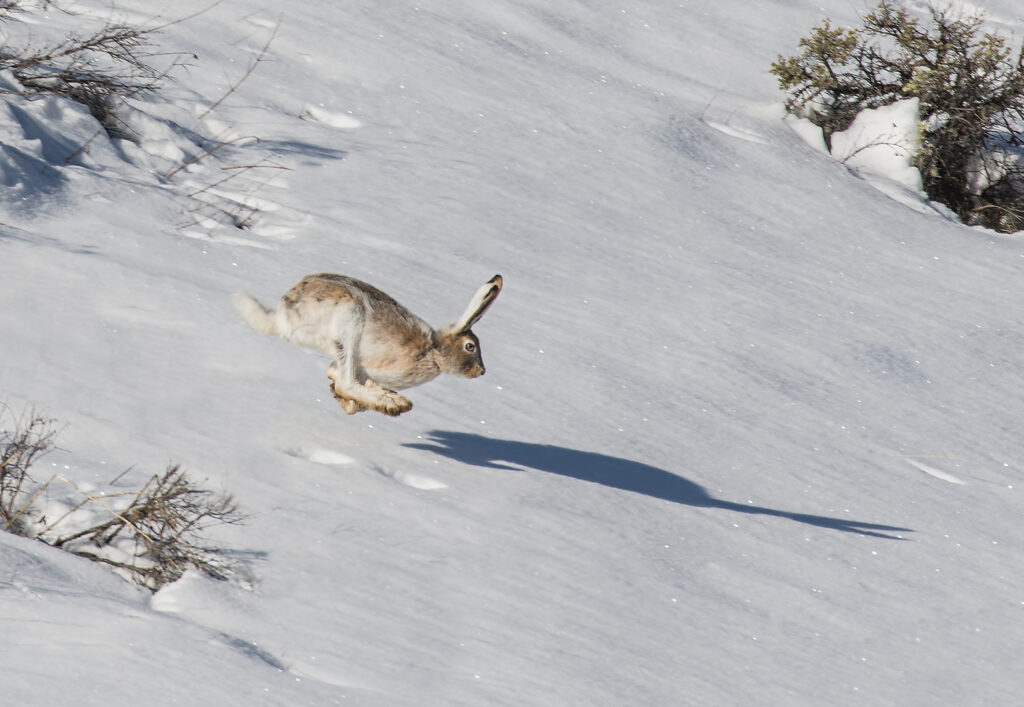
1. Hoppers

Snowshoe hare, mouse, red squirrel

The snowshoe hare’s back legs swing forward as it hops

Hoppers usually have back legs that are bigger than their front legs. When the animal hops, its front feet land first, then its back feet swing forward and land in front of the front feet.

What to look for: Clumps of four prints

Snowshoe hare tracks showing how the back feet land in front of the front feet.
Snowshoe hare tracks © Colin Owens

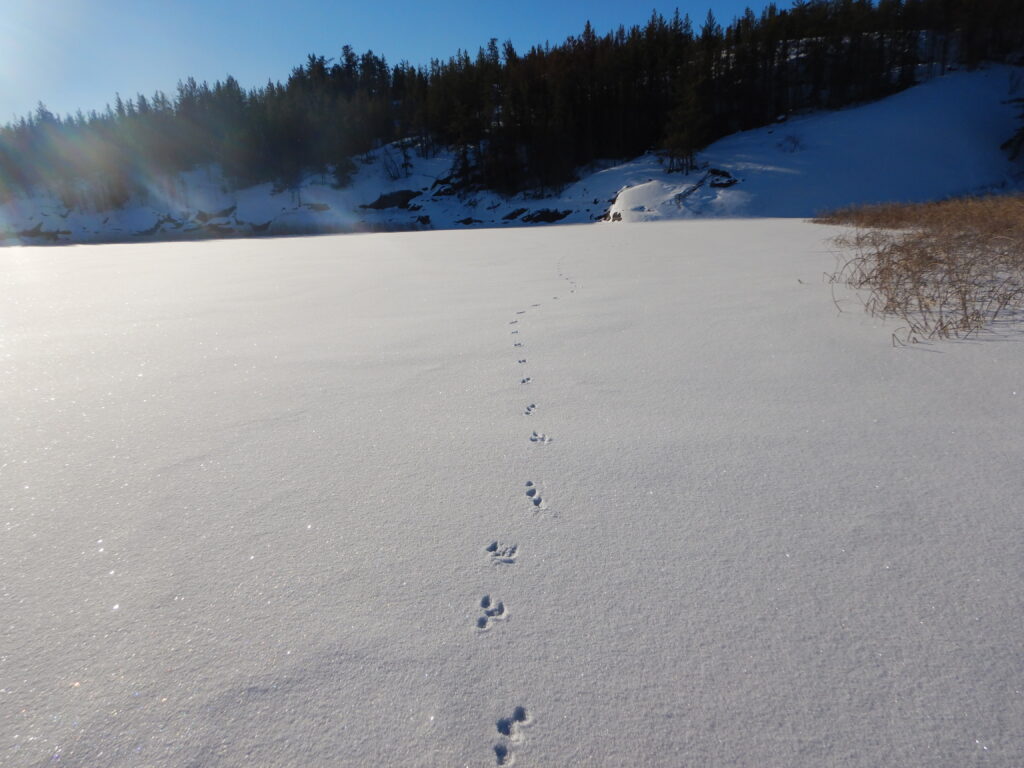
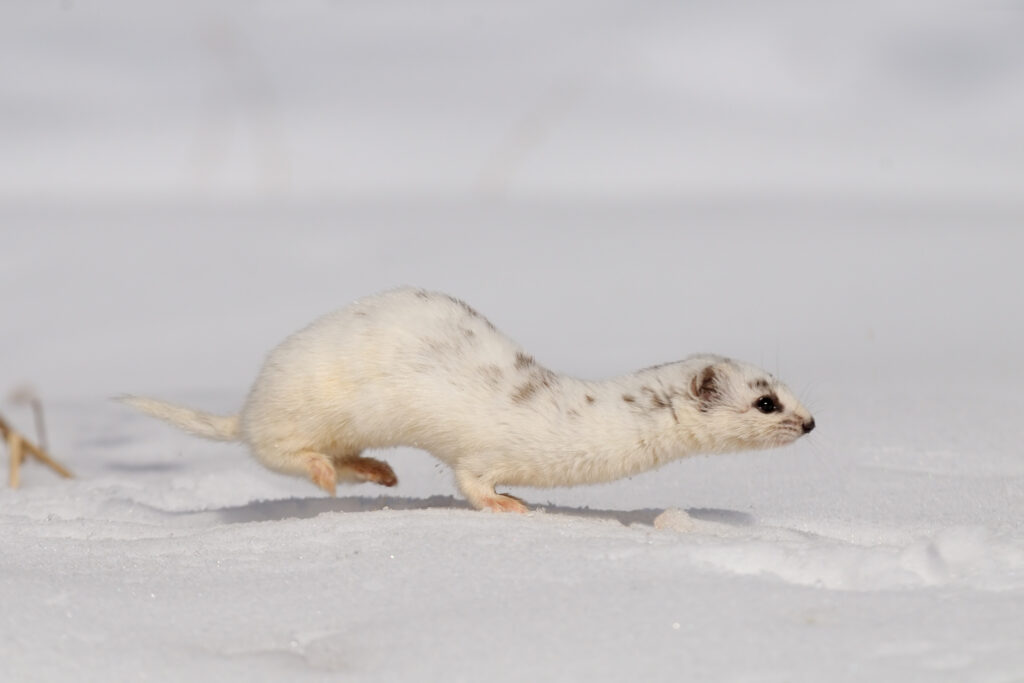
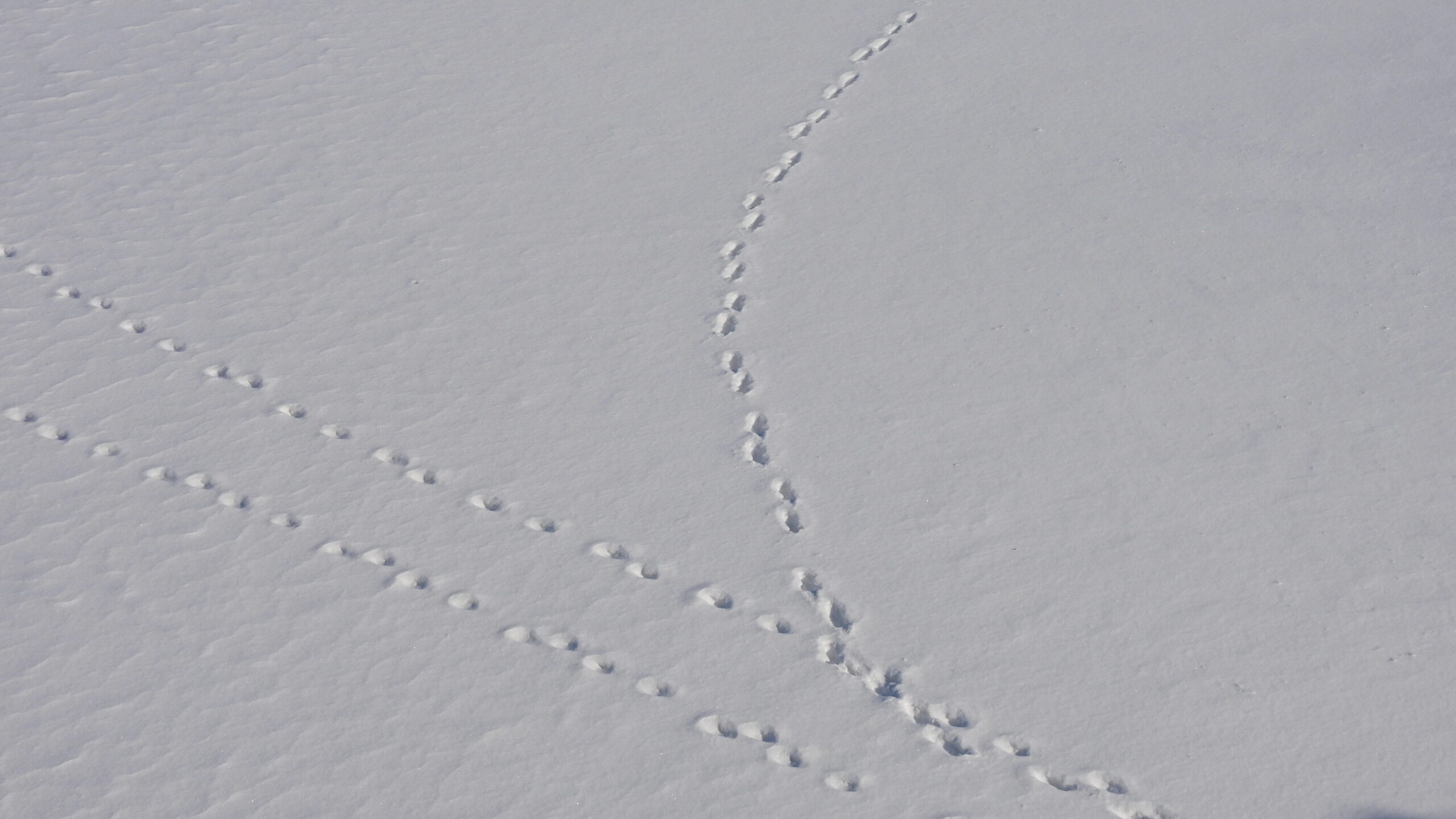
2. Bounders

Mink, otter, marten, weasel

Weasel in mid bound through snow. The weasel lands on its front feet. When it bounds forward again, its back feet will land where its front feet currently are.

Bounders usually have long bodies and short legs that are all the same size. When the animal moves forward, its front feet are down. In a single motion, it lifts its front feet and pushes off with its back feet. The back feet land almost exactly where the front feet were.

What to look for: Two prints side by side, with one print slightly in front of the other (it looks almost as though the animal was hopping on two feet)

Weasel tracks showing sets of prints where its back feet land on top of the print made by its front feet.
Otter © Ōtake Hidehiro
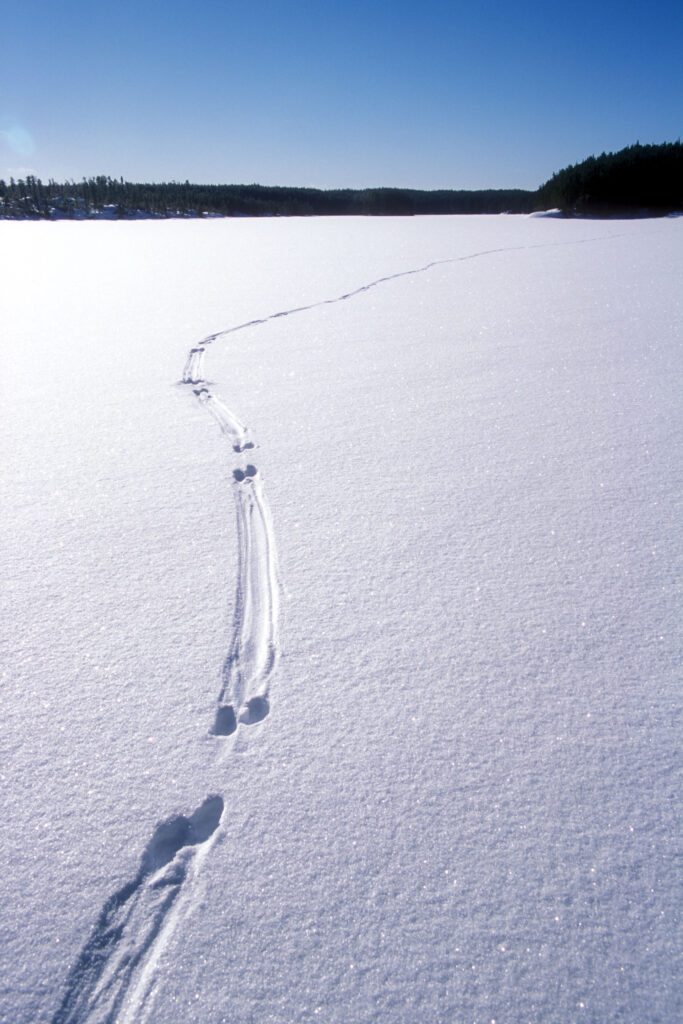
Tracks left by an otter sliding on its belly across the snow. © Ōtake Hidehiro

3. Waddlers

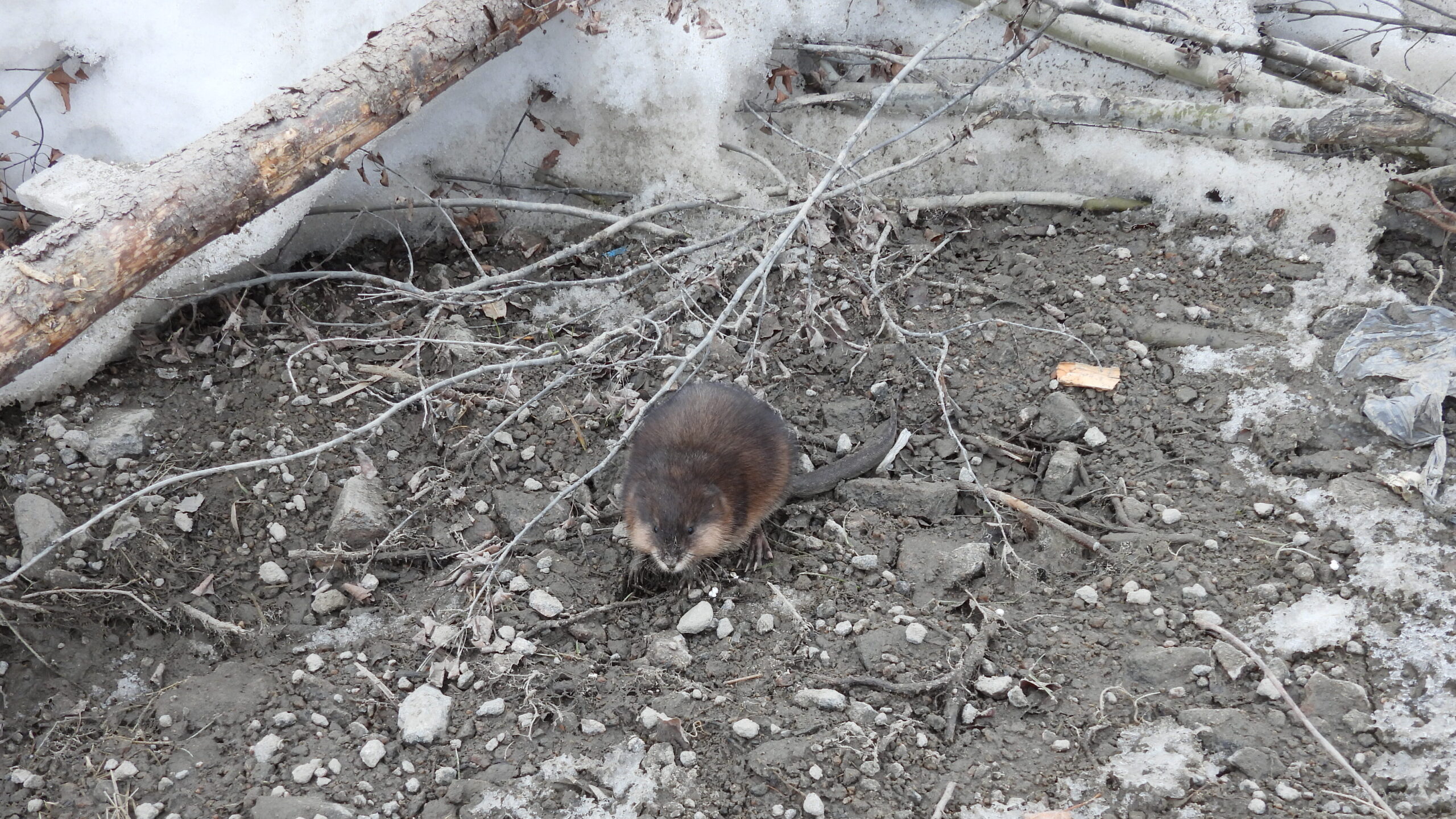
Bear, beaver, muskrat, porcupine, skunk, woodchuck

Muskrat in spring © Melba Green

Waddlers usually have short legs and shift their bodies side to side as they walk, dragging their bellies. Their front and back legs move together on one side of their body, then the other side. All four prints land in separate spots.

What to look for: A front and back print next to each other, on each side

Bear tracks with lines showing how its body sways side to side as it walks/waddles.

Bears occasionally wake up and move around during winter.

4. Zig-Zaggers

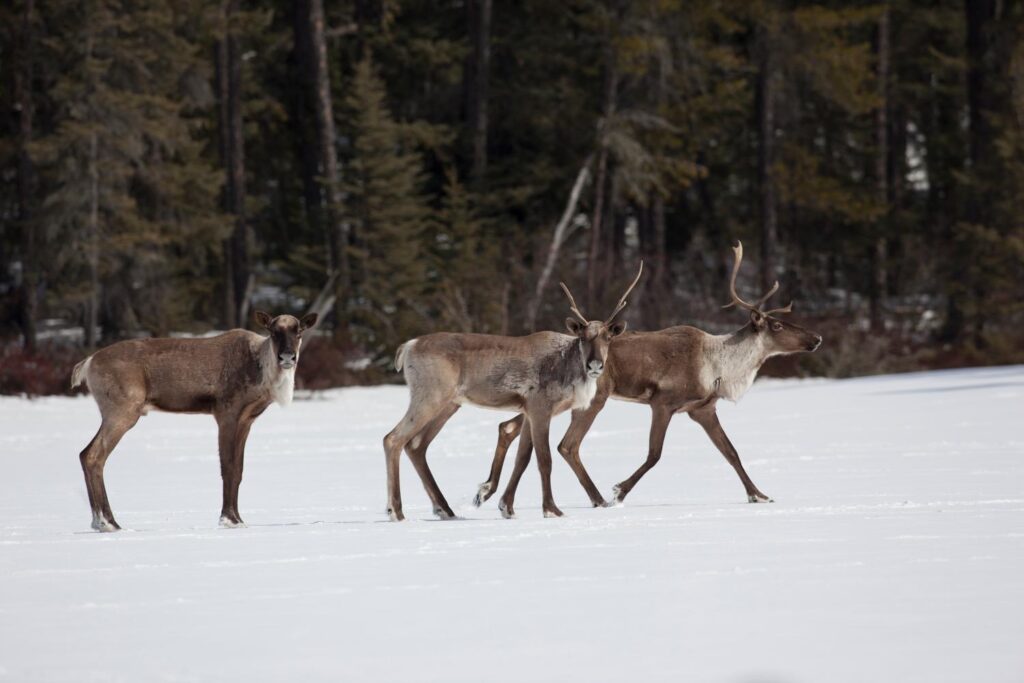
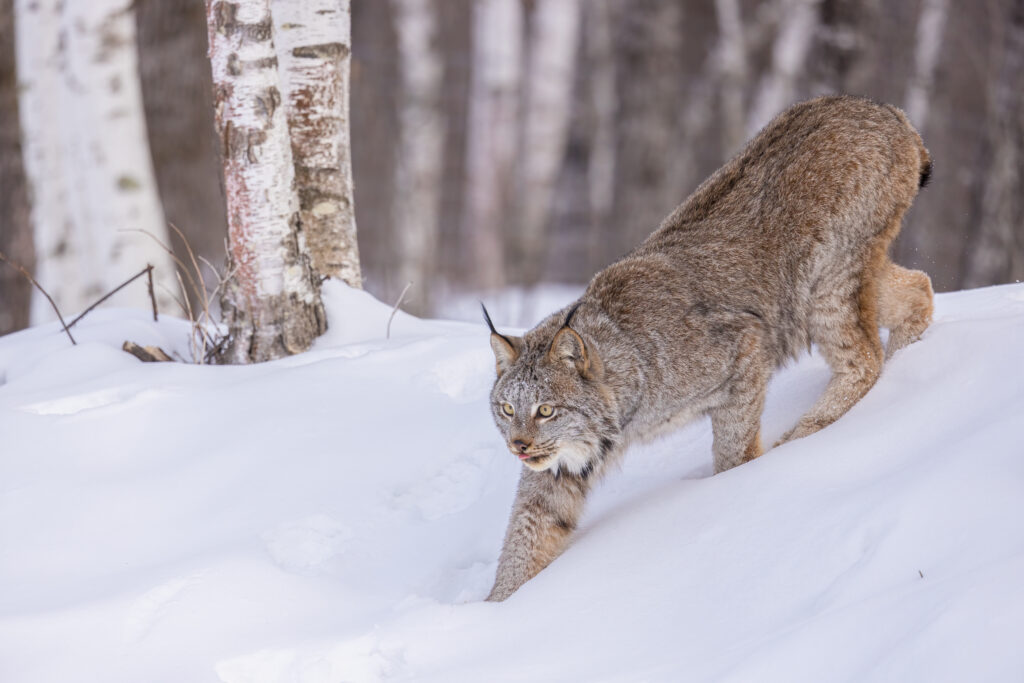
Lynx, fox, moose, timber wolf woodland caribou 

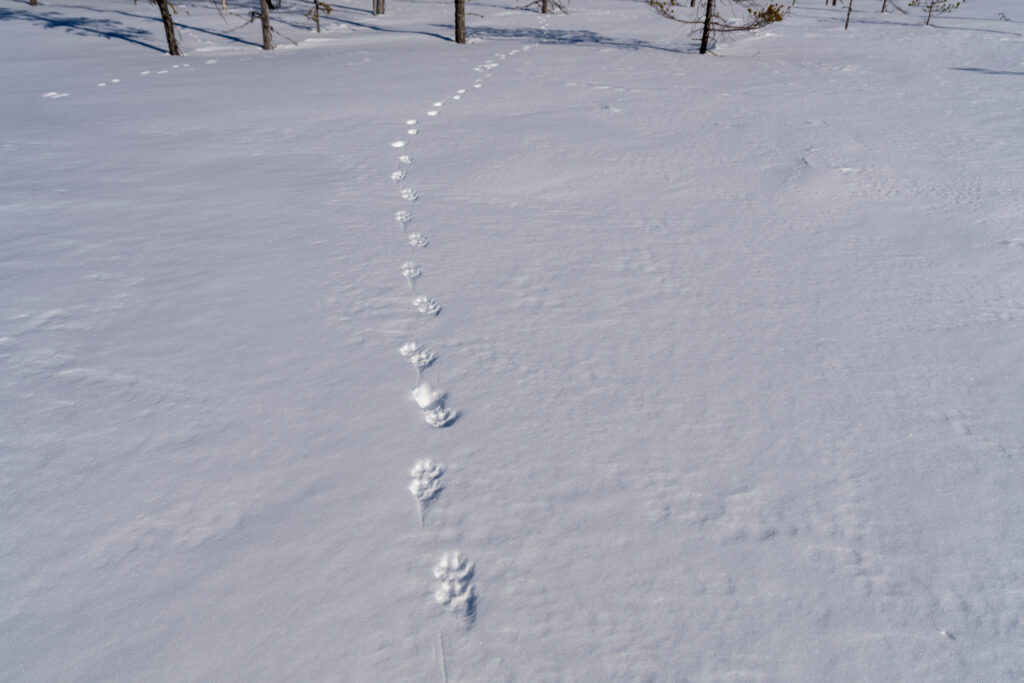
Notice the woodland caribou in stride on the far right . Its back right foot has just landed where its front foot was. © Ōtake Hidehiro

Zig-zaggers usually have long legs. When the animal moves forward, the print from its back foot lands on top of (or very close to) the front print.

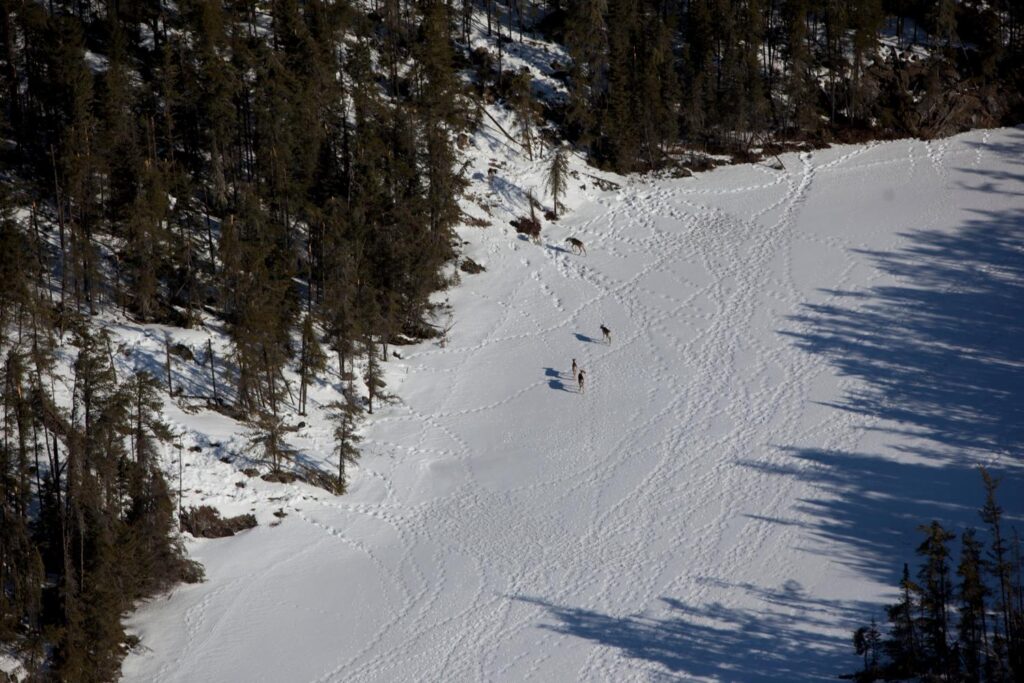
What to look for: Single tracks in a straight or slightly zig-zagged line

Woodland caribou tracks, showing how zig-zaggers create a straight line by stepping on top of their own tracks.
Woodland caribou travel in herds. © Ōtake Hidehiro
Lynx are zig-zaggers, also known as perfect walkers – they step on top of their own tracks
Tracks of lynx in the snow

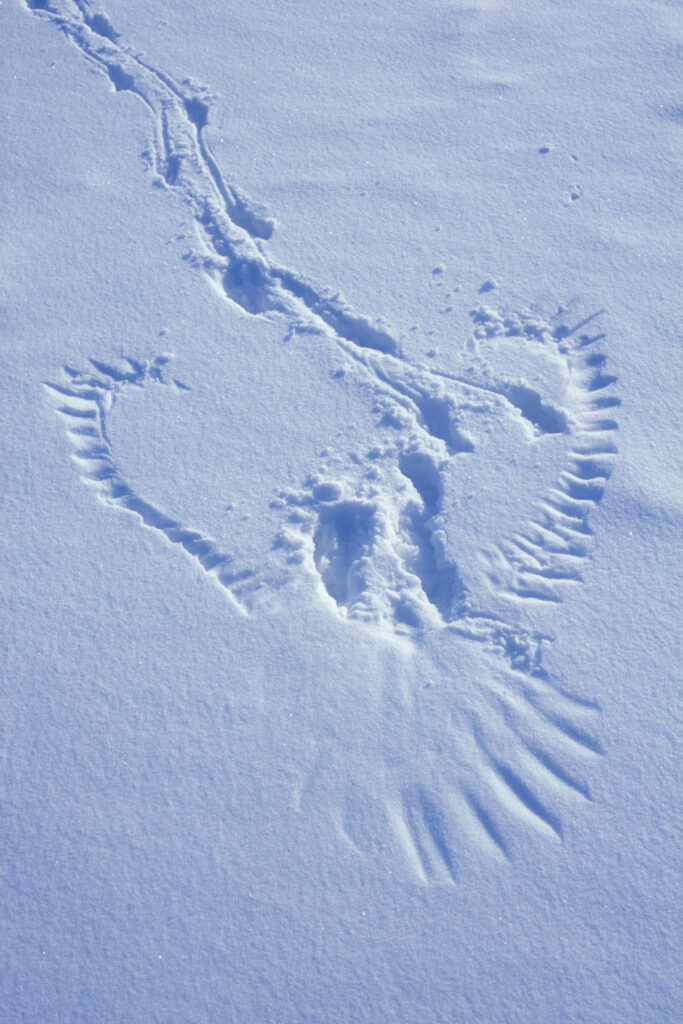
5. Snow Angel

Eagle, owl

Owl snow angel © Ōtake Hidehiro

Birds of prey touch down to capture their prey. You can usually see the tracks of a small mammal moving toward the print and messy snow in the centre of the print, where the bird gripped the prey with its talons. 

What to look for: Wing, tail and talon marks, and tracks made by prey

Track Like a Guardian!

What animal made the tracks you see? Once you identify the track pattern, ask yourself these 10 questions to narrow down your list:

  1. What animals live in the area?
  2. Where are the tracks—such as an open area, riverbank or forest—and what animals tend to inhabit or travel through here?
  3. What shape is the track?
  4. How large is the track?
  5. Does the animal have webbed feet, hooves or foot pads?
  6. How many toes do I see?
  7. Does the track have claw marks?
  8. Is the track deep or shallow (the heavier the animal, the deeper the tracks)?
  9. Is scat nearby and does it tell me if the animal is a plant eater (pellet-like scat) or meat eater (tube-like scat)?
  10. Are there any other clues, like multiple tracks indicating that the animal travels in a pack or herd, fuzzy tracks caused by fur between the animal’s toes, or signs of a tail dragging through snow?

The Challenge of Identifying Animal Prints in Snow

Animal prints in snow are often unidentifiable—they may be too deep, fuzzy, melted, blown over, or lack detail—but it’s still fun to look for clues and do your best to narrow down which animals walk among us. Enjoy spotting track patterns this winter!

These deep and undefined tracks were likely made by a zig-zagger but are difficult to identify with certainty. © Melba Green
These tracks appear to be made by a bounder. © Melba Green
Multiple clues indicate that foxes were here: zig-zag track pattern, roughly 2″ x 2″ print size, multiple tracks (foxes live in social groups). © Melba Green
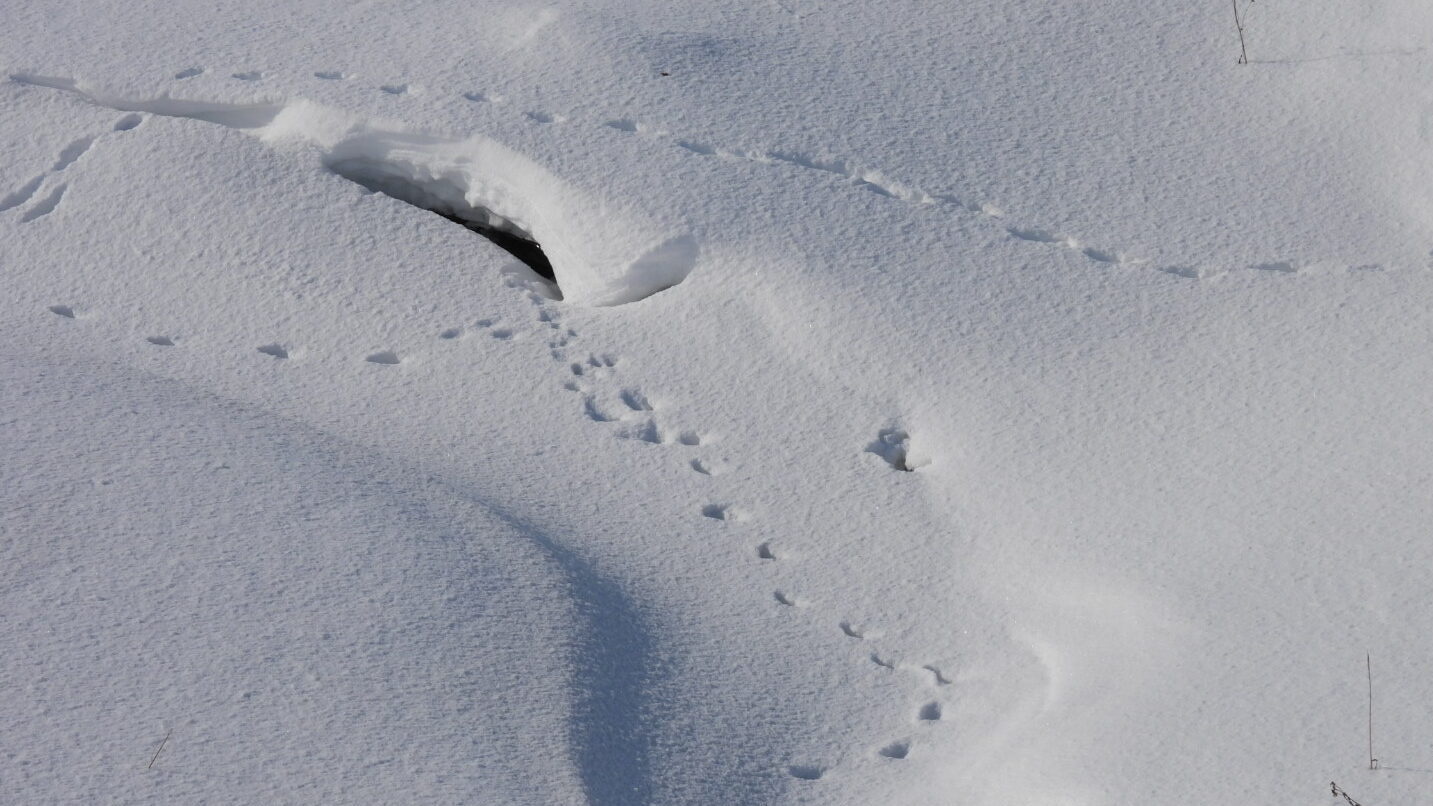
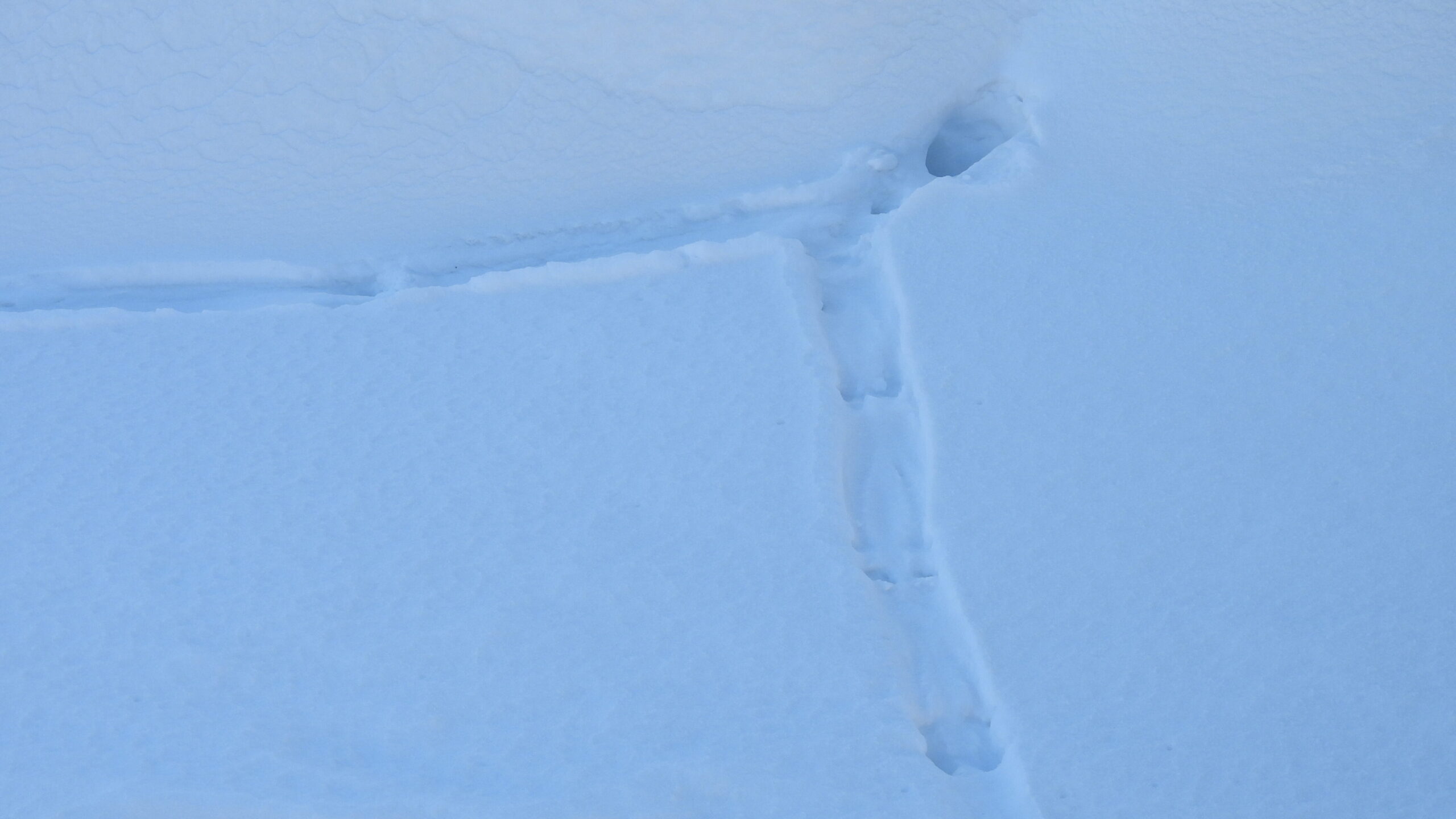
Multiple clues indicate that an otter was here: two prints side by side, snow slide trail, and a hole in the snow. © Melba Green
What do these clues tell you? © Melba Green

Feature photo: © Ōtake Hidehiro

How to Harvest Manoomin (Wild Rice)  

March 11, 2024


The late Joe Owen of Pauingassi First Nation often reminisced about harvesting, traveling and listening to stories from his dad. Below, Joe describes the process of harvesting manoomin (wild rice).

Identify Harvest Time

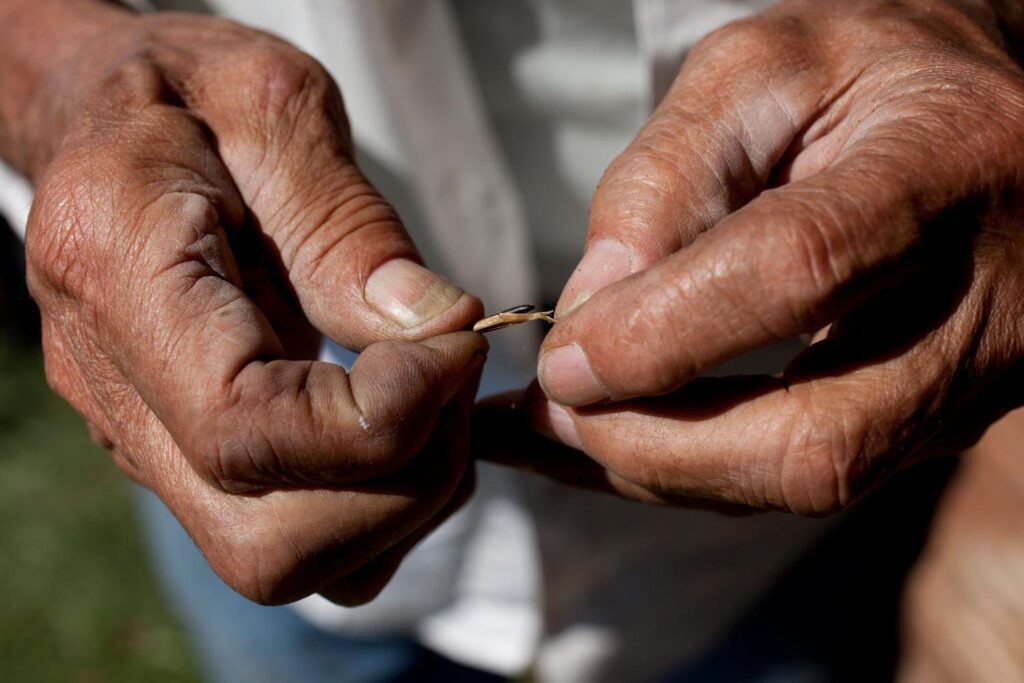
The wild rice plant needs to be above the surface of the water, with the branch extended, and pockets for the kernels formed. Once this occurs, it takes about 10 days for the heads to fill out. At that point, the kernels are ripe and need to be harvested. If this narrow time window is missed, rain or wind will cause the kernels to fall back into the lake.

Pankissinon
(Better pick them quickly before they fall)

Kwiipit (Joe’s Dad) often used this word
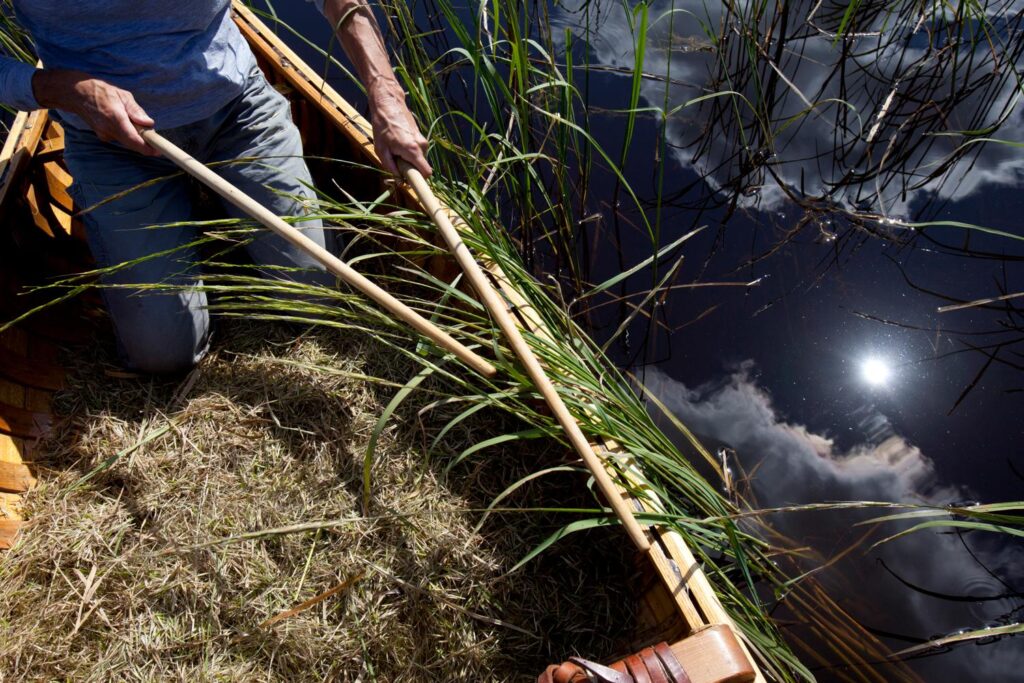
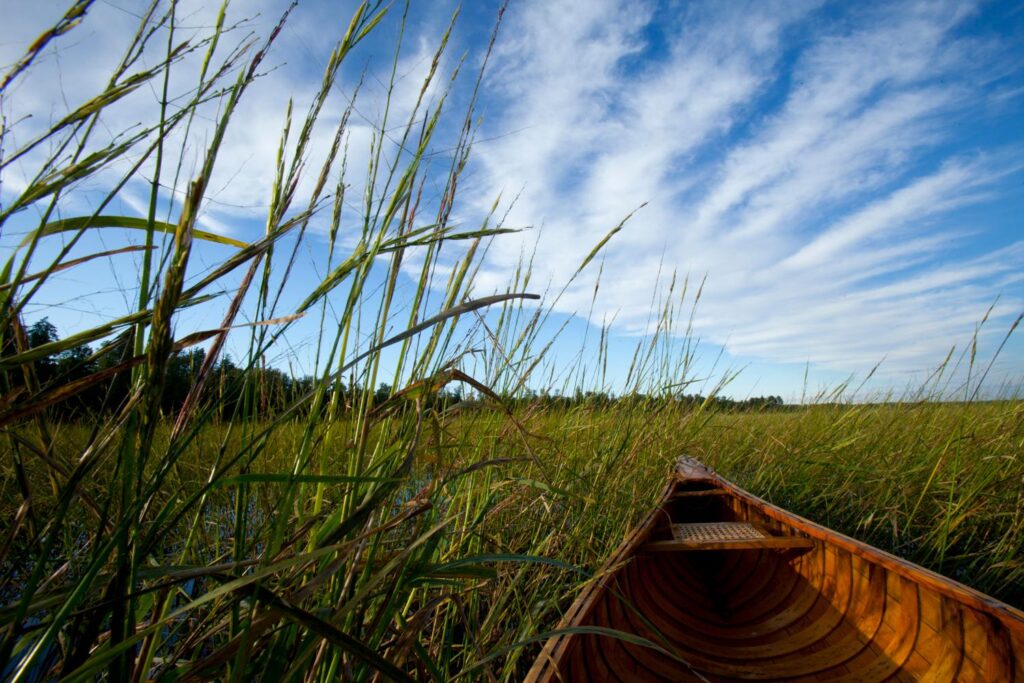
Manoomin looks like floating grass before it grows up and out of the water.
Photos: Ōtake Hidehiro


Drying Manoomin (Wild Rice)

Once the kernels are harvested, they are placed in a tall metal pail angled against the heat of the fire to heat and dry them. It is imperative that they be thoroughly dried for two reasons. First, the husking process follows the drying period and the husks won’t detach from the kernel if the kernels aren’t entirely dry. The heat needs to remove moisture and result in temperatures that cause the husk to burn, but not the rice. The second reason for needing high levels of dryness is to preserve the wild rice.  Heating of the kernel is needed to prepare for storage.

In the pot, a paddle is used to continuously stir the rice for 10-15 minutes if the quantity of wild rice is 3-4 pounds. This process is repeated over and over again during the initial drying/stirring process if greater volumes are being dried.

Ahkihkan okii apichii’an (They used a pail)
Piiwapihk ahkihk (A metal pail)
Oki wanaweyaanan ima ahkihkwonk
(It was stirred in the pail)
Apwi oki aapachii’an (A paddle was used)

Separating Husks and Kernels

Photo: Ōtake Hidehiro

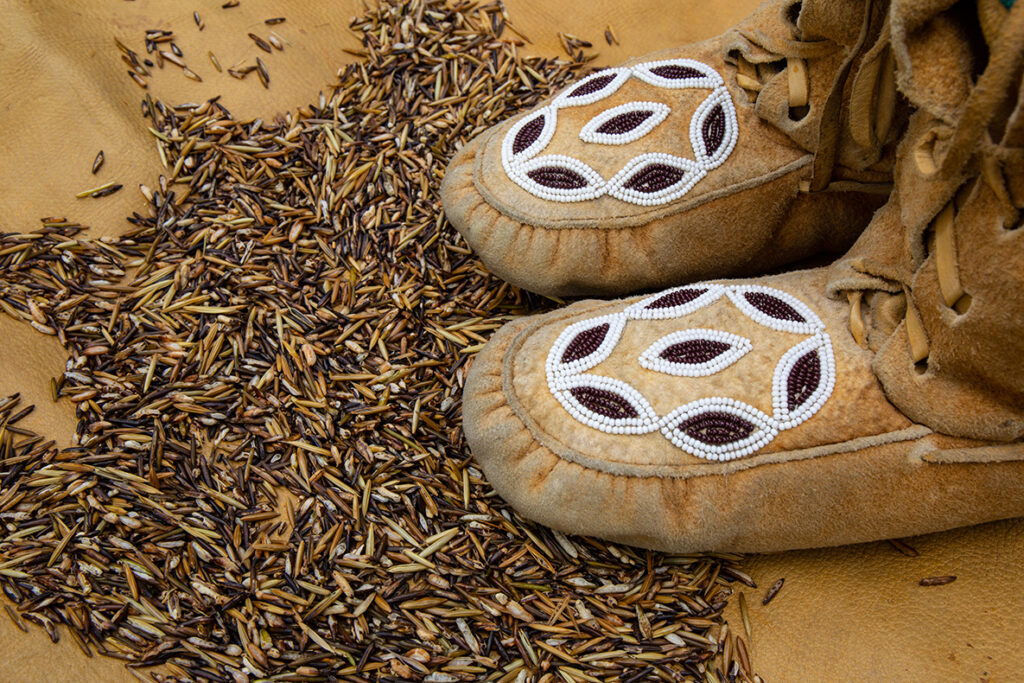
Once the drying is done, the rice is placed on a canvas in a shallow pit in the ground. Joe’s Dad would step into the pit wearing moccasins. He would stand on the rice and stir it in an agitator fashion, with his feet moving side to side, while holding a branch or stick to maintain his balance. The agitating action would separate the dry/burned husks from the rice kernels.   

Once the husks and kernels were separated, Joe’s dad would lift out the canvas and throw the kernels up and down, allowing the wind to blow away the husks.

Ahkihkwaabpihk  kii siikinaan oteshpiwepinaanan, wepash ikiweniwak (husks)
Kii pahkwachihsewak (they fall off)

Photo: Ōtake Hidehiro

Pimachiowin Aki is grateful to Joe for sharing his knowledge and Gerald Neufeld for recording Joe’s words.

⟩

Footer

Stay connected

Sign-up for seasonal news from Pimachiowin Aki.


  • Facebook
  • Twitter
  • Instagram
  • YouTube

  • Contact
  • Visit
  • Shop
  • Donate
  • Legal
  • Privacy Policy

© 2026 Pimachiowin Aki

Built by PeaceWorks