• Skip to primary navigation
  • Skip to main content
  • Skip to footer

Pimachiowin Aki

World Heritage Site

  • News
  • Resources
  • Visit
  • Home
  • Shop
  • Donate
  • Contact
  • About Us
    • Pimachiowin Aki Assembly of Partners
    • Board of Directors
    • Timeline
    • Communities
      • Bloodvein River First Nation
      • Little Grand Rapids First Nation
      • Pauingassi First Nation
      • Poplar River First Nation
    • Annual Reports
  • Keeping the Land
    • Our Work
    • Cultural Heritage
    • Wildlife and Habitat
    • Sustainable Economies
    • Guardians Program
      • Colin
      • Melba
      • Owen
      • Dennis
    • Education
  • The Land That Gives Life
    • Boreal Forest
    • Calendars
    • Climate
    • Cultural Sites
    • Habitation
    • Harvesting
    • Language
    • Named Places
    • Plants
    • Travel Routes
    • Water
    • Wildfire
    • Wildlife
  • Fast Facts
  • Search
  • Facebook
  • Twitter
  • Instagram
  • YouTube

Indigenous Youth

Remember Who You Are

September 8, 2026

“Remember who you are, take care of these things, and keep learning from the people who came before you.” 

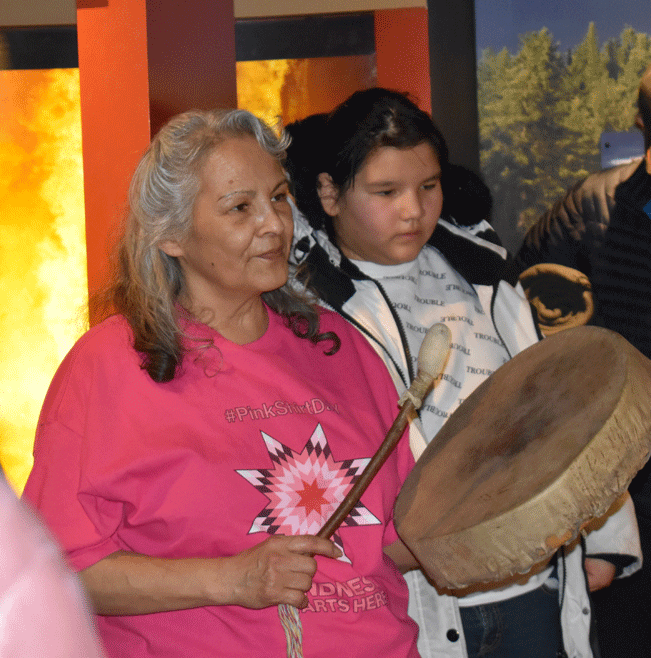
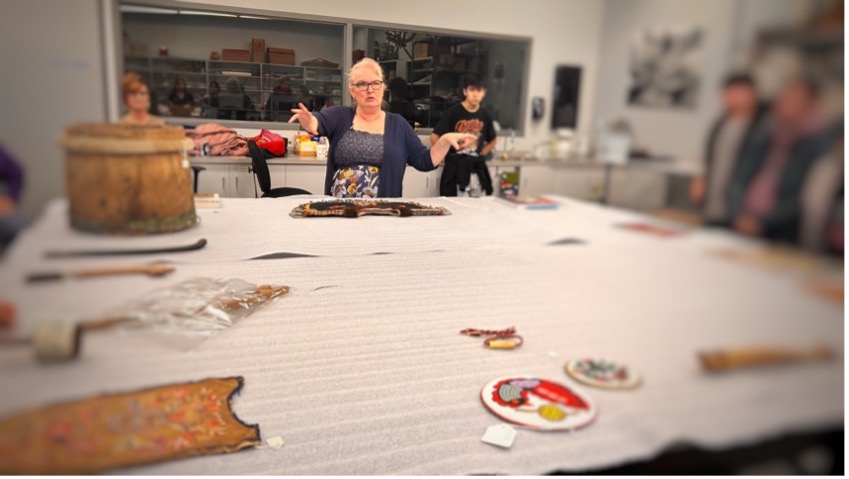
Elaine Owen, a Guardian of the Pauingassi collection of artefacts cared for at the Manitoba Museum, shared these words while presenting the collection to students from Bloodvein River First Nation earlier this year.

Elaine’s late husband, Nelson Owen, was from Pauingassi. His father was Charlie Peter and his grandfather was Charlie George (the late Omishoosh). 

“You may have heard of Omishoosh School—the school in Pauingassi. That’s who it was named after,” Elaine told the students.

Elaine’s Presentation:

I’ve been a teacher for 35 years, and I worked in Peguis and Pauingassi.

These are items from the collection of artefacts, some of which were stolen at one point. 
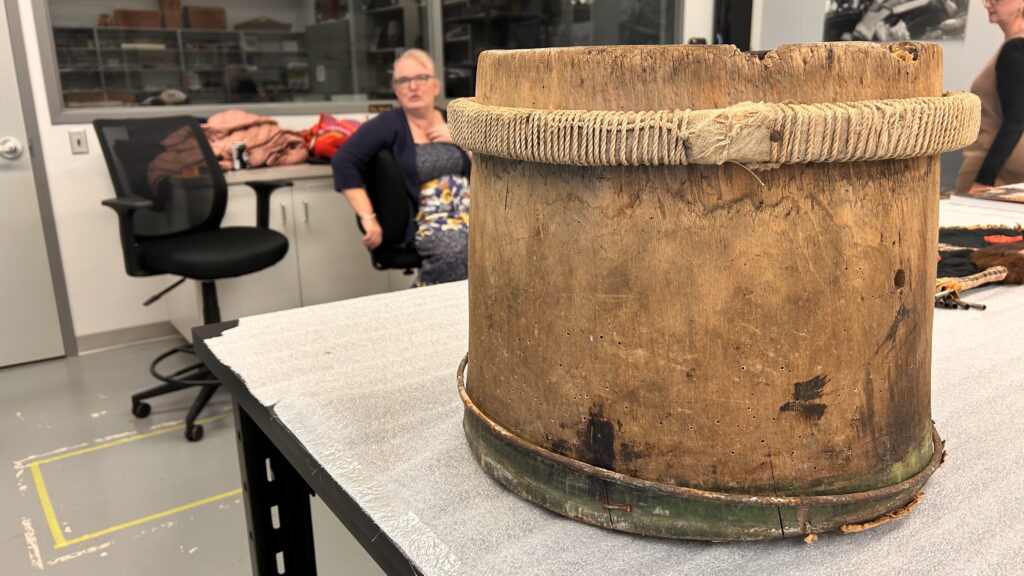
This drum and several other artefacts were held at the University of Winnipeg in their museum at one time. A friend of ours, Maureen Matthews, who works with the school, was preparing a class about them when they discovered that some of the items had been stolen. Someone had decided that because these artefacts were in museums, people didn’t care about them. That’s not true at all.

If you don’t understand Ojibwe culture, you don’t realize, people don’t jump up and down and say, “Hey, pay attention to me.” That’s me. That’s my red hair. My husband’s really calm and quiet.

One day he found an article in a paper called The Drum and it was talking about how some artefacts had disappeared. “Do you want to do something about it?” he said. I said, “Yes. Why don’t you do everything in Ojibwe, and I’ll do everything in English?” That was the best thing we ever did, and it worked very well.

He stood up to the president of the University of Winnipeg and their lawyers and said how important the collection was for preserving the culture and language. 

He always talked to Omishoosh about things and before Omishooh had died, he said, “Take the stuff to teach kids about them so they don’t forget who they are.”

Dance Cape Belonging to Omishoosh’s Wife Eva
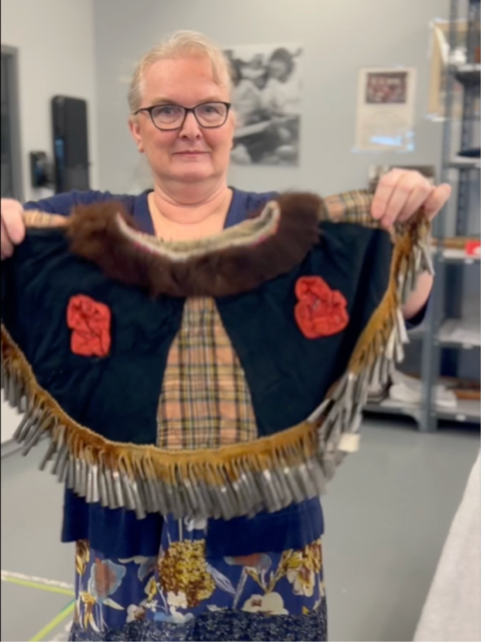
This is her dance cape. It is about 100 years old.

All these little tinklers were hand-made from old cans. In the winter, people would sit and hand cut and hand roll them. They are so evenly made, it’s amazing.

Then they crimped them onto moose hide, and these have been around for more than 100 years. What would happen if this [fabric] part wore out, they would just move the tinklers.

Hear the tinklers

We have a cape in the collection that belonged to a woman from an older generation, and there’s rows and rows of tinklers on the shoulders, and some of them are bigger than these. They’re fabulous. This one is nice but that one is fabulous.

I say I am a bit of a tinkler snob because the new ones that sound so tinny to me, I just (ugh)… So, I’m spoiled. You should think about that too, because this is all connected to you.  

Now, back to the drum. The drum was discovered to have been taken over the border. Maureen Matthews found it in Wisconsin.

She saw some of the drumsticks with their museum labels on them, and she did a radio program and spoke about them, and shortly after that radio program, that gentleman from Wisconsin came up here and met my husband.

My husband was a typical Ojibwe man—very quiet; wasn’t loud or anything. They had a conversation in Ojibwe. Ooh, he was angry, but you would never know he was angry. He was just sitting there with a calm face. He kept saying over and over to this other gentleman, “Where did you get this? How did you get this?” He was livid!

A few days later, all of a sudden the drum appeared, and we were invited to receive the drum back.

Nelson didn’t like to get attention. That’s not the way—you don’t pump yourself up and tell everyone you’re wonderful. So. we went and got the drum, and APTN was there. I kept standing in front of the cameral, in front of him because he was upset.

His grandfather asked us to make a book about these objects. Have you seen the book? There are copies at the school. His grandfather specifically wanted it designed so that children could look at it and read it.
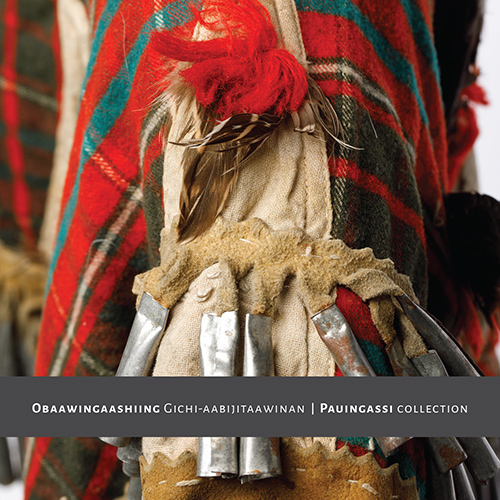
Donate $300 or more to receive a copy of the book: https://pimaki.ca/shop/

One of the things I love about the book is the author page. My name is there, along with my son’s name. We are the guardians of this collection. Our job is to protect these things so that they are not stolen again. That is why they are kept locked up.

You normally can’t just come and see them. Even if you were the Prime Minister, you couldn’t see them unless I said yes. Today, you’re seeing them because you are a part of the families who are connected to these items.

I’m one of the keepers of this collection, and I’m able to share it because I respect Omishoosh and understand how important it is to remember these things.

Embroidered Ceremonial Piece

This ceremonial piece was worn by Oomishoosh We have photographs from the 1930s showing him wearing it during a ceremony. He was raised by his aunt and uncle, who did not have children of their own.
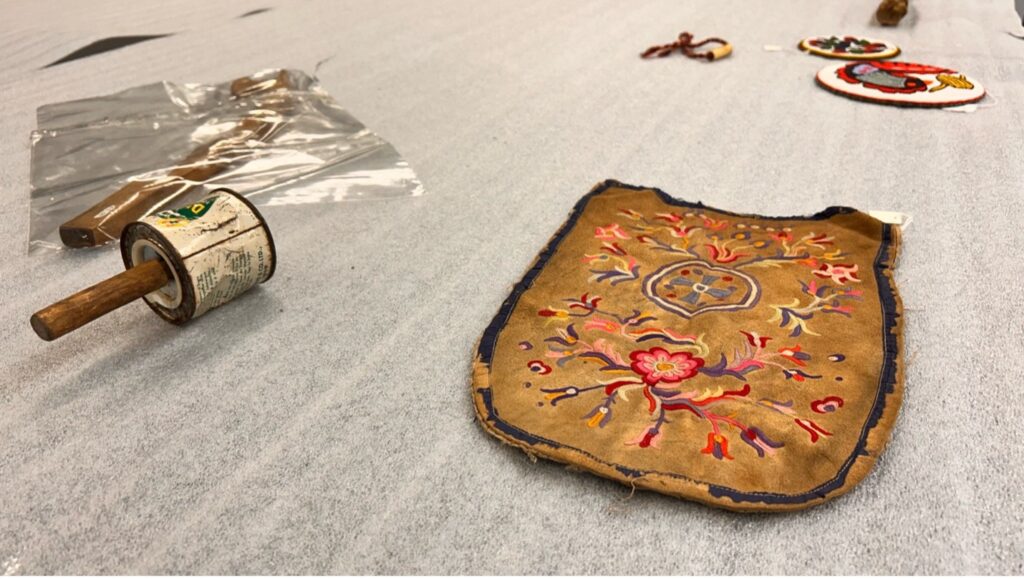
Look at the embroidery. It is remarkable. My mother, who grew up with embroidery, was especially impressed by it because it was a tradition in her family as well.

This particular piece has retained its colour because it was kept indoors and away from direct light. There is also a matching piece that could be worn over the shoulder. It has tinklers made from dewclaws.

Dewclaws

Do you know what a dewclaw is? Animals have them on their legs. In Anishinaabemowin, we talk about animals as having arms and legs, rather than simply front and back legs.
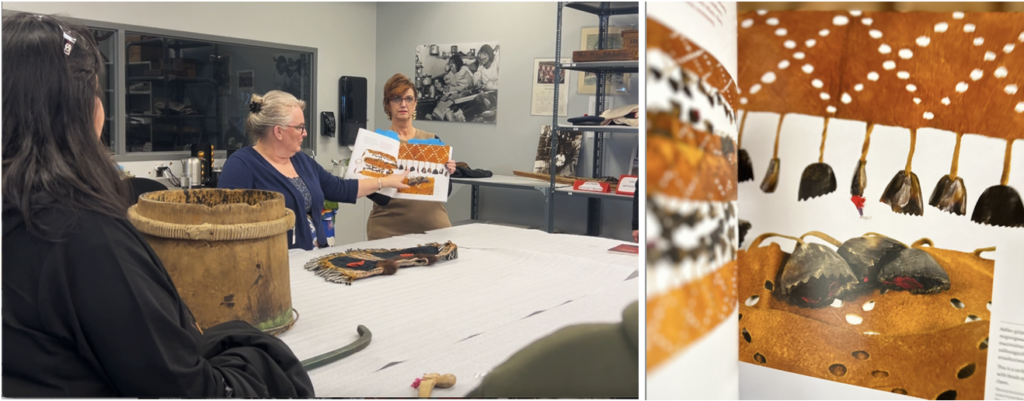
The dewclaws were carved and shaped so that they looked like little bells. When they moved, they tinkled together.  

Every time I do one of these presentations, I bring out different objects. So, if you ever have the opportunity to come again, you’ll probably see something different.

Hug Your Grandmas

My husband passed away 15 years ago, but I still want to do this because it is important. It is important for you to understand how significant you are to Manitoba and to your communities, to respect these wonderful objects, and to talk to your grandparents.

I have a rule in my classroom: if your grandmother is in the building, you have to hug her. Grandmothers come into my classroom all the time to teach children how to knit, crochet, and do other traditional things.

Hug your grandmas, because you are here because they were here.

Some traditional things really are better than modern things. As First Nation people, you have a direct connection to knowledge that many other people have lost. You have the opportunity to learn from your Elders, your communities, and the traditions that have been passed down to you.

Remember who you are, take care of these things, and keep learning from the people who came before you.

The Pauingassi collection of artefacts is viewed only on rare and special occasions. Learn more about the collection:
21 Artefacts, Explained
Return of Anishinaabe Artefacts

Dog Sledding for Land-Based Learning

December 10, 2020

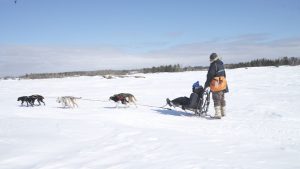
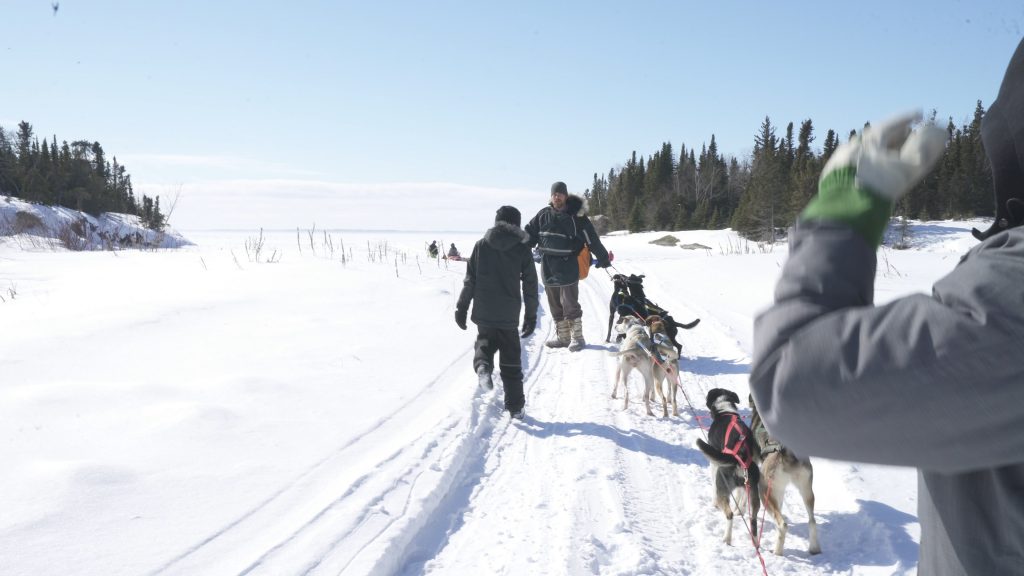
Surrounded by the expansive boreal forest and the soft sounds of canine paws on snow, Sidney Klassen glides through Bloodvein River First Nation behind his team of dogs. Mr. K, as he’s known to students at Miskooseepi School, is providing a “hands-on experience for the kids to be out in nature.“ Dog sledding is part of the school’s newly-formed Land-Based Learning program.

“We take the dogs out and I show students how to handle them, how to bring them to the truck and bring them to the staging area where we launch,” Sidney explains. Students practise getting the sled ready and hooking up the team. They also learn parts of the sled, like rigging and lines. But their learning runs deeper than physical skills.

“The kids learn about the connection between the dogs and humans when they take care of the dogs,” says Sidney. “They develop responsibility. The implications for learning are endless.”

Who is Sidney Klassen?

Sidney is a former physical education teacher. He has grown to love his new role as Land-Based Instructor but he’s not comfortable with the title. “I’d change Instructor to Coordinator or Facilitator,” he says. ‘Instructor’ is more suitable for a local, not a former Winnipegger like him, he explains.

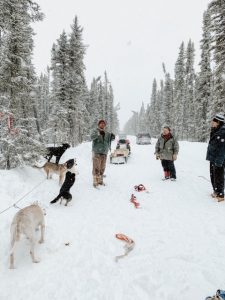
Sidney with the dogs and a student

“I’m not from Bloodvein River First Nation and I don’t know the land like the locals do.”

Sidney works closely with teachers and residents of the Manitoba First Nation community to connect traditional knowledge to classroom learning.   

“The goal is to get the kids outside on the land, in the bush behind the school, out on the river in canoes, or on hiking field trips,” he says. It’s all part of learning science, social studies and mathematics in new ways. 

From the Circus to Teaching

Sidney became a teacher at age 39, after an unusual career route.

His inspiration to teach started when he “ran away with the circus.”  

Years ago, Sidney worked as the crew chef with the Caravan Stage Company, a traveling circus on a tall ship sailing boat. “The pirate ship theatre was started by two old, card-carrying hippies and it led me to look at my life and chase my dreams. I thought that if they can build a hippy pirate ship, I can do what I want to do.”

What he wanted to do was teach.

How Sidney Started Dog Sledding

He left the traveling circus with a plan to go to university. But first, he took a trip to the Yukon. The trip sparked a new passion. “I took up dog sledding and fell in love with it. I was working for an esteemed champion dog musher and he taught me about dog mushing. I loved being able to see beautiful territory, and I loved the interaction between the humans and dogs.”

When he returned to Winnipeg for university, Sidney formed a dog sled team of his own. With his two dogs, and sometimes a friend’s dog, he traveled the city’s river trails. He had no idea that his love of dog sledding would one day carry into his classroom in Bloodvein River First Nation.

“When I got to Bloodvein, I wanted to start a dog team,” he says. “I put together a fundraiser to raise funds for equipment and got started.”

The team began with six dogs donated by Kevin Lewis who runs the Cree cultural immersion camp in Saskatchewan called kâniyâsihk Culture Camps.

Showing Students the Ropes

The dogs live with Sidney. He has a kennel with doghouses behind his home. “I take students on a tour of the kennel to meet the dogs. I show them how the kennel is set up, and how to care for them.”

Sidney also takes students dog sledding along Indigenous travel routes. The trip includes Ojibwe teachings from an Elder and local trapper.

“Gabriel Green, drives ahead with his snowmobile and takes us down his trapline,” Sidney shares. “He pulls a cargo toboggan behind his snowmobile. The students take turns driving the dog sled or riding in the sled or the toboggan.”

Stopping at designated spots, Gabriel shows his traps and tells stories about the dog team that he had years ago. “Having that platform for Gabriel to share his knowledge and stories is really great,” says Sidney. “We tie-in classroom learning and we’re getting the kids out into nature, over the river and on the trail.”

Students enjoy the adventure. “Just being out on the sled with the kids, even though they might be acting cool at the time, I know they’re excited,” says Sidney. “It’s a beautiful, sunshine-y day, running through a beautiful trail…one of the best feelings ever for me.”

“Word gets around that Mr. K has a dog sled team and takes kids out sledding,” says Sidney. Students like to share stories about their experience of driving the dog sled on their own, he adds.

Each trip includes eight to 10 students from grades four to nine. “Last winter we were out with the kids about five or six times,” Sidney says. The most recent trip was in March, before COVID-19 school closures.

Other Land-Based Learning Activities

The Land-Based Learning program involves more than dog sled education.

“One of my highlights every year is the overnight trip to the Manitoba Museum,” Sidney reflects. The Miskooseepi students spend an overnight inside the museum. It includes a behind-the-scenes tour of the curator’s room to view artifacts from Pauingassi First Nation. Students learn about the importance of protecting their cultural heritage.

“These are items from their culture. They learn that their culture is significant and valued by the world.”

Knowledge keepers like Culture and Language teacher Yvonne Young take students out on the land where they learn to identify plants and pick medicine. They also learn how to use plants, like offering tobacco.

Last winter, a few students took an ice fishing day trip. “We’re fortunate to have William Young be a part of the program. He had ice fishing equipment donated and took us to Round Lake to go ice fishing,” Sidney says.

“The kids have their Anishinaabe culture in their blood,” he says. He notes that many students can teach him about hunting, fishing and living off the land. “They go out with their fathers, uncles, grandfathers or aunts, and they have a lot of knowledge.”

Due to the COVID-19 pandemic, instructors and students are now doing remote learning. Sidney is running logistics, getting homework packages delivered and monitoring social media. He plans to set up a spot this winter so that students can get out onto the land. “We’ll have the ice fishing shacks, cross-country skis and snowshoes, and let the kids use them.”

13 Rapids with a Traditional Place Names Map in Hand

September 21, 2020

When young people go out on the land, they come back with their language.

—Anishinaabe Elder, in translation

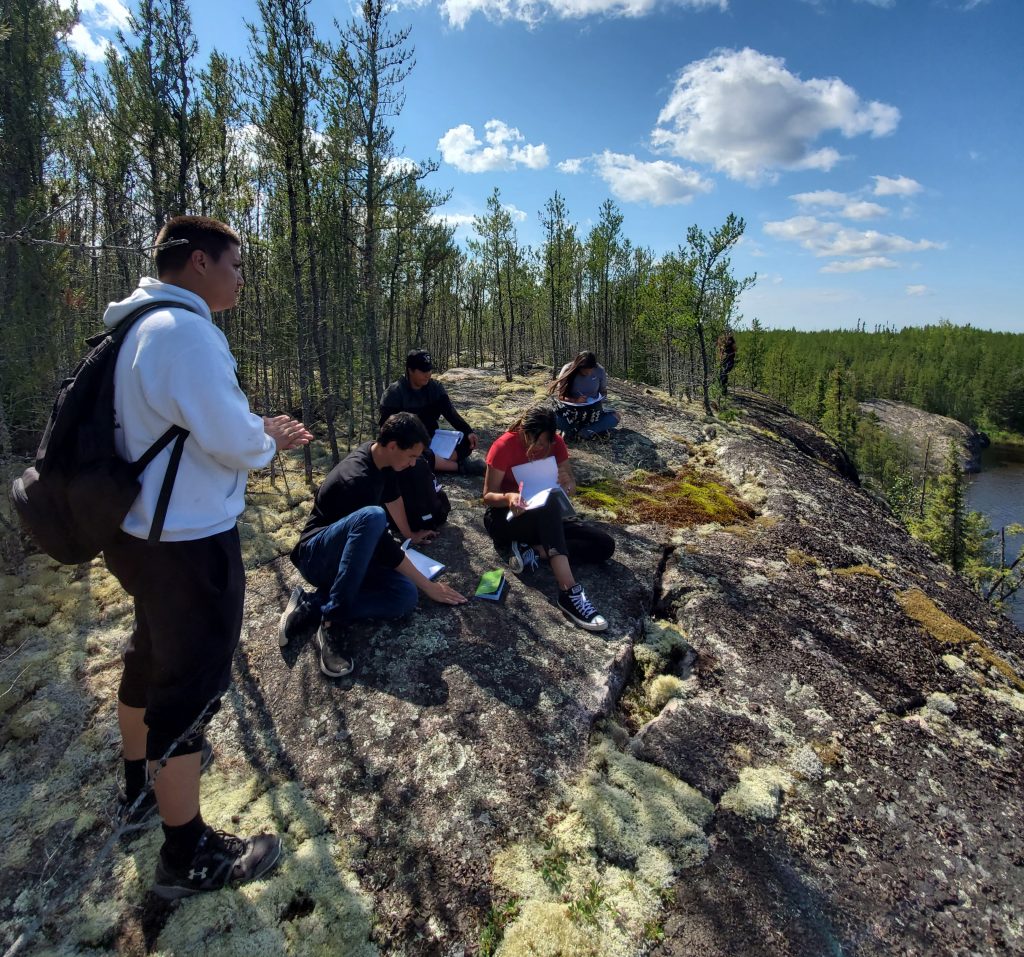
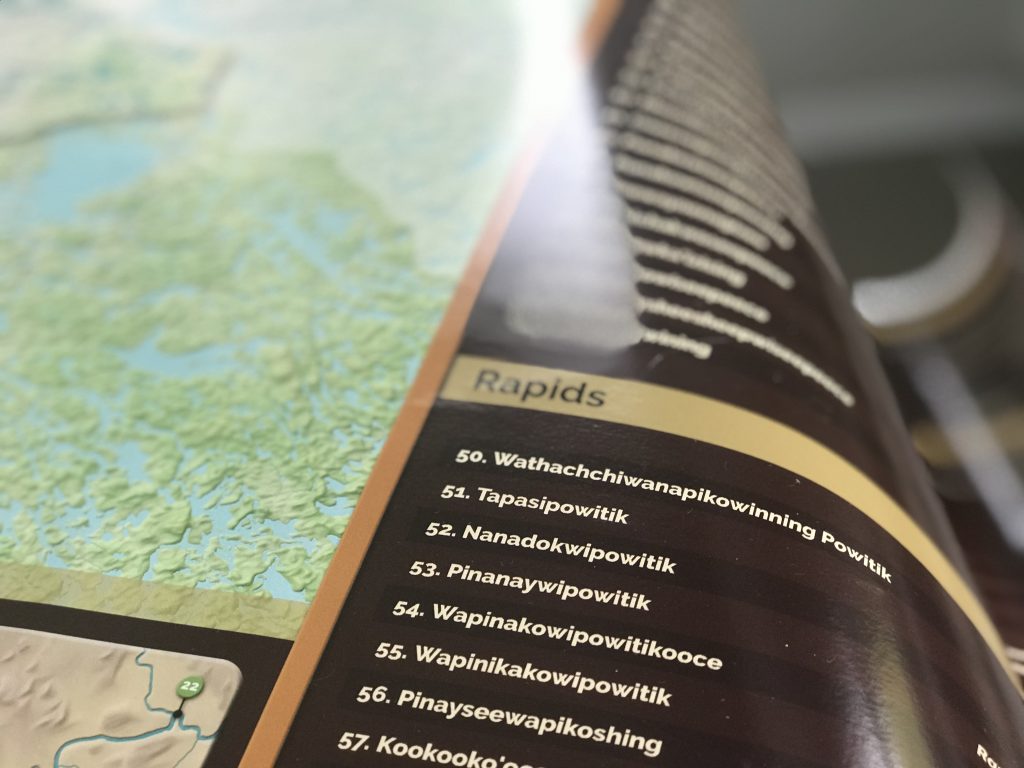
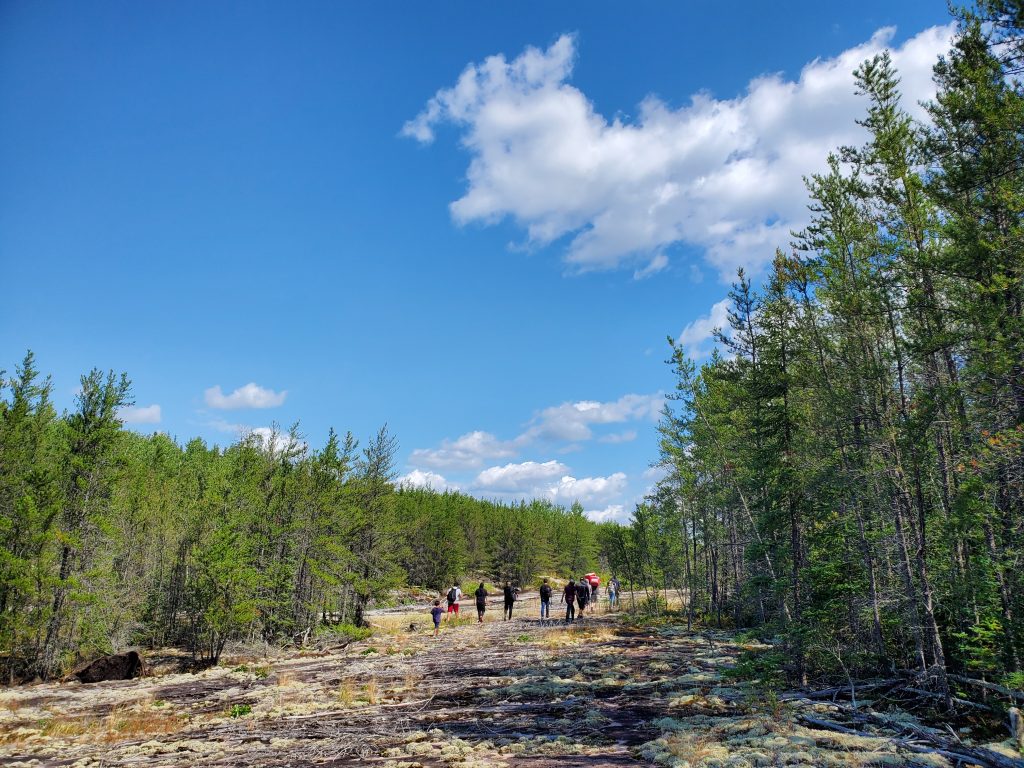
This summer, eight youth had a one-of-a-kind experience using the Poplar River First Nation Traditional Place Names map. The teens participated in a five-day knowledge-sharing trip hosted by Poplar River First Nation Guardian Norway Rabliauskas and his mother Sophia. Together, with hired guides, the group boated from the Poplar River First Nation community to Pinesewapikung Sagaigan (Weaver Lake). Along the way, they manoeuvred through 13 rapids marked on the map, and translated the names into Anishinaabemowin (Ojibwe language).

With names like Thagitowipowitik (Rapids before Poplar River flows into Weaver Lake) and Machi-powitik (Bad rapids where some people sense bad feelings), the map prepared them for the rapids ahead. It also helped them reflect on the past.

“I think it’s important for the young people to learn whey where they come from, and the history of Pinesewapikung Sagaigan (Weaver Lake),” Norway says.

The map gives meaning to places and helps keep the language and stories about these places alive.  Do you want to view the Poplar River First Nation Traditional Place Names map, with 149 named places? Click here and scroll down toward the bottom of the page.

Learning the History of Weaver Lake

Cultural heritage connects people and unites communities. The group camped on an island, where more people from the community were already gathered. Together, they visited the healing camp near Weaver Lake to learn more about the history of their community, and why the healing camp was established many years ago.  

“We wanted them to know who went there, why the camp exists, and why it is important,” Norway explains. He and Sophia shared with the youth that some Elders in the community were residential school survivors who used this site for their own personal healing journeys.  

Learning the Seven Sacred Teachings

Sophia also explained the principles of the Seven Sacred Teachings that have been passed down from generation to generation: 

  • wisdom 
  • love 
  • respect 
  • bravery 
  • honesty 
  • humility 
  • truth

Inspiring the Next Generation of Guardians

Anishinaabeg were placed on the land by the Creator and have a sacred responsibility to care for it, so the trip included a ride around the lake to see the offering rock and pictographs, with a hike up a high rock to see tea kettles (deep holes in rocks). The youth also learned about the trees in the area. Each youth received an information booklet. 

“I wanted to create a spark that might inspire them to work as Guardians,” Norway says. 

The youth will carry the land-based knowledge and skills with them into the future, he adds, noting that the youth prepared meals and helped around camp. 

“They set up and took down the tents, too,” he says.  “I wanted them to be involved as much as they could.”

Each youth had a journal to write down their own personal reflections.

“On the last day, we went fishing as a group and cooked our meal with the fish we caught,” says Norway.

Because the knowledge-sharing trip was such a success, Norway plans to make it an annual summer outing. “We’d like to make it bigger next year,” he says.

It was Norway’s work with the Education Department that inspired the trip, funded in part by Pimachiowin Aki. Norway facilitates a language and culture program that was cut short this past school year due to the COVID-19 school closures. He intends to continue the program in the current school year with the help of community members who speak Anishinaabemowin (Ojibwe language).

Tips on How to Smoke Fish and Meat

June 15, 2020

After 46 years as a commercial fisherman, Frank Young Senior retired last year. That doesn’t mean he has stopped fishing. Today he fishes to feed his family, to share with Elders in the community and neighbouring communities, and to pass on traditions to his children and grandchildren.

Frank and his wife Ellen raised two daughters and a son in Bloodvein River First Nation. He says that his daughter Lisa, who now lives in Winnipeg, wants to learn how to smoke meat, and his grandchildren are interested in fishing.  

“We go out on the lake in the boat with the net. They really enjoy that,” he says.

Learning to fish, hunt and trap are a right of passage for youth living in Pimachiowin Aki, and learning how to prepare and cook meat is passed down through generations. 

“When I cut up and dry meat, my daughter always wants to be there,” says Frank, adding that his grandchildren like to watch him filet fish.

Frank has also done a lot of moose hunting, sometimes traveling a long way to “get moose just about every year.” He says that he cuts the moose into quarters to haul it home, where he then cuts it up into smaller pieces.

“My daughter wants to learn how to cut up meat into slabs and hang it,” he says. She was helping me last year. She’s very interested in stuff like that.”

If you’re interested, too, here are some tips from Frank:

The Best Wood for Smoking Fish and Meat
“Look for dead poplar trees,” says Frank. He builds a fire out of dried poplar, found right outside his home. Poplar is best because it doesn’t have sap—trees with sap make a black fire.

Frank’s Tips on How to Smoke Meat
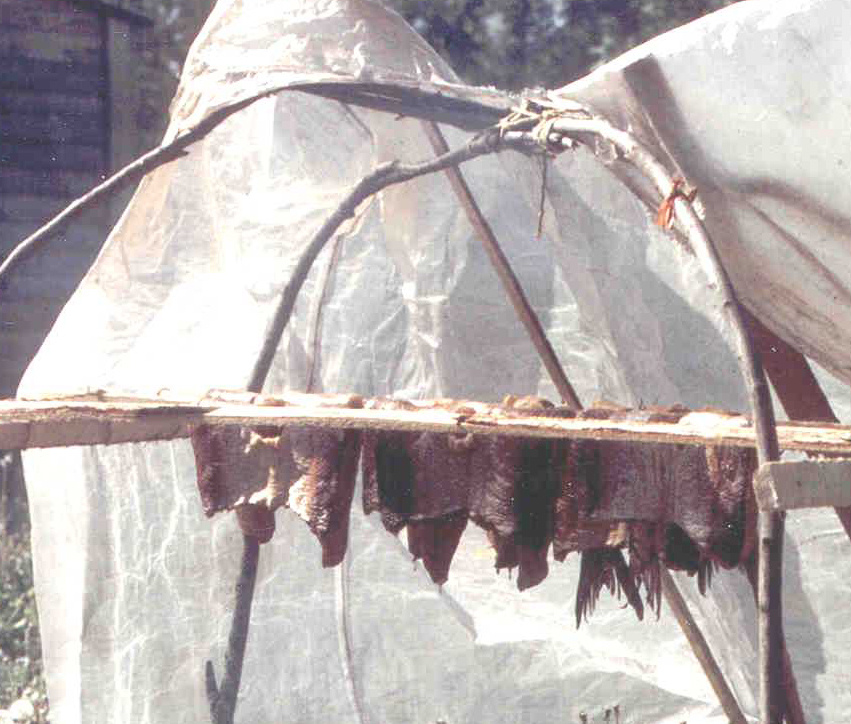
Historically, many people would smoke meat to dry it out, to preserve it. This was in the days before electricity and deep freezers, Frank explains. “Now that we have a freezer, I still smoke meat because I like the taste of it. It’s tradition.” 

Frank hangs pieces of moose meat on sticks and smokes them.

 “There was someone who was drying meat a couple of years ago and he used spices,” Frank says. “That’s not the traditional way of doing it. I don’t use spices, just salt. That’s how it was done when I was growing up so that’s the way I do it.” 

Unlike fish, which is smoked for flavour and then boiled or cooked afterward, smoked meat is eaten right away.

Frank’s Tips on How to Smoke Fish
Frank has his own smokehouse where he smokes catfish, whitefish and goldeye. “We don’t smoke pickerel filets,” he says. “We fry those with flour and butter.”

Franks recommends using birch sticks to pierce the fish. He smokes six to eight whitefish at a time. The fire should have a small flame, he says. 

Frank closes the door and just lets it smoke. “You don’t want to dry it out,” he warns. “Just smoke it long enough to have the flavour.”

Try this Duck Fat Potato Recipe!
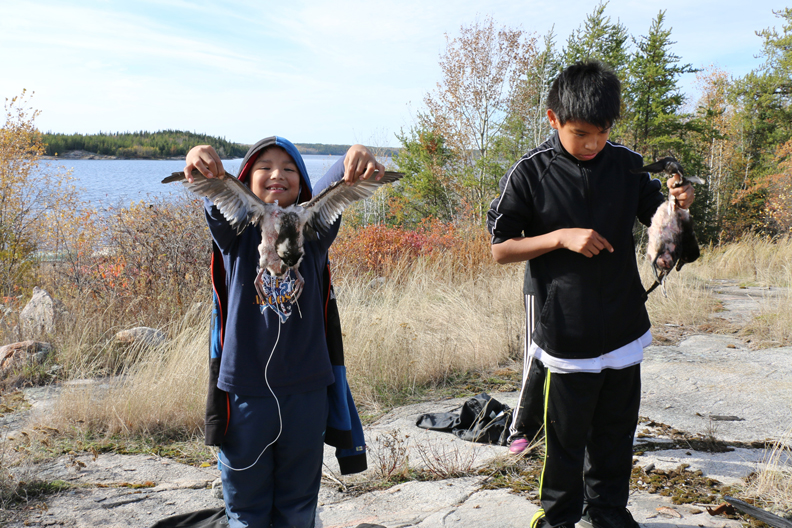
Fish, moose, and duck are favourite traditional foods along with delicacies like smoked meats, white fish, and pickerel caviar.

Little Grand Rapids First Nation Guardian Dennis Keeper says that duck is one of his favourite traditional foods. He notes that the ducks are especially fat this year, so he looks forward to trying this duck fat potato recipe:

https://www.foodnetwork.com/recipes/duckfat-potatoes-recipe-1957259

You can watch a video with British Chef April Bloomfield making Duck Fat Potatoes here: https://www.youtube.com/watch?v=93404IQdSSY

The recipe is on page 238 in her cookbook ‘A Girl and Her Pig: Recipes and Stories’.

How a Meeting with Hunters and Trappers Led to the Idea for a New School Program

June 15, 2020

Melba Green grew up in Bloodvein River First Nation. Today, she is a Pimachiowin Aki Guardian; a responsibility she takes very seriously. “This is what I’m supposed to do, help people, help the youth and watch over the land,” she says.

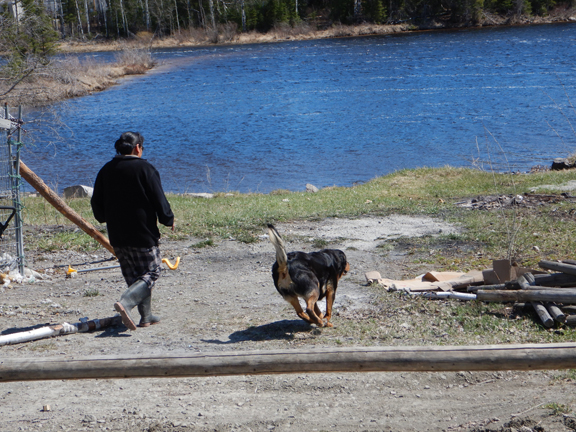
With her one-year-old Rottweiler Rocky by her side, she takes daily walks on the land. “I stop and listen to hear activities like gun shots, walking, people hunting or on a quad,” Melba explains. “I check on the water, the plants, medicines and trees.” 

Melba also listens to the concerns of people in her community. She has regular meetings with local hunters and trappers who talk with her about what is happening on the land. It was during one of these meetings that the idea for a new school program was born—Melba often talks to the students in the Miskooseepi School about what it means to keep the land. When she shared this at a meeting, she quickly had four male volunteers who wanted to share their knowledge and meet with students regularly to discuss the roles and responsibilities of men and women. Melba pitched the idea to women in the community and, once again, had eager volunteers.

Melba Reflects on Her Childhood
Anishinaabeg have very specific roles within their families and in their communities. Melba grew up the oldest sibling with three brothers and one sister. She says that when boys turn eight years old, they go out onto the land to learn how to hunt. Melba was surprised when her own young brother was being taken out into the bush. “I was scared that something bad might happen to him,” she remembers. My mom told me, ‘That’s just how it is’.” 

“Girls are supposed to know what our mothers do at home; cook, clean, help with the kids… That’s what we’re taught, through oral lessons,” she adds.

While many young people learn from their own parents or grandparents, some children may not have a role model to teach them. “But they do have guidance in the community and at the school,” says Melba.

Looking back, she notes that she ran to her grandmothers when she wanted to know something. “Now when I see young kids, a lot of their grandparents are gone.” 

The new program will help young people understand their roles and learn the skills needed to become responsible adults. The COVID-19 school shut down has put the program on pause but Melba and her group of volunteers look forward to implementing it as soon as they are able.  

The Roles of Men and Women
Male students will learn about:

  • Hunting and trapping
  • Fishing
  • Being respectful towards the land
  • Being respectful to others

Female students will learn about:

  • Harvesting plants and medicines
  • Responsibilities caring for the home
  • Their moon time
  • Parental responsibilities

Today’s Culture Shock  
Without a high school, after grade 9, students go to live with extended families in urban centres like Winnipeg, Selkirk or Riverton to finish their schooling. 

“It’s culture shock,” says Melba. “We have to do our jobs to help the youth. We want to show them that there is another way of life.”

The new program will do just that—help students learn to survive on the land and live healthy lifestyles.

Bloodvein River First Nation is looking forward to completion of a new K-10 school within the community in August 2021. New K-12 schools being constructed in Poplar River First Nation and Little Grand Rapids First Nation are also expected to open in August 2021.

First Nation Youth Spend a Night at the Museum

March 19, 2020

Thirty middle school students from Miskooseepi School in Bloodvein River First Nation enjoyed a thrilling overnight stay at Manitoba Museum, where they explored the wonders of technology in the Science Gallery and a private behind-the-scenes tour of the museum galleries.

Before they unrolled their sleeping bags and settled down for a sleepover at the museum, the students had a first look at the new Pimachiowin Aki exhibit. 

“It’s a part of who we are,”13-year-old Jenelle said about her ancestral homeland. 

Ainsley, age 13, said that keeping the land and water clean is one way to help protect the land. This sentiment was echoed by many of her classmates.

Miskooseepi’s language and culture instructor Yvonne drummed and sang with the students in Anishinaabemowin (Ojibwe language). She reminded the youth of the importance of Pimachiowin Aki.  

“Let’s honour those who have walked on our land before us,” Yvonne said. “We thank the Creator for them.”

The students shared their gratitude for the cultural teachings they experience in their school, including taking ice-fishing day-trips, Anishinaabemowin, and going on dog-sled rides.

“I’ve learned how to trap different animals,” Trinity, age 12, said when asked what makes her school unique. They also learn at a young age how to care for, and respect, the land. Anishinaabe knowledge has been passed down from generation to generation. These young students receive the ancient teachings that will allow them to carry on the sacred responsibility of keeping the land.

Join the private tour: https://youtu.be/vdAyfWOB7G8

⟩

Footer

Stay connected

Sign-up for seasonal news from Pimachiowin Aki.


  • Facebook
  • Twitter
  • Instagram
  • YouTube

  • Contact
  • Visit
  • Shop
  • Donate
  • Legal
  • Privacy Policy

© 2026 Pimachiowin Aki

Built by PeaceWorks