• Skip to primary navigation
  • Skip to main content
  • Skip to footer

Pimachiowin Aki

World Heritage Site

  • News
  • Resources
  • Visit
  • Home
  • Shop
  • Donate
  • Contact
  • About Us
    • Pimachiowin Aki Assembly of Partners
    • Board of Directors
    • Timeline
    • Communities
      • Bloodvein River First Nation
      • Little Grand Rapids First Nation
      • Pauingassi First Nation
      • Poplar River First Nation
    • Annual Reports
  • Keeping the Land
    • Our Work
    • Cultural Heritage
    • Wildlife and Habitat
    • Sustainable Economies
    • Guardians Program
      • Colin
      • Melba
      • Owen
      • Dennis
    • Education
  • The Land That Gives Life
    • Boreal Forest
    • Calendars
    • Climate
    • Cultural Sites
    • Habitation
    • Harvesting
    • Language
    • Named Places
    • Plants
    • Travel Routes
    • Water
    • Wildfire
    • Wildlife
  • Fast Facts
  • Search
  • Facebook
  • Twitter
  • Instagram
  • YouTube

First Nation Communities

Elders are Our Scientists

December 17, 2019

There has been much dispute about global warming and climate change but Anishinaabeg have long known that poor land use planning can have damaging results. The Elders who came before us have taught us to respect the earth. Pimachiowin Aki is a gift from the Creator, and Anishinaabeg have a sacred responsibility to care for it.

Years ago, Elders spoke about the impending changes in weather patterns and cautioned us that we must work together to make a difference for current and future generations, says Pimachiowin Aki Board Co-Chair William Young. “We have our own scientists,” he says, referring to the Elders in the communities. 

William generously translates as we speak with Bloodvein First Nation Elder Leslie Orvis. Born in Bloodvein, Leslie has worked all over Manitoba as a commercial fisherman, and is an experienced hunter and trapper.

Leslie sees the changes that Elders talked about long ago. “They used to be able to do various things, like make it rain. Now that’s all changed,” he says.  

While we may no longer be able to call upon the clouds to open up, the Elders in Pimachiowin Aki are the knowledge keepers. Sharing their traditional knowledge is invaluable. They talk about the effects that global warming has on the wildlife in their communities. 

At the end of November, Bloodvein was experiencing rain and unusually warm weather for about a week and a half. “When it rains this time of year,” Leslie says, “it freezes onto the twigs, trees and bushes, which the moose and rabbits rely on to eat.“      

Lack of food for wildlife inevitably affects the trappers and hunters.  

“The wolves are starving,” William adds. Recently three wolves were spotted on the road walking at night, desperately searching or food, coming closer than normal to residents’ homes.

Communities Affected by High Waters 

Dennis Keeper, a Pimachiowin Aki Guardian who observes the lands and waters in Little Grand Rapids is very concerned about the unusual weather patterns and erratic water levels that he has witnessed over the last few years.

“Usually at this time of year, the water levels drop and the current slows down,” he says. But this year is different. The lake froze once in the fall and then opened again near the end of November. Yet in June and July, water levels were lower than normal. Dennis says that in 2018 Little Grand Rapids had low water levels all year.

Pauingassi First Nation, 18 kilometres north of Little Grand Rapids, is experiencing its highest water levels ever, with some parts of the community swallowed up and becoming islands. The high waters prevent trappers from accessing their trap lines. 

“We have to rely on outside food, says Dennis. “It puts pressure on the community.”

It also affects communities’ access to transportation. Typically, for about one month each winter, people use winter roads to travel to and from the communities of Pimachiowin Aki. The roads are a direct route across the lakes. But those roads won’t open until the lakes freeze, and Dennis worries that the roads won’t be open for as many days as needed. 

 “It takes a month of minus 30 degrees Celsius for it to freeze,” he explains. It takes six to eight weeks to get the roads passed as driveable, which results in 22 to 30 days of winter road driving. The slow freeze-up can also result in the trucks having to carry smaller loads, cutting the weight of the loads in half from 80,000 pounds to 40,000.

This is unsettling news for Little Grand Rapids, which is expecting 1500 loads of supplies this winter via the winter road. The trucks will be carrying materials to build the community’s own much-needed high school this spring.  

“Global warming is not a myth,” Dennis says. “Come over here and see it for yourself.”

Elder Leslie says, “There will be days ahead that will be hard, and we have to prepare our youth by teaching them skills like hunting, trapping, fishing and survival.” He believes that we can, and should, all work together toward sustainable hunting in order to build a brighter future for all.
Winter Solstice! & Other Celebrations to Enjoy this Season

December 17, 2019

There is a lot of joy to experience right now in Pimachiowin Aki, including these celebrations:

1. Joyful Month – Kissing Month

As people gather for winter celebrations, they greet each other affectionately—with a handshake and a kiss on the cheek—so December is known as the joyful month and January is known as the kissing month. In Pauingassi First Nation, December includes a Christmas dinner for the entire community. There is a similar feast for the Bloodvein First Nation community, with each household receiving a turkey.

2. Winter Solstice

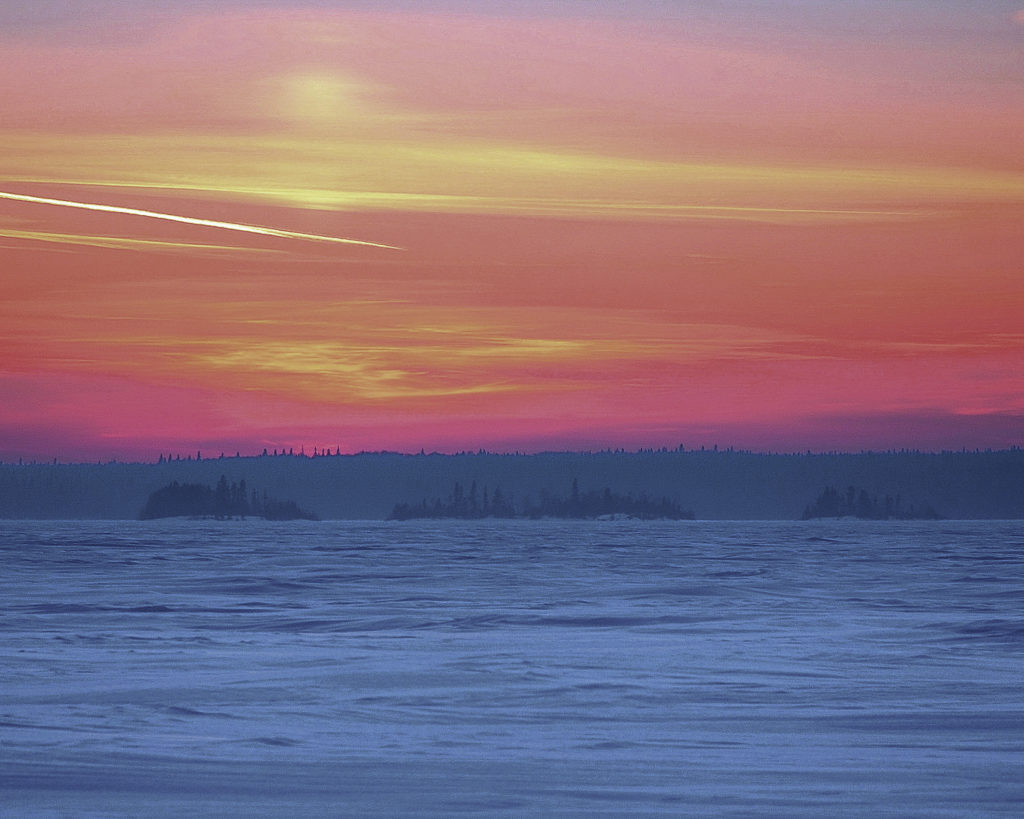
December 21 marks the day with the shortest period of daylight in 24 hours and the longest night of the year (in the Northern Hemisphere), all thanks to the tilt of the earth.  

This date also means that winter is officially here. In Anishinaabemowin, winter is called Beepoon. The December moon is called makoshkish giizis and is known as the joyful moon.  

The colder, shorter days bring with it a peaceful silence, a kind of muffled quiet as you walk outdoors to gaze at the stars in the night sky. Enjoying a warm fire, being cozy under a blanket, ice-skating, playing hockey on the frozen lake, snowshoeing, tobogganing, and cross-country skiing are just some of the activities to look forward to as we celebrate the joys of winter. 

3. Magu zhi giizhigan & O gen du giizhigan

Younger generations of Anishinaabeg follow the 12-month calendar, but Elders in Pimachiowin Aki used the seasons to measure the days. We followed the 13 moons, which meant 13 months of 28 days, explains Bloodvein First Nation Guardian, Melba Green. “They didn’t really have holidays like Christmas and Thanksgiving,” she says. Today, many people in Pimachiowin Aki celebrate Christmas, known as Magu zhi giizhigan, and the New Year, known as O gen du giizhigan.

Fall Moose Hunt

September 16, 2019

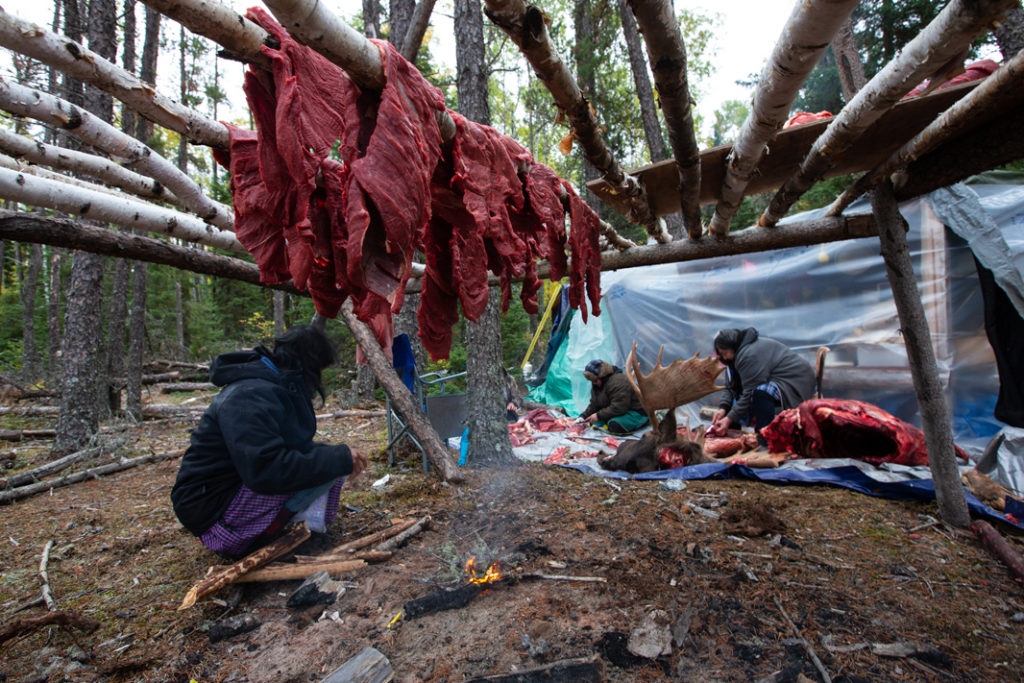
A moose can provide six months of food for a family, but moose hunting is more than just practical. It’s a family tradition, passed down through generations. 

Norman Pascal of Pauingassi First Nation learned how to hunt from his grandfather, Bushie Pascal, when he was “old enough to know how to handle a gun,” at the age of 14. Today, he hunts duck, geese, moose, beaver and muskrat. He learned from past generations to only take what you need. “Just because you see five moose, you don’t shoot five moose,” he says. 

When someone kills a moose, they think about the whole community. If a family doesn’t have the capacity to hunt, hunters will share the meat with them. “We share the meat with whoever asks for it,” says Norman. 

Hunters will also hunt for the Elders in the community. Pimachiowin Aki Guardian Dennis Keepers says that there are eight people who look after the Elders in his community of Little Grand Rapids. They will harvest beaver and duck, and fish and hunt moose for them. Dennis says he “has lots of family in the area,” but the Elders he hunts for are not related to him. The Elders give him gas or other hunting supplies as payment. 

Moose hunting is so important to the Anishinaabeg of Pimachiowin Aki that many children enjoy official breaks from school in order to join their families on fall moose hunts. 

Dennis, who also learned how to hunt from his grandfather, plans to pass on his knowledge to his son when his son turns 10 years old. “I will take him and his friends out to learn how to survive out in the wild,” he says. 

In October, when moose are mating, you can hear the bellow of the males along the lakeshores.  Hunters use horns made of birch to call them. They typically lure the males by imitating the sound of a female moose (cow), or by imitating the sound of a male moose (bull).

Anishinaabeg are careful not to be wasteful. They honour the Creator’s gifts through the continued harvest of plants and animals in a manner that ensures continuity of all life on the land. The Guardians in each community of Pimachiowin Aki are constantly monitoring their areas, building relationships with hunters, and watching out for poachers and trophy hunters. 

In our ancestors’ time, a person who wasted an animal would be punished, explains Bloodvein First Nation Guardian Melba Green. “You take only what you need and don’t waste it,” she says. Today, community members report back to the Guardians, sharing what they observe when they go out onto the land. Any illegal activities or other areas of concern, including wastage, are passed along from Guardians to the relevant authorities. 

Anishinaabeg are respectful of all living things. Once a moose hunter skins the meat and hide, to share the good news of their successful hunt, they display the head in front of their home. It is a show of pride, but also a show of respect for the moose, which has given up its life to feed the people of Pimachiowin Aki. In an act of respect, the moose beard is hung in the trees. This tradition is to give back to the land, Norman points out.

Sadly, not all traditions are being kept alive. “The older generations used to make leather from the moose hide but there’s nobody doing this anymore,” says Norman.

Dennis stresses the importance of talking to the Elders, to learn from them. “All the knowledge they have, once they’re gone, it’s gone.” Knowing this makes Dennis’ job as a Guardian all the more important. A huge priority is to bring youth and Elders together on the land, he adds.

Photo: Hidehiro Otake

⟨

Footer

Stay connected

Sign-up for seasonal news from Pimachiowin Aki.


  • Facebook
  • Twitter
  • Instagram
  • YouTube

  • Contact
  • Visit
  • Shop
  • Donate
  • Legal
  • Privacy Policy

© 2026 Pimachiowin Aki

Built by PeaceWorks